
Remember me







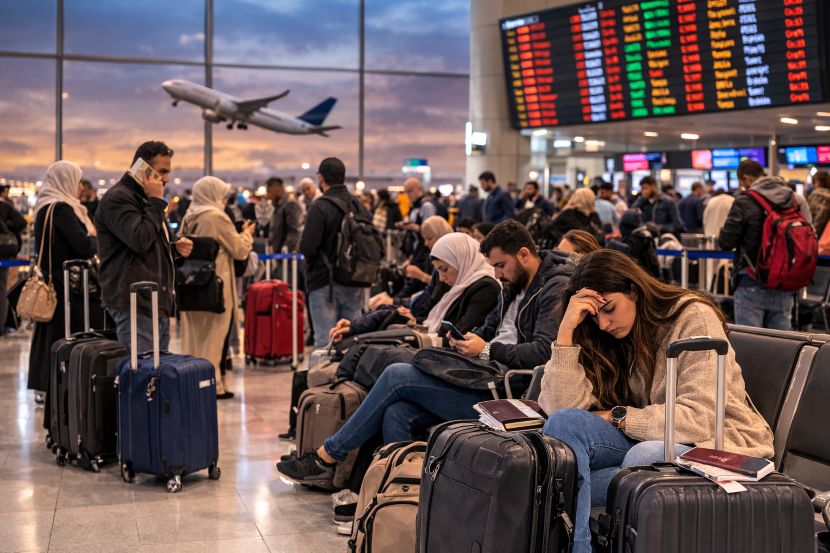
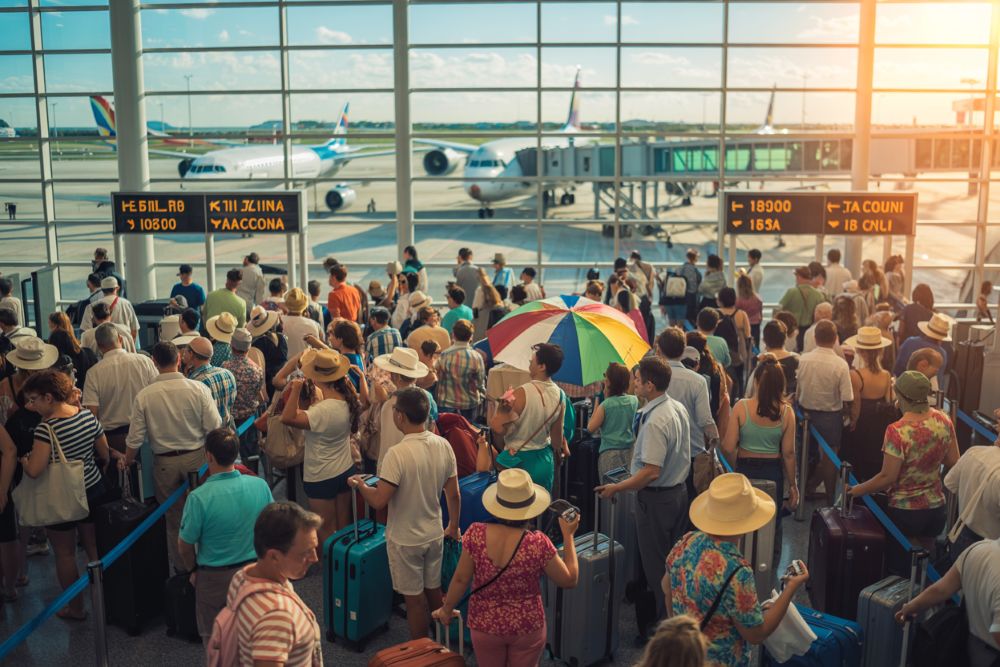


Image generated with Ai
The stability of the national aviation network is being severely undermined as a partial U.S. government shutdown continues to disrupt essential services during one of the most active periods for domestic mobility. Since the funding for the Department of Homeland Security (DHS) lapsed on February 14, 2026, the Transportation Security Administration (TSA) has been forced to maintain operations without the ability to issue paychecks to its frontline workforce. This fiscal impasse coincides with a historic surge in spring break travel, where an estimated 171 million passengers are projected to transit through American terminals during the months of March and April. The intersection of record-breaking passenger volumes and a demoralized, unpaid workforce has resulted in significant operational sustainability concerns, characterized by rising unscheduled absences and a growing exodus of trained security personnel.
The Three-Hour Security Nightmare: Why You Must Arrive Early Or Risk Missing Your FlightThe consequences of the ongoing political stalemate are being felt most acutely at the nation’s major transit hubs, where wait times have escalated to unprecedented levels. It has been reported that at Houston’s William P. Hobby Airport, security lines have frequently exceeded the three-hour mark, forcing administrators to issue urgent bulletins advising travelers to arrive at least four to five hours prior to their scheduled departures. Similar disruptions have been documented at Hartsfield-Jackson Atlanta International Airport and Louis Armstrong New Orleans International Airport, where the depletion of available screening staff has triggered dozens of operational hotspots. Because the TSA workforce is currently being utilized without compensation, the rate of unscheduled absences has more than doubled, reaching a nationwide average of 6% with some specific locations seeing nearly half of their scheduled officers fail to report for duty.
TSA Staffing Meltdown: The Hidden Reason Your PreCheck Lane Might Be ClosedWhile travelers often rely on expedited screening programs to bypass congestion, the current crisis has rendered even these services unreliable. It is observed that TSA PreCheck and other fast-track initiatives are being intermittently limited or shuttered at various checkpoints as managers are forced to consolidate limited personnel into general screening lanes. The loss of human capital is not merely temporary; it is recorded that over 300 TSA employees have officially resigned since the shutdown commenced, citing the inability to cover basic living expenses such as rent and fuel. Because the certification process for new officers requires four to six months of rigorous training, these departures represent a long-term threat to aviation security that cannot be easily mitigated once a funding agreement is eventually reached. The psychological toll on the remaining 50,000 officers, who are now facing their first full missed paychecks, has led to a significant decline in morale across the agency.
Donations and Pantries: The Shocking Way Airports Are Keeping Unpaid Guards On The JobIn a desperate bid to maintain the flow of commerce and ensure the safety of the traveling public, airport authorities and local communities have resorted to extraordinary charitable measures. In cities such as Las Vegas, Seattle, and Cleveland, food pantries have been established within airport perimeters to provide essential groceries and toiletries to unpaid federal workers. Major corporate entities, including MGM Resorts International, have coordinated the delivery of hundreds of meals to sustain officers who are struggling to afford food while working full-time shifts. Furthermore, several airports have taken the unusual step of soliciting donations from the public, requesting small-denomination gift cards for gasoline and groceries to assist staff in commuting to their posts. These grassroots efforts highlight a grim reality: without the intervention of local charities, the primary layer of national aviation security would be at risk of total collapse.
Advertisement
Advertisement
A System On The Brink: What To Expect As The Funding Standoff IntensifiesThe outlook for the remainder of the spring season remains bleak as long as the legislative deadlock over immigration and border policy persists in Washington. Analysts suggest that the situation is poised to worsen as the cumulative financial strain on federal employees reaches a breaking point. There are growing concerns among aviation experts that the protracted absence of pay will lead to a surge in “sick-outs,” potentially mimicking the historic disruptions seen in previous multi-week shutdowns. If the TSA is unable to staff a sufficient number of lanes to meet the daily demand of 2.8 million travelers, the Federal Aviation Administration (FAA) may be compelled to implement flight capacity reductions to prevent dangerous overcrowding within terminal gate areas. For the 171 million individuals planning to fly this season, the era of predictable travel has been temporarily replaced by a landscape of uncertainty, where the reliability of a boarding pass is entirely dependent on a resolution to the ongoing federal funding crisis.
Advertisement
Advertisement
Advertisement
Original article: https://www.travelandtourworld.com/

Comments (0)