
Remember me


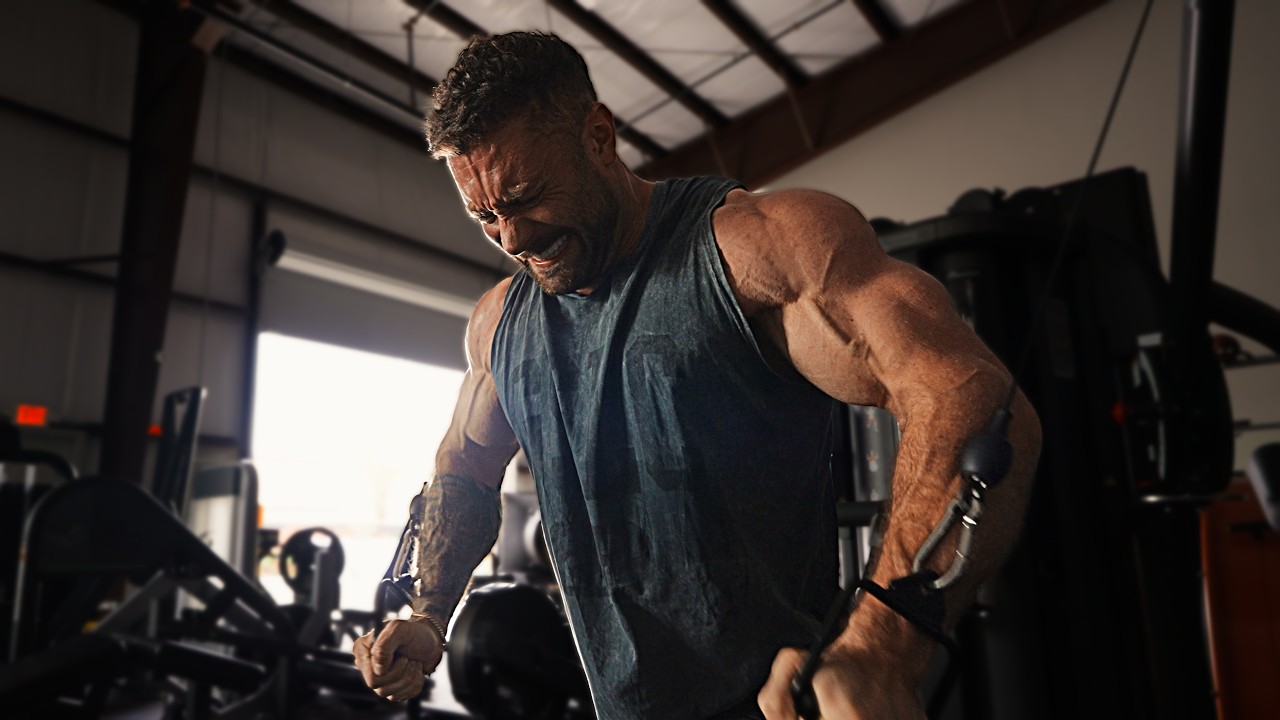
Fitness influencer Chris Heria is rethinking his approach to training—and it’s not just about the weights.
In a recent YouTube video, the popular content creator shared his current chest and back workout while diving deep into what makes training truly effective.
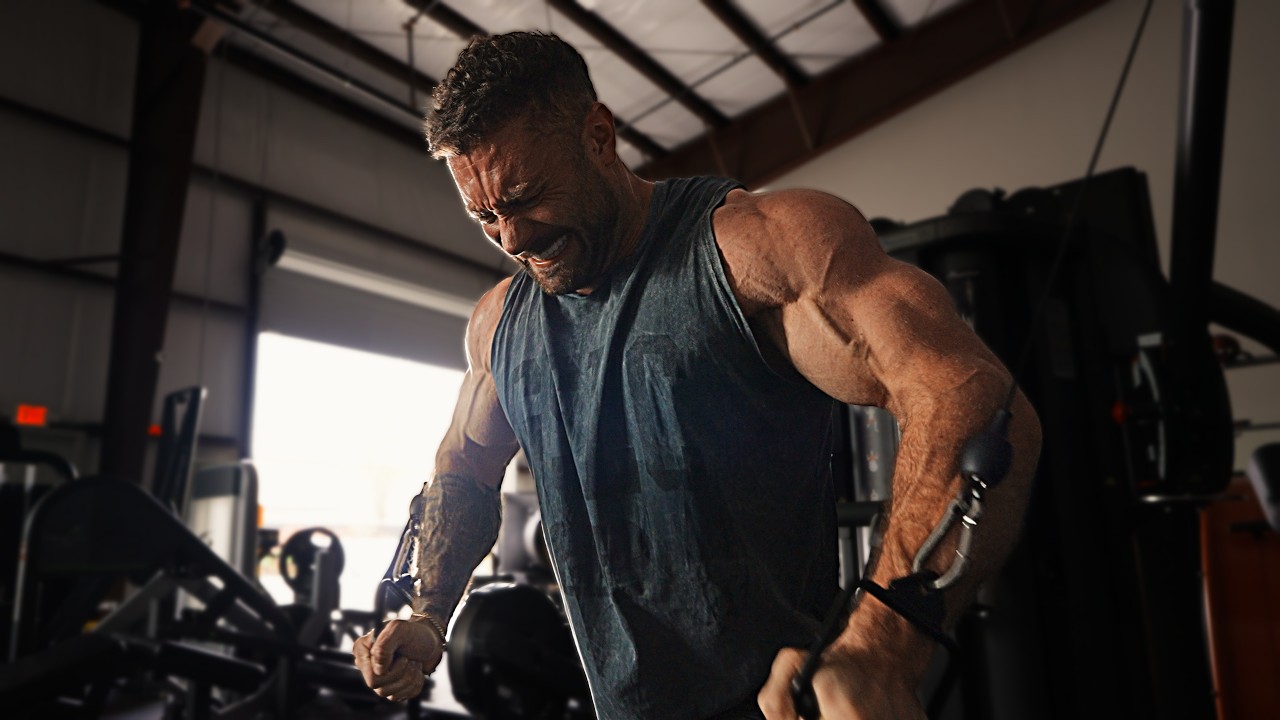
But the real conversation starter? His fascinating discussion about doing hard things that actually challenge us in today’s overstimulated world.
From neutral-grip pressing to three-day darkness retreats, Heria’s approach to growth extends far beyond the gym.
Why Neutral Grip Changed EverythingHeria’s pressing technique has evolved significantly from his earlier training days. He’s abandoned the traditional wide-elbow, knuckles-forward approach that once wreaked havoc on his shoulders.
This still just feels so much better for me and my shoulders. And when I don’t do this now, my shoulders almost feel worse. So, it actually helps my shoulders.
The neutral grip dumbbell press has become his staple movement. Not only does it allow greater range of motion, but it’s actually therapeutic for his shoulder joints.
He explained that the deeper stretch achieved with neutral grip creates a strengthening effect in the stretched position—something the traditional grip couldn’t provide without causing pain.
Pull-Ups Over Pulldowns: A Skill-Based RealityHere’s something that might surprise gym-goers who rely heavily on lat pulldown machines: pulldowns don’t automatically translate to pull-up strength.
They’re doing pull downs not make you better at pull-ups. Trust me. I used to be able to pull down the whole machine. I could do like five pull-ups, maybe.
Heria emphasizes treating pull-ups as a skill that requires specific practice. His focus now involves pulling all the way to the top and achieving that crucial squeeze at the peak contraction.
That full range of motion isn’t just about building muscle—it’s critical for shoulder health and mobility.
Progressive Overload with Bodyweight MovementsHeria uses a personal benchmark system for progressing his pull-ups. Once he hits 10 clean reps with just bodyweight, that’s his signal to add external load.
His reasoning reveals sophisticated understanding of adaptation. Without sufficient stimulus change, the body plateaus regardless of effort level.
Unless I’m changing the stimulus excessively enough for my body to respond differently, like if I was doing sets of three to four because I had like 50 lbs attached to me, my body would probably progress at this point faster because I’ve already adapted to what my load is.
This approach demonstrates why simply doing more reps eventually stops producing results. Variation in loading patterns drives continued adaptation.
The DIY Instability Training MethodHeria revealed an ingenious alternative to expensive specialty bars like earthquake or bamboo bars. His solution? Hanging weights from resistance bands during pressing movements.
This creates constant instability that forces stabilizer muscles to work overtime. The setup might look chaotic, but the benefits are substantial.
Lower weight requirements: Stabilization demands reduce how much load you need Enhanced shoulder health: Stabilizer muscles get strengthened in realistic movement patterns Injury prevention: Prepares supporting structures for heavier loads later Cost-effective: Requires only bands and standard weightsThe instability training also applies to his chest-supported rows. That slight oscillation from bands creates variable resistance that hits muscles from constantly changing angles.
Training Your Weakest LinkHeria shared critical insight about strength imbalances. Being strong on machines doesn’t guarantee equivalent barbell performance—and that gap creates injury risk.
If you’re really strong at machine press, dumbbell press, means your pecs are strong, but not in the exact motion and stability that a bench press requires. So sometimes people will move on to this and hurt themselves cuz they’re stronger than their body’s able to.
The weakest link principle matters tremendously. Your body can only handle what its least developed component can manage.
Instability training with bands or unstable implements forces those weak links to catch up before progressing to heavier loads.
Strategic Preparation for CoachingHeria’s current hypertrophy phase serves a specific purpose beyond muscle building. He’s preparing for an intensive three-to-four-week period working directly with trainer Justin.
His philosophy? Having expert guidance is “a cheat code to making more progress”—but only if you arrive prepared to maximize that limited window.
This preparation phase involves rebuilding base strength and muscle before transitioning back into athletic-focused programming under Justin’s supervision.
The Three-Day Darkness RetreatPerhaps the most compelling part of Heria’s video had nothing to do with lifting. He recounted a conversation with a fellow traveler about sensory deprivation retreats.
The concept: 72 hours alone in complete darkness. No food. No sound. No light whatsoever—not even enough to see your hand in front of your face.
You start to hallucinate by the end. Like you are on plant medicine, but you’re not actually high. So, you’re fully like your complex brain is able to take in everything you’re experiencing, but you’re hallucinating, but you’re sober.
His fascination stems from recognizing this as the ultimate “hard thing” for our overstimulated generation. While most people struggle to avoid screens for 24 hours, this represents complete sensory withdrawal.
Why Difficult Experiences Drive GrowthHeria connected the darkness retreat concept to his philosophy about growth through challenge. True difficulty is relative to your starting point and cultural context.
If what’s hurting our world now is over consumption, too much information, too much visual stimulus from our phones, just so much more that we shouldn’t be able to absorb, what would be the complete opposite end of the spectrum?
He views the retreat as potentially transformative precisely because it terrifies him. That anxiety signals an area for meaningful personal development.
The mental battle described—oscillating between peace and panic, constantly negotiating with your own mind—represents growth through discomfort at its purest form.
Letting Go of Self-SeekingWhen asked about his motivation for attempting such an experience, Heria revealed deeper spiritual curiosity beyond just conquering difficulty.
I feel like it would rid my self seeking desire to find out who I am and just be like you just are, you know? I feel like it would just give me like a profound answer of stop desiring, stop chasing, stop trying to figure something out.
His goal extends beyond physical challenge into existential territory—using extreme conditions to strip away constructed identity and discover what remains underneath.
He’s set himself a deadline: complete this experience before turning 40.
Practical Takeaways from Heria’s ApproachWhile not everyone needs to attempt 72-hour darkness retreats, Heria’s training philosophy offers applicable lessons:
Listen to your body’s feedback: If traditional techniques cause pain, explore variations Practice specific skills directly: Assistance exercises supplement but don’t replace the real movement Address weak links proactively: Use instability training to strengthen supporting structures Periodize intelligently: Different training phases serve different purposes Seek expert guidance strategically: Prepare yourself to maximize limited coaching windows Embrace meaningful difficulty: Growth happens outside comfort zonesWhether you’re adjusting your grip width or contemplating sensory deprivation, the underlying principle remains constant: sustainable progress requires honest assessment and willingness to do what’s actually challenging.
Heria’s blend of practical training wisdom with philosophical exploration offers a refreshing perspective in fitness content typically focused solely on sets and reps.
Comments (0)