
Remember me



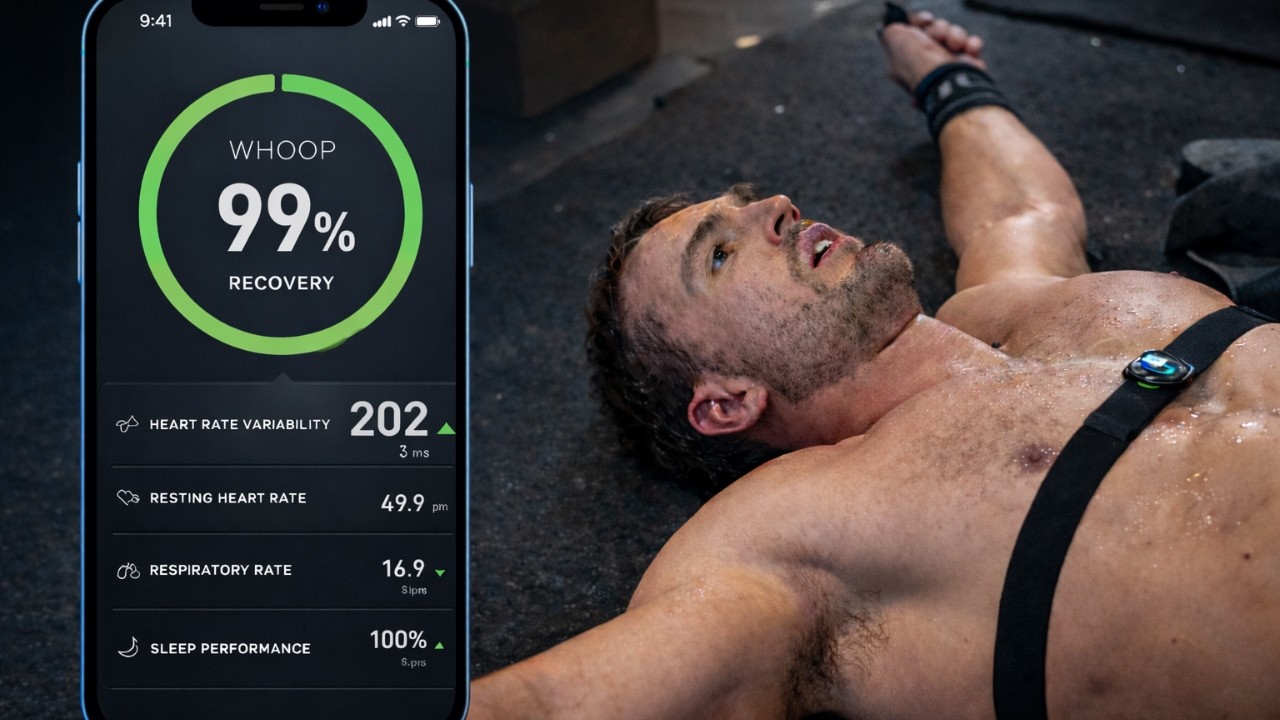






Heart rate variability has become the go-to metric for determining training readiness.
Millions of athletes now check their HRV scores each morning, letting algorithms decide whether they should push hard or take it easy.
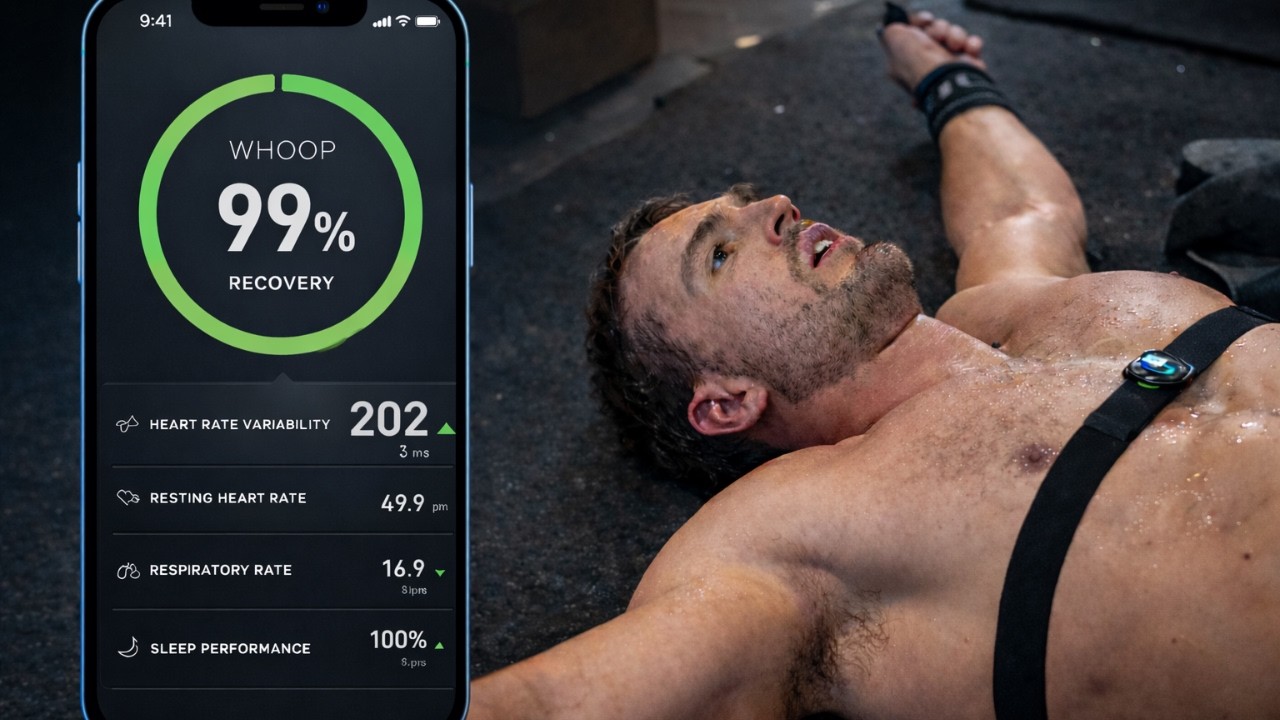
But there’s a significant problem with this approach that most people don’t realize.
In a recent video, Gomar, a senior scientist at ETH Zurich who has studied exercise physiology for over a decade, revealed why HRV might be misleading athletes who do strength training or high-intensity mixed modality work like CrossFit and Hyrox.
Understanding Heart Rate VariabilityHeart rate variability measures the variation in time between each heartbeat. If someone has a heart rate of 60 beats per minute, the time between beats isn’t exactly one second—it varies slightly.
One gap might be 1,050 milliseconds, while another is 950 milliseconds. That variation is HRV.
Research from the 1980s and 1990s established a clear link between HRV and the autonomic nervous system, which has two opposing branches. The sympathetic nervous system triggers the fight-or-flight response—when activated, heart rate increases and HRV decreases.
The parasympathetic nervous system acts as a brake, promoting rest and recovery. When it’s active, HRV increases.
HRV-Guided Training for Endurance AthletesEarly 2000s research explored whether HRV could optimize training. Finnish researcher Ari Nummela conducted groundbreaking studies with well-trained runners.
One group followed a predefined training plan: six sessions per week, four low-intensity and two high-intensity. Another group trained based on their daily HRV readings, only going hard when their scores indicated readiness.
The HRV-guided group actually trained less overall but improved more in VO2 max and lactate threshold compared to the predefined group.
Meta-analyses have since shown small to medium beneficial effects of HRV-guided training for endurance sports. This research led companies like Whoop, Garmin, and Oura Ring to incorporate HRV into their recovery algorithms.
Most of the research on HRV and how to use HRV to monitor your training has been done on pure aerobic sports such as running, cycling, and triathlon.
Where HRV Falls ShortThe problem emerges when athletes do more than just aerobic training. HRV primarily measures central fatigue—how stressed the central nervous system is.
For pure endurance sports like cycling or distance running, most fatigue is indeed centrally regulated. HRV works well here.
But strength training, CrossFit, Hyrox, and high-intensity mixed modality work create peripheral fatigue—muscle damage, soreness, glycogen depletion, and neuromuscular fatigue that occurs away from the heart.
HRV struggles to detect these peripheral factors, which are crucial components of overall recovery and training readiness.
The Research on Strength Training and HRVA study published in Frontiers in Physiology examined HRV monitoring during strength and high-intensity interval training overload cycles. Researchers put athletes through six days of either pure strength training or pure high-intensity interval work.
The results revealed striking differences. During strength training overload, HRV decreased in most athletes as expected. However, during high-intensity interval training, this effect was heavily reduced—some athletes even showed increased HRV.
More importantly, when researchers looked at actual performance metrics, the disconnect became clear.
During strength training overload, one-rep max decreased in 10 out of 19 subjects—exactly what you’d expect from overtraining. But RMSSD (a key HRV derivative) only decreased in five athletes. In four it remained the same, and in one it actually increased.
HRV only matched the expected physiological response half the time when examining individual participants.
The high-intensity interval results showed even worse correlation between HRV and actual performance decrements.
Why Athletes Feel ConfusedGomar receives messages from athletes experiencing discrepancies between how they feel and what their recovery scores show. This happens particularly with devices like Whoop that heavily rely on HRV for recovery calculations.
Athletes doing substantial strength training or CrossFit often find their bodies feel beaten down while their recovery scores remain high—or vice versa.
Two factors contribute to this confusion:
HRV doesn’t capture peripheral fatigue from muscle damage and neuromuscular stress Wrist-based HRV measurements aren’t always accurate, especially during functional movements and strength training What HRV Can and Cannot DetectBased on current research, HRV reliably detects:
Systemic or central fatigue Illness Sleep deprivation High systemic stress Endurance training overload (high aerobic volume)HRV poorly detects:
Muscle damage Soreness Local muscular fatigue Glycogen depletion Neuromuscular fatigue A Simple Alternative to Expensive TechGomar recommends a surprisingly low-tech solution: the Hooper questionnaire. This simple seven-question assessment asks athletes to rate how they feel regarding nutrition, sleep, readiness to train, and overall well-being.
The combined score has been shown to be an excellent predictor of performance and recovery status.
How you feel internally related to recovery has been shown to be a very good overall metric to performance and the decrement of performance.
For athletes struggling to interpret their wearable data, this subjective assessment can provide clearer guidance on training readiness.
Should You Always Train Fully Recovered?There’s another consideration beyond simply following recovery scores. Should athletes only train when fully recovered, or is there value in occasionally pushing through 2-3 days of incomplete recovery?
Strategic overreaching—deliberately training in a somewhat fatigued state before taking adequate rest—can trigger supercompensation and greater adaptations.
This approach requires thoughtful periodization rather than blindly following daily readiness scores.
Practical RecommendationsFor athletes incorporating strength training or high-intensity mixed modality work:
Don’t rely solely on HRV from wrist-based devices to determine training readiness Pay attention to subjective markers like muscle soreness, motivation, and perceived recovery Consider using the Hooper questionnaire alongside or instead of tech-based metrics Recognize that feeling sore or fatigued after heavy strength work doesn’t always correlate with low HRV Follow well-structured training plans that build in appropriate rest and recovery regardless of daily scoresHRV remains a valuable tool, particularly for endurance athletes and for detecting systemic stress. But for those doing comprehensive training that includes significant strength work, it’s just one piece of the recovery puzzle—and perhaps not the most important one.
The key is understanding what HRV actually measures and combining it with other indicators, especially subjective assessments of peripheral fatigue that no device can currently capture.
Comments (0)