
Remember me

 Cavan - stock.adobe.com
The underappreciated role of women in Scotland’s lighthouses is featured in a new book recording the memories of the last generation of keepers before automation was completed nearly 30 years ago.
Among more than 50 people reflecting on their work in Lighthouse Lives, one of the first women to become an “occasional” keeper recalled her experience in the previously entirely male role.
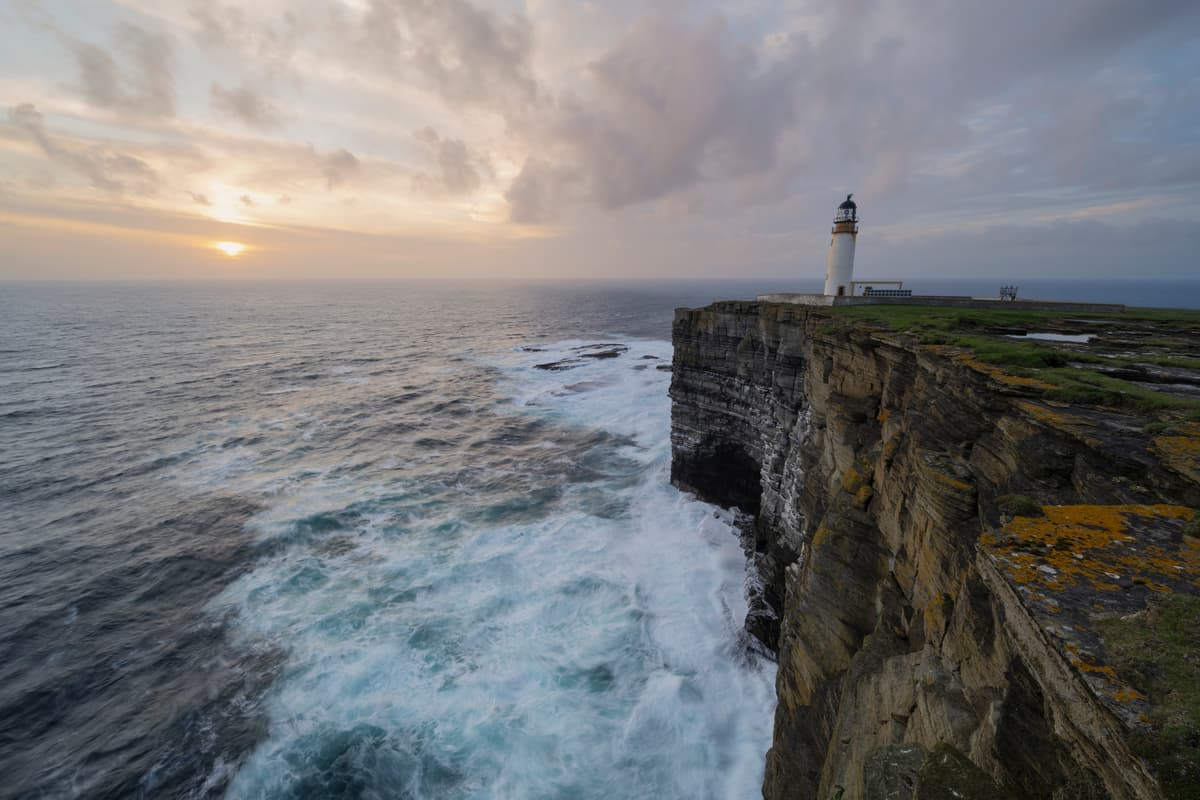
 Clifftop Noup Head lighthouse on Westray in Orkney | Cavan - stock.adobe.com
Elisabeth Hepburn said several people she had worked with “didn’t like it at all” when women became keepers.
Her husband and fellow keeper Robert said one person had told him: “It’s a bad thing tae have women in this service, that’s the downfall o this service, you know.”
But Mrs Hepburn said women had always played a vital supporting role to their lighthouse keeper husbands.
She said: “A lot of women did it. If their husband maybe took ill, or something, the women did it. Way back, they’d have gone out, probably with their shawls on, away up the tower.
“The women just...did what they had to do, until their husbands were recovered. I’m sure that happened many a time.”
Mrs Hepburn performed the role at Killantringan lighthouse near Portpatrick in Dumfries and Galloway, and then at Ailsa Craig.
She said: “It was only for a short period of time I was involved in it, but...I think if it had gone on we’d probably have ended up with quite a lot of women.”
Her husband, who was also a union official, said: “I used to think, throughout the years in the lighthouse, the women were very much underplayed.
“It became very apparent that, you know...being involved with them through the union, it dawned on you just the part that women played.”
 The cover of the book | Birlinn
The couple were among those interviewed by Erin Farley and Martine Robertson between 2012 and 2019 for the Northern Lighthouse Board (NLB) oral history project, which was the basis for the book published by John Donald in association with the Northern Lighthouse Heritage Trust and the European Ethnological Research Centre at the University of Edinburgh.
Ms Farley said the testimonies in the book also exploded some myths about lighthouses.
She said: “The popular image of lighthouse keeping is one man and a light - a very solitary image that you often see in popular culture - [but] it absolutely was not.
"It involved a really tight-knit community centred on individual lighthouses and in which people moved around the coast of Scotland.
“The nature of the job often resulted in a combination of quite extreme closeness with colleagues and their families, and distance from your own family and friends.”
The NLB’s 202 lighthouses in Scotland have been automated since 1998 when Fair Isle South became the last to be de-staffed.
It marked the end of a process over several decades, which some keepers, such as Alistair Henderson being quoted in the book as unsentimental about the role ending.
He said: “The Stevensons would probably - if they had had the technology when they built the lighthouses - have probably built them automatic, without lighthouse keepers. They just complicated things.”