
Remember me
.jpg?crop=3:2,smart&trim=&width=640&quality=65&enable=upscale)
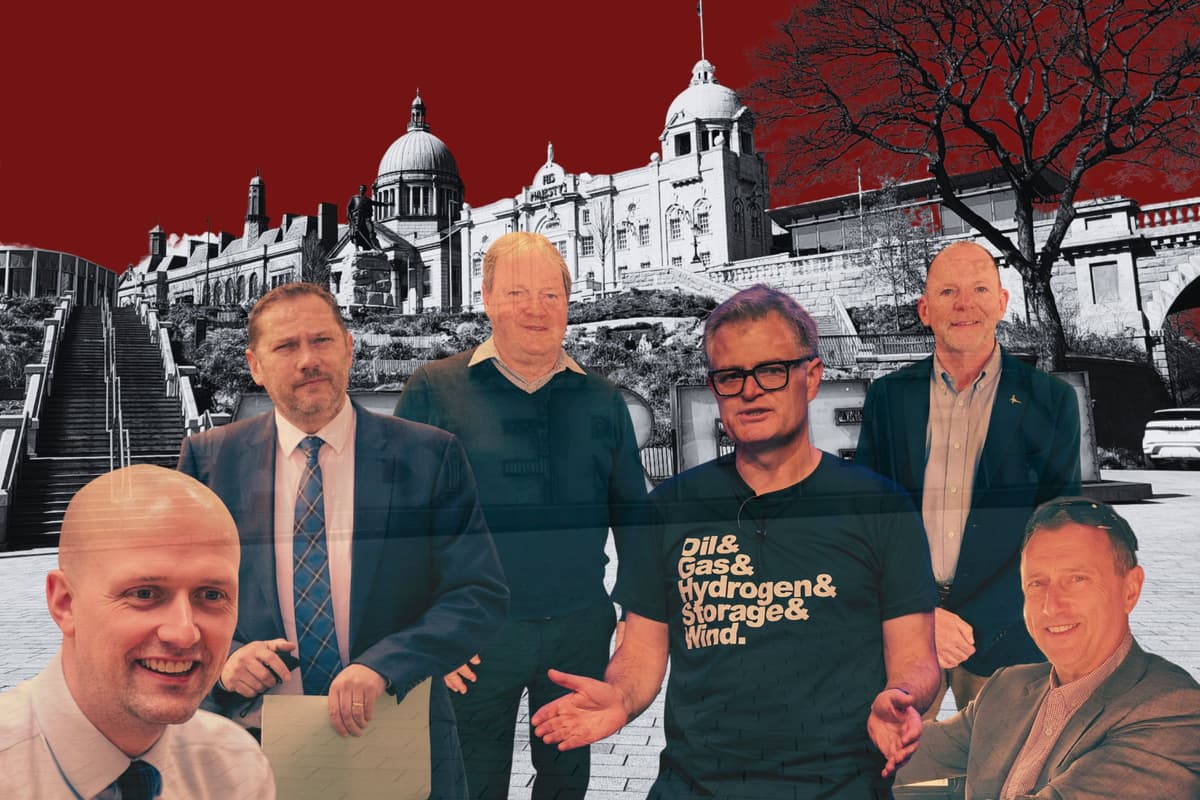
 Scotland on Sunday has been up in the north-east to hear about its hopes for the Holyrood election. | Scotland on Sunday
Aberdeen was one of the few places to stick with the SNP at the 2024 general election.
Fast forward two years, and the nationalists are confident they can hold on to the Granite City and make gains across the north-east. But they are not the only ones with an eye on the oil and gas capital - the Scottish Conservatives and Reform UK are certainly putting in a lot of effort too.
Scotland on Sunday has spent a few days in Aberdeen to find out exactly what is going on in the north-east, and what voters are looking for at the Scottish Parliament election on May 7.
.jpg?crop=3:2,smart&trim=&width=640&quality=65) Scotland on Sunday has been up in the north-east to hear about its hopes for the Holyrood election. | Scotland on Sunday
Scotland on Sunday has been up in the north-east to hear about its hopes for the Holyrood election. | Scotland on SundayWill Scheffler, a researcher at the Diffley Partnership, said: “We have the SNP winning in 95 per cent of our simulations, so there is a reasonably strong showing for them.
“The other 5 per cent of the time, we are looking at the Conservatives of Reform, so it is not impossible that someone else could sneak in, but Aberdeen is looking fairly comfortable for the SNP.”
It is not just the city where the party is polling well - Mr Scheffler says there is around a 65 per cent chance they will win Aberdeenshire West too, an area won by the Scottish Conservatives at the last election.
 Stephen Flynn is the SNP's candidate for Aberdeen Deeside and North Kincardine. | Jane Barlow/Press Association
“I’m feeling really positive,” he told Scotland on Sunday. “Obviously it’s a really big step on a personal level, but I want to secure the support of the people I already represent and be a strong voice for them in the Scottish Parliament.
“There’s a lot of responsibilities which sit within the remit of the Scottish Parliament rather than Westminster so I hope I can contribute to that and be a loud and clear voice for the people of Aberdeen.
“The party is very successful in the city thanks to the work of our predecessors, but Jack Middleton, Jackie Dunbar and I are looking to build on that and hopefully the public will continue to put their faith in us.
“I have been through a fair few elections and we are absolutely taking nothing for granted. We are fighting for every single vote.”
We know Mr Flynn is extremely ambitious, and many are already talking about him being a future First Minister - but he insists his 2026 move to Holyrood is motivated by a desire to serve the people and secure a nationalist majority.
Speaking of Mr Middleton - the former special adviser turned SNP candidate is also feeling positive.
“The campaign’s going well,” he said. “We’re out knocking doors really hard.
 Jack Middleton, the SNP's candidate for Aberdeen Central | Supplied
“The polling indicates things are going really well, but we can’t take our foot off the gas and be complacent.
“A lot of people are pretty angry about the cost of their energy bills and the Labour government’s treatment of the oil and gas industry, when that’s something I’m championing every single day.
“That’s the key issues that are coming up for me.”
He added: “We have a good story to tell and we have a positive vision while the other parties are talking down the area.
“I think the SNP is genuinely on the side of the energy industry, and that’s a huge issue locally.”
The Conservatives are still optimistic about their chances though. In 2021, they won four regional MSPs in the north-east and a constituency MSP and are hoping to replicate this success.
Scotland on Sunday went to visit Douglas Lumsden, the party’s candidate for Aberdeenshire East, in Portlethen to hear about their campaign.
 Douglas Lumsden, the Scottish Conservatives’ candidate for Aberdeenshire East. | Local Library
“It’s been really good, really positive,” he said. “The main issue is people are worried about their jobs because oil and gas is being demonised.
“It doesn’t take much driving about the industrial estates here to see the impact the downturn is having.
“People are angry because both governments aren’t helping - we have a Labour government saying no to new oil and gas licences and the energy profits levy, and the Scottish Government with John Swinney trying to sit on the fence, but there is still a presumption against new oil and gas.
“People are scunnered by how the north-east is being treated.”
He added there are other issues beyond oil and gas that voters in the north-east want to see action on, including fishing, farming, business rates, and accessing the city centre.
So we know what the candidates think - but what about those all-important voters?
Scotland on Sunday spoke to voters out enjoying the rare Aberdeen sunshine in Union Terrace Gardens about what the priorities are for them at this election.
 Union Terrace Gardens, Aberdeen | Rachel Amery/The Scotsman
The Diffley Partnership says the top three issues in the north-east according to their polling is the NHS, the cost-of-living, and immigration.
Surprisingly, oil and gas was not the number one issue voters talked to us about - every single one said the state of Union Street and the wider Aberdeen city centre is the biggest priority for them on May 7.
A good chunk of Union Street is closed for long-term roadworks, and in recent years several retail and hospitality businesses are closed down on Aberdeen’s main high street.
With the downturn in oil and gas meaning less money is flowing through the city, the change over the past decade in Union Street is noticeable.
The other issues that came up were perhaps more predictable - the NHS, oil and gas and the move to renewables, and Scottish independence.
Others said that younger voters in the city are very engaged and switched onto politics, but are often overlooked by those in charge.
There is a lot already happening to try and breathe some new life into Union Street. Several people we spoke to recommended we get in touch with the people at Our Union Street - so we did exactly that.
Our Union Street is a group of volunteers who are working to try and attract businesses to fill the empty units and revamp the public’s impression of the flagship street. They also work on the general upkeep of the street, including weeding and clearing up litter and graffiti.
David McKeith, a director at Our Union Street, said: “We are making a tangible difference to the city centre and we are helping people realise that while a lot still needs to be changed, a lot has already been improved.
 David White and David McKeith from Our Union Street | Rachel Amery/The Scotsman
“When the project first started we had undergone a period of decline with the downturn in oil and gas, and the post-Covid change in shopping habits. People had fallen out of love with the city centre.
“But things are turning around - there were 60 available empty shops at its worst point and now it is down to 24 which by any measure is a success.”
David White, one of the other directors, added: “Business rates are the number one issue - a number of existing businesses are hanging by a thread and they need help to get them through the next 12-18 months to when the roadworks are completed.
“This is the time to be investing in Union Street.”
Scotland on Sunday also joined Aberdeen and Grampian Chamber of Commerce on the Aberdeen Adventurer hop-on hop-off tour bus round the city to hear directly from businesses.
Speaking in the sunshine on the top deck, chief executive Russell Borthwick said: “The Scottish Government needs to trust business to drive economic growth.
 Russell Borthwick, chief executive of Aberdeen and Grampian Chamber of Commerce, on the Aberdeen Adventurer bus | Rachel Amery/The Scotsman
“It feels like the economy has been a secondary consideration for too long now, and although we understand the requirements to fund public services and reduce child poverty, the best way to do that is to allow businesses to do what they’re good at - investing, growing, driving the economy and providing tax revenues to pay for public services.
“Stop making business a bad thing and have economic growth at the heart of the next five years and beyond in Scotland.”
However, it is clear that everything that happens in the north-east is underpinned by what happens in the North Sea.
Scotland on Sunday spoke to OEUK at their Aberdeen offices about what they want to see from the candidates standing for election next month.
David Whitehouse, OEUK’s chief executive, said: “[The government] needs to back our own oil and gas production alongside the build-out of renewables, and supporting our own energy production.
“That also means supporting Scotland’s wider industries - what happens here in the North Sea isn’t just about energy, it has a ripple effect on chemicals, fuels and pharmaceuticals.”
.png?crop=3:2,smart&trim=&width=640&quality=65) David Whitehouse, chief executive of OEUK | Supplied
David Whitehouse, chief executive of OEUK | SuppliedMr Whitehouse says the downturn in the North Sea has knock-on effects that can be felt across Scotland, for example the recent job losses at Grangemouth and Mossmorran.
He said: “It is important to Aberdeen and the north-east, but it should be important for the whole of Scotland.
“It is vital that parties have aspirations to spend more and support vital public services that are underpinned with strong industry, and one of our strongest industries is North Sea oil and gas.”
Mr Whitehouse added: “We’re looking for clear support of industry, workers and the economy, and prioritising that over imports. We need more pragmatism.
“We also want parties to support Scotland’s renewable sector too.
“Anyone at this election who is calling for supporting our own jobs, our own communities, and recognising the importance of our own energy production, will resonate with the public.”
Mr Borthwick from the Chamber added: “The one thing everyone talks about when they say ‘Aberdeen’ is its status as a global energy capital for 50 years, and right now that is torn between threat and opportunity.
 Russell Borthwick, chief executive of Aberdeen and Grampian Chamber of Commerce, outside the Aberdeen Adventurer bus | Rachel Amery/The Scotsman
“We have engineering capability, a supply chain, businesses and resources here to be the place that drives the UK’s energy ambitions, but right now we are asking why is the UK Government policy driving that away and forcing us to import fossil fuel?
“There is £17.5 billion worth of investment right now on the table if we roll our new oil and gas projects in the North Sea, but what is stopping that is the UK Government taxing all activity in the basin at 78 per cent.
“That’s driving investment overseas and companies that have been here for 50 years are following that investment.
“Although it is not in the gift of the Scottish Government, they need to make it clear to their UK colleagues that this is costing Scotland’s economy dear, it’s losing jobs, and as we import oil and gas to keep the country moving, it makes no sense.”
Scotland goes to the polls on May 7.