
Remember me


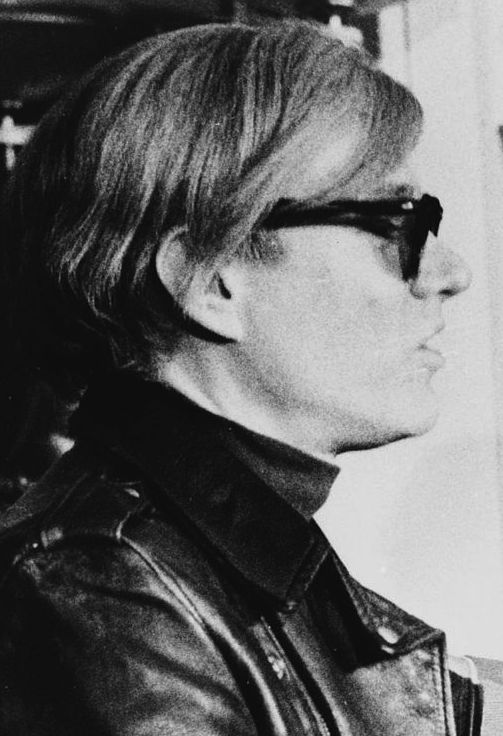

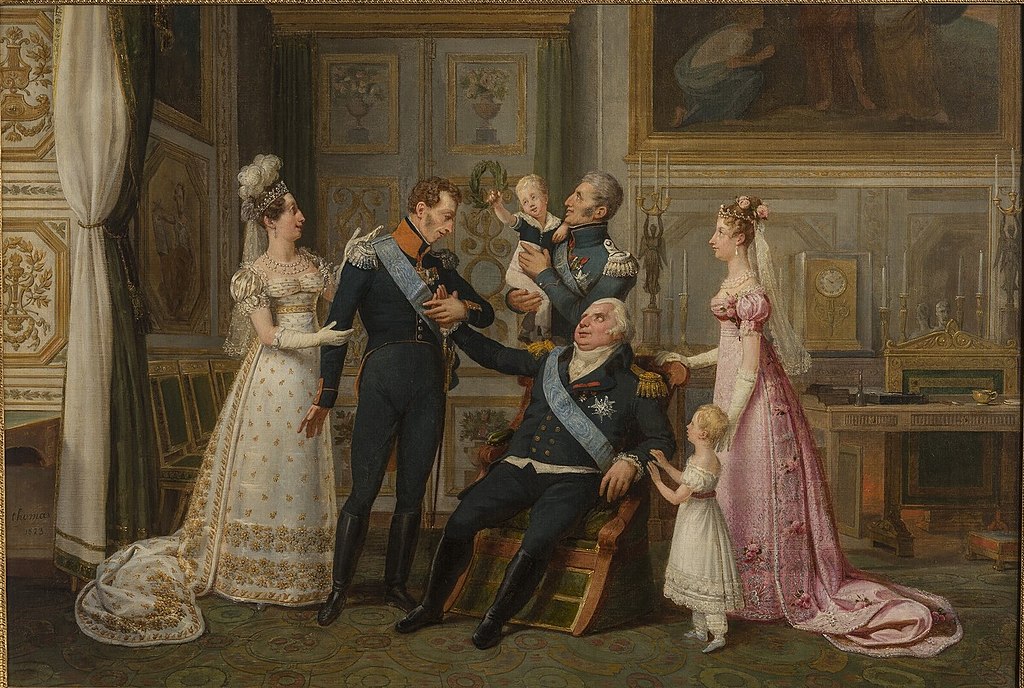

Andy Warhol, 1967. New York World-Telegram and Sun photograph by Ed Palumbo, via Wikimedia Commons. Library of Congress collections, public domain.
“I keep having horrible nightmares that blood is coming out of my mouth,” Candace Bushnell confessed to the dream analyst Lauren Lawrence in the early 2000s. Bushnell’s column Sex and the City was then the basis for one of prime time’s most popular shows. Through her alter ego, Carrie Bradshaw, Bushnell and her lifestyle were adored by millions. Lawrence didn’t interpret that dream in the way you or I might; her reading may have been colored by her own adulation. Terrifying? No: the dream is “hot and gutsy.” The gore pouring out Bushnell’s mouth is a blessing that means her writing is “pure and true” and, happily for her career, its nightly recurrence implies she will “never be drained of her creative juices.” This is all fantastic news but there’s one issue: The dream is obviously a nightmare. Lawrence never addresses Bushnell’s subconscious horror. As far as she’s concerned it might as well not exist.
The dream is one of dozens collected in Lawrence’s 2002 coffee table book, Private Dreams of Public People. There’s a paradox here: once they are mass-published, of course, the dreams are no longer private, but the allure of the exposé is the compilation’s main selling point. Despite its origins in the phantasmagoric, Private Dreams follows a clear format. Each celebrity is placed into a category (“Society Dreamer,” “Beautiful Dreamer,” “Entrepreneurial Dreamer”). Each dream is followed by Lawrence’s analysis. Lawrence, who has a M.A. in psychology, built a career on public dream interpretation, as the dreams columnist for the New York Daily News and on an A&E show called Celebrity Nightmares Decoded.
Lawrence solicited the dream entries directly from stars like Paris Hilton, Kareem Abdul-Jabbar, Lady Lynn Forester de Rothschild, Cyndi Lauper, Kate Moss, and the vice-presidential runner-up Joseph Lieberman. Donald Trump turned her down. (“I don’t have time to sleep let alone dream,” he says in the Declinations section. “I’m too busy building back my empire.”) To these she adds some dream descriptions clipped from Vogue, Elle, and, for Martin Luther King Jr., the History Channel. I was never quite clear on how Lawrence got close enough to America’s A-list to pull the book off, but a late, casual reference, in an analysis of one of her own dreams, to being “driven around town in my Rolls-Royce” and doing “substantive damage to my husband’s American Express card” fills in some of the blanks. In 2002, the list price of Private Dreams—now out of print—was thirty-five dollars, but in the introduction, Lawrence promises something priceless: The book will surpass the “paparazzi phallic lens … intent on mating with the intangible inner being of fame.” It will actually allow us to “get into bed with the celebrity mind and nestle with its glittery, klieg-lit unconsciousness.”
Lawrence’s lurid prose makes clear that this is a fantasy she expects her readers to share. In the early 2000s, she could talk about fame in these flagrantly intimate terms, not as a deranged fan or stan but in a glossy, mass-produced book that invites the public into bed with celebrities with whom she was cozy. In Yukio Mishima’s novella Star, the sex-symbol narrator, exhausted by rabid fans, confesses he’d “much rather have a girl masturbating somewhere to my picture than actually trying to sleep with me.” Private Dreams trades on a similar exhaustion with more face-to-face forms of intimacy. Gay Talese calls the safely parasocial book an actively “pleasurable invasion of privacy,” in a blurb on the back cover.
The photos in the book are pure projections of power and status. Juliette Binoche is the cover girl. She has her eyes closed, her head cocked back, and her hand in her hair. Her lip gloss is so perfect I thought it might rub off on my fingers when I took the book out of its shrink-wrap. I know logically that I must have encountered photos like these before, but I don’t remember them. These artifacts from the early aughts contain no affectation of relatability at all. I can look at them only anthropologically, like engravings of pharaohs on walls. Placing accounts of genuinely odd, vulnerable dreams next to these extremely shiny images produces a strange effect, one that only celebrity can cohere. The interior decorator to the stars Mario Buatta’s 9/11 trauma dreams are printed overleaf a photo of him on a cluttered desk, beaming, surrounded by lush fabric. In his iterant nightmare about another attack on New York, the scene is yet more apocalyptic the second time around: “bombs are going off” and “huge water bugs” swarm the city. “For Buatta,” Lawrence muses, “a world-renowned interior decorator whose livelihood is based on creating beautiful interiors, the destruction of exterior facades is particularly threatening as it is viewed as an assault on the aesthetic sense.”
In a sheer blue cowboy shirt, Madonna cradles a horse’s snout next to descriptions of a nightmare of killing her unborn child. “You have pushed yourself too hard, and the baby’s dead,” Madonna’s doctor says. The psychic camera shifts, and from inside her own womb Madonna watches “the baby detach itself from the placenta and sort of float around in my stomach.” Chris Kattan dreams that his mother has failed to notice her parked car rolling down a mountain with him in it—a metaphor for anxiety of losing the spotlight. Lawrence ends her analysis by promising: “Mr. Kattan, we will never tire of watching.” Chris Kattan’s most recent big role was as the voice of Alligator #1 in the 2023 Netflix film Leo. But as I read her promise, I believed it.
Encountering Private Dreams’s combination of glossy rapacity and utter sincerity, it struck me that these two qualities defined celebrity culture at the time of the book’s release. Then, the veneration of the rich and recognizable occupied a central place in mass culture. A quarter century later, much of the corporate media built on the logic of celebrity worship and terrorization has collapsed or fallen into irrelevance. The public these magazines and tabloids relied on has been algorithmically sliced to ribbons, and fame along with it, parceled out, in tiny fiefdoms, to streamers and influencers. Celebrities often aim for an unmediated relationship with fans, one that generates strategic banality. We might stumble across a freely divulged dream just by scrolling their feeds: their dreams no longer feel so far away. Private Dreams’s central logic is the voyeuristic joy—now no longer guilt-free, no longer good clean fun—of piercing a kind of luster that doesn’t really exist anymore.
Sometimes Lawrence applies conventional wisdom to the dreams she’s analyzing. About Tyson Beckford’s basketball dreams, she notes that “almost all male dreams of putting a ball in a hole usually have sexual significance.” Sometimes the dreams themselves follow convention: George Plimpton’s entry is simply “In my dream fragment there’s going to be some exam or test that I forget about.” You can’t wring much out of that. More often, though, Lawrence pinpoints her analysis to the profession of the dreamer in question, or to what she knows directly about their personal life or character. This gives the book its flashes of real intimacy. The first line of Elvis’s entry reads:
I had this dream that the Presley Brothers were performing. My twin brother Jesse and I were on stage, both wearing white jumpsuits with guitars slung around our shoulders. He was the spitting image of me, except he could sing better.
This was the first I’d heard of Elvis’s stillborn brother. The account is accompanied by a blurred, autographed image of the singer flanked by friends in tan trousers; it feels ghostly. Lawrence’s analysis focuses on Elvis’s “spiritual quest: to become one with a heavenly being in the hope of joining his twin on the other side.” A spiritual quest! I felt I was hiding behind the booth during Elvis’s Catholic confession, that I should close the book. The guitars slung over his and his brother’s shoulders, she argues, are “symbolic wings” that, together with the white jumpsuits, express his desire for “spiritual wisdom and purity,” the juvenility of which feels almost profane. I couldn’t help but see his dream as a tragic wish to return to innocence, something out of the last act of a Mob movie, especially set against the Vegas narcoticism and geriatric masculinity I associate with Elvis in his later years. The dream, the photo, and the analysis somehow combined to produce in me a searingly intimate encounter with one of the most ubiquitous cultural figures of the twentieth century.
The dead make a more glamorous appearance in Andy Warhol’s dream of Marilyn Monroe. She’s been allowed back to earth for a day; they go see a show. He frets because she’s wearing a green metallic dress and it’s a “beauty mistake”—in the theater’s strong lighting, the dress throws “green light all over her skin” (“Marilyn is still in the limelight,” Lawrence points out). Andy presses her for heavenly gossip about the famous deceased. She refuses. Instead, she tells him she’s saving it for a book. Andy is incensed: “I said, Look Marilyn, you’re only here for one day! How can you do a book?” She doesn’t budge. At home, he searches for a mirror to determine his age, so he can figure out what year it is. His phone rings, and he wakes up.
Warhol’s worries about Marilyn having made a “beauty mistake,” even while she’s dead, even while he’s asleep, are pure gold. His subconscious is just like it is in the movies: he has the same strange, tender neuroses, the same clammy vanity. Lawrence sees his search for his reflection as an indicator that his “self-recognition is floundering.” And yet the moment in the dream when Andy is at his most recognizable to me is the very moment he loses sight of who he is—or rather, of who he’s supposed to be. It takes an audience to remind him, if only an audience of one. We never find out if he’s aged or not, which is perfect. He stays a human symbol in a symbolic world, a bundle of artistry and intrusion and anxiety. He stays a celebrity.
Toye Oladinni is a writer from London. His short stories and essays have appeared in Granta, the London Review of Books, The Relegation Reader, and elsewhere.

Comments (0)