
Remember me
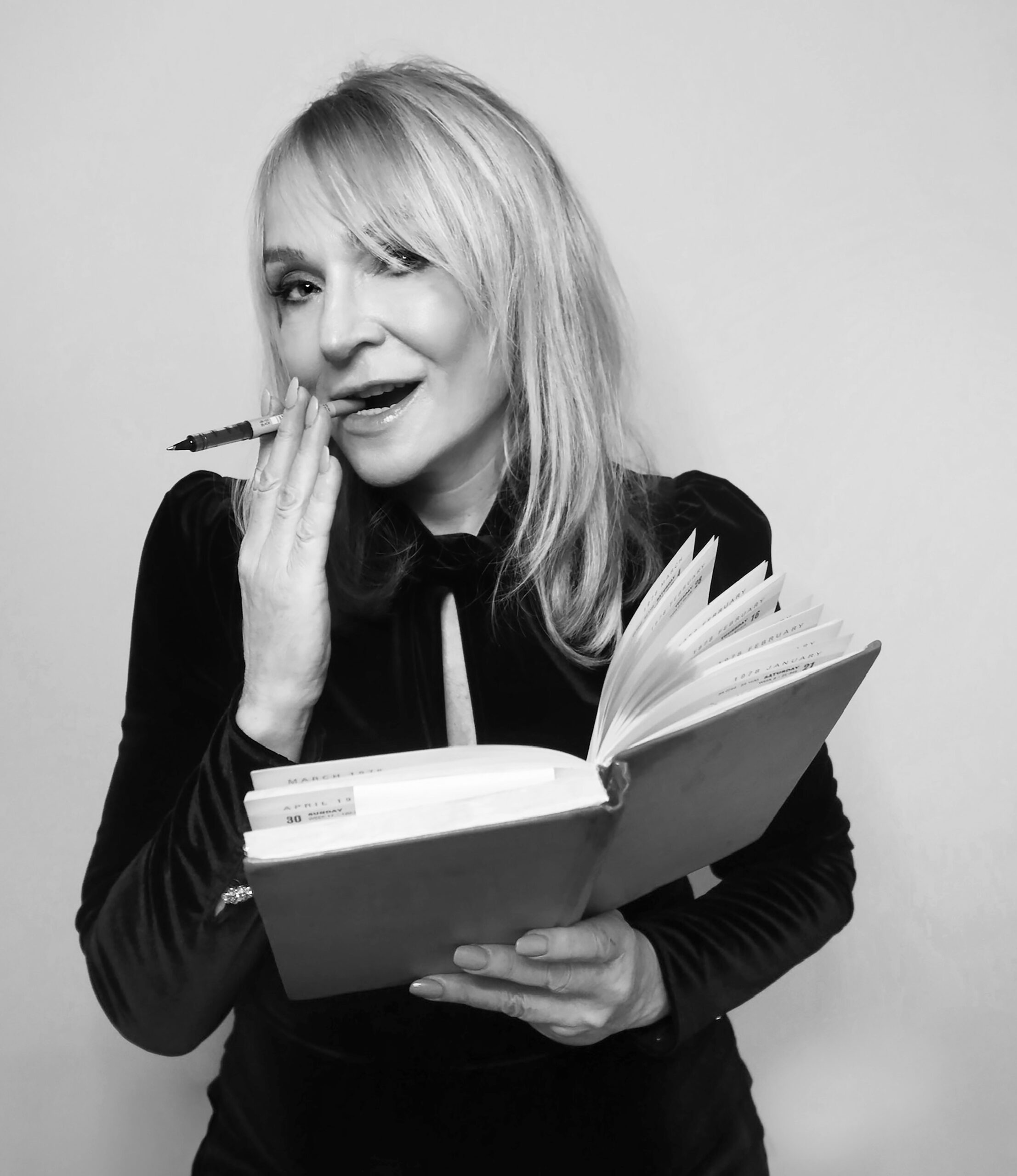
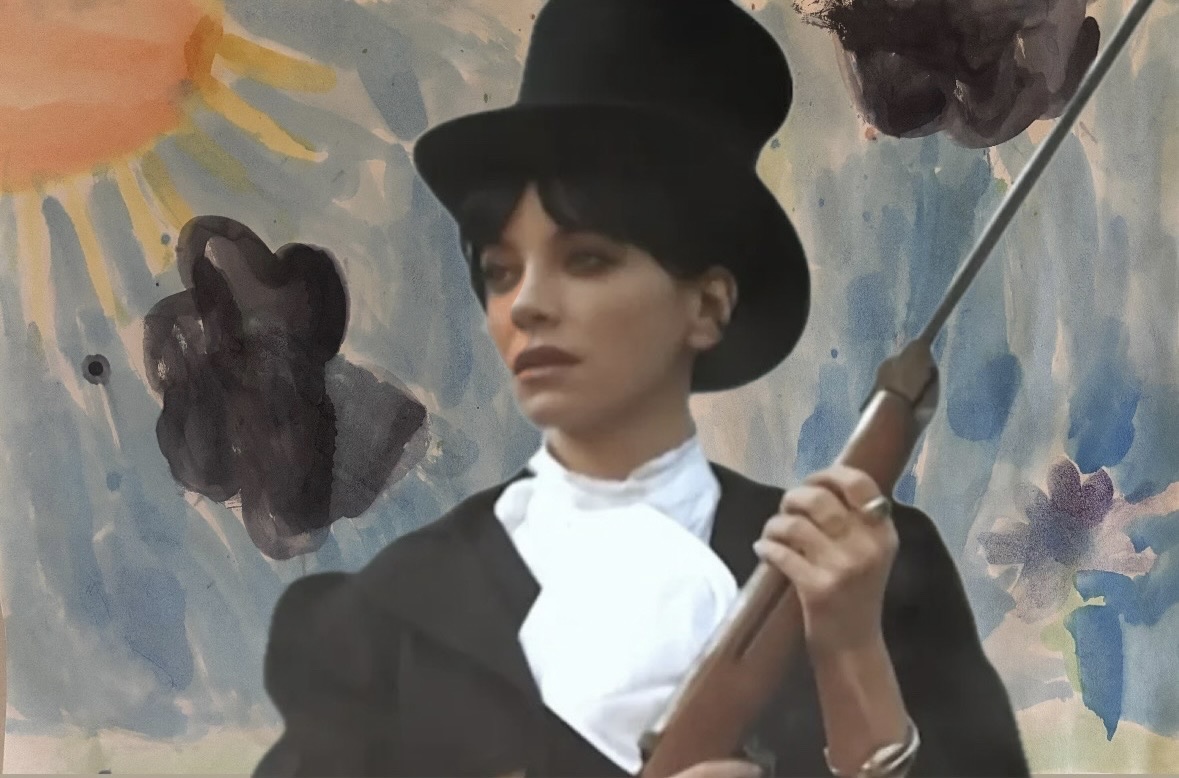

Photograph by Romy Curran.
Bridget Jones made her first appearance in February 1995, complaining amiably about her publishing job and obsessing over her rakish boss in a diary column in London’s Independent newspaper. “Last Tuesday, at the Cheapskate’s Wine Guide launch, weeks of flirtation appeared to climax. When the others were boring on about Stephen Fry […] Daniel moved behind me and murmured, “So … will I see you?” and then, more quietly, “I mean … see you?” – so horny.”
The writer of the column, Helen Fielding, had already published one novel, Cause Celeb, but it was Bridget—a worrier, a charmer, an expert at having a good time—who would make Fielding famous. The diaristic column, published anonymously at first, was a smash hit. Readers responded immediately to Fielding’s vivid portrait of single life in nineties London. Her novel Bridget Jones’s Diary—whose structure and characters were based loosely on those of Pride and Prejudice—was published less than a year after that first column, and Bridget became a kind of generational touchstone, a beloved figurehead and a lightning rod for critique. Fielding, who was thirty-seven, originally from West Yorkshire, and still working at the newspaper, meanwhile became almost as famous as a writer can get.
What is so striking, reading those very first columns thirty years on, is that it’s all there, right from the beginning: the levity and humor, even the influence of Austen. (Even before Fielding named her heroine’s love interest after Mr. Darcy, Bridget was moodily watching the BBC adaptation of Persuasion and concluding that she was Anne Elliot.) We can see Bridget’s combination of self-awareness and obliviousness, her cheerful resignation about the possibility of behaving like an idiot again sometime soon. Her voice is so instantly recognizable that one might forget that she didn’t always exist, that Fielding made her up, one day in the nineties.
I caught up with Fielding about her writing life and the years since those early columns. She has gone on to write four more books—three more Bridget Jones novels and one standalone spy novel—and to work on the wildly popular film adaptations. Over Zoom, we talked about the role Austen has played in her work, her penchant for and methods of social observation, and what it’s like to have an alter ego. She is thoughtful and funny, with a finely tuned sense of the absurd.
INTERVIEWER
Did you always know that you were going to be a writer?
HELEN FIELDING
Words were the thing felt I had a facility with. I knew what to do with them, which I didn’t feel with a lot of other things—cooking, driving, anything practical, I wasn’t very good at. But I always wrote, starting when I was very small. I remember I put the word immobilized in an essay and a teacher at school wrote, “Whose word is this?”—implying that my parents had done my homework. I used to read a lot. Just anything. I liked words and all my family were all very funny, so we were always fooling around and making jokes. I grew up in the industrial north, it was quite sooty and dark. I’d read Jackie Collins and think, Oh, if I was a writer, I could have a swimming pool and be free and not have to go to work and I could go live somewhere hot.
INTERVIEWER
How do you write? Do you write every day?
FIELDING
I will if I’m in full-on mode. With a novel, there are some phases where you’re just thinking and gathering material and then it’ll get a momentum. I tend to do an old-fashioned working day, about ten till six. I don’t work in the evenings, and I don’t work on the weekends, so my mind knows, Okay, it’s time to do the writing now. When you get deep into a novel, into a flow state, it’s really nice and you don’t want to stop doing it. But before you get to that point, it’s harder. I always feel a bit unsettled if I’m not writing regularly—it’s like I haven’t got my handbag or something.
INTERVIEWER
Do you sort of know what a novel is going to be before you start? Or is the gathering of the material what gives it shape?
FIELDING
I don’t write in a linear way. I’m quite disorganized. I use a program called Scrivener, where I keep a lot of files. There’s a lot of social observation to the way I write, so I’ll keep a file of funny things that have happened or funny things people have said, or one called “Envy,” say, which is just looking at that as a sort of trait. And then I’ll say to myself, Look, you’ve really got to stop just mucking around like this and assemble it, see how it’s all landing. And then up it cranks up a notch.
INTERVIEWER
What are some other things you’re storing in your Scrivener files?
FIELDING
Just little moments of social observation. Someone once came up to me in the shop and held up a blue sweater. She said, “Do you think this looks too inky?” I just thought that was such a funny thing to say. What does she mean, “too inky”? How can a blue be too inky? Or a while ago, the government was practicing an emergency alert, so everyone’s phones were set to go off at three. So I just walked past the pub to see what would happen. The answer was—nothing. Everyone was sitting outside the pub and everyone’s phone started blaring. Somebody said, “Oh, the aliens are coming,” and burst out laughing, and then everyone just carried on being in the pub. Things like that, I suppose, I would come home and just jot them down. That’s the way you give the texture to the thing, these sort of mad things that happen.
INTERVIEWER
I’ve been reading your old columns in the Independent. In one of the very first, before Mark Darcy—Bridget Jones’s great love interest—has even appeared, Bridget is watching the BBC adaptation of Persuasion, and she’s thinking about Daniel Cleaver, the cad. She says, “I think I am Anne Elliot anyway. I noticed it was only when someone else was after Anne that Captain Wentworth came running. How can men be so obvious? … Let him think I have gone to Lyme, fallen on my head and am being tended by Dr Rogers. But then wait: Anne Elliot did not play games but was modest, honest and true, and certainly did not sit smoking and smirking at the answerphone.” It seems as if you had an identification with Jane Austen from the very inception of Bridget.
FIELDING
Jane Austen was the first author I read who wrote realistic women. I was probably fifteen when I read Pride and Prejudice. I immediately loved Elizabeth Bennet because she was so sparky and so intelligent and so brave and full of integrity and wit and irony and brio and fun. She was a real feminist, Jane Austen. Everyone thinks of her as a tragic, barren spinster, but she could have married. She turned down someone called Harris Bigg-Wither, not because of his name, but because she just didn’t really fancy him or like him. It would’ve saved her family. But she had the brio to think, I’m not going to do this. I’m not going to marry someone I don’t like, and I am going to hold out. And she knew she was a good writer and she thought she could make a living doing it. She wrote very well about the economic powerlessness of women at that time. Unless they had private means, they just had to wait to be chosen by a man. And their only power was to say no, which she did, and she got Elizabeth Bennet to do that too. I admire the precision of her dialogue and her humor and her characters. There are always little side characters or conversation. Even though she’s ostensibly writing about ladies sitting around doing embroidery, wanting to shoot themselves in the head out of boredom, she’s actually telling you about society at the same time. In one of her letters to her sister, she writes, “Next week shall begin my operations on my hat, on which you know my principal hopes of happiness depend.”
INTERVIEWER
The parallels between the first Bridget Jones novel and Pride and Prejudice are striking. Did you know from the beginning that it would be a framing device, or did that idea come to you as you wrote?
FIELDING
I suppose what happened was that I was writing the column and then the BBC started putting out its adaptation with Colin Firth as Mr. Darcy, and the country was gripped. On Sunday nights, the streets were quiet, everyone was watching it, and everyone was in love with Colin, including me. So I then introduced a character into the columns who was basically Mr. Darcy. The columns then started following the story of Pride and Prejudice. At the same time, I was working on a White Lotus–y novel about cultural divides in the Caribbean—I think it was called “Trouble in Paradise.” It was the second novel I’d written, and the first one had been set in a refugee camp in East Africa, which I often point out if people say Bridget’s a bit silly. I say, “Well, I did write a novel set in a refugee camp, but nobody bought that one. So there you go.” As I got further into doing the columns, my publisher said, over drinks, “Oh, why don’t you do a Bridget book instead?” And I said yes, because I really didn’t like the book I was working on and I did enjoy writing the columns. I hadn’t got a plot, though, so I thought I’d just steal Austen’s. It was a conscious theft, I guess. I don’t think she would’ve minded, and anyway, she was dead. It’s a really, really good plot. You cannot screw that plot up. There have been so many adaptations, Pride and Prejudice this, Pride and Prejudice and Zombies, Mr. Darcy, Vampyre. As long as you stick to what she did, you can’t muck it up.
INTERVIEWER
I loved the bit, in the second novel, when Bridget has been dumped, and her friends bring the video of the BBC Pride and Prejudice to her flat, as if it’s got medicinal properties.
FIELDING
You know, when I was still working as a journalist, the Independent asked me if I’d like to go to Rome to interview Colin Firth. We hadn’t cast him in the film yet—there wasn’t a film at that point, because the novel was quite a slow burn, it wasn’t like it was an overnight success—but he knew about Bridget and about her obsession with Mr. Darcy. So I went and met him in a café in Rome, and we had lunch and we had wine, and then we went to another restaurant and switched characters, so he turned into Mr. Darcy and I turned into Bridget. I’ve got the tape of it somewhere, I must find it. We were laughing so hard. He was trying to talk about Nietzsche, and this film he’d made that was something to do with sphagnum moss, and I just kept bringing it back to the wet shirt in Pride and Prejudice. We were really, really laughing.
INTERVIEWER
When did you realize that Bridget Jones was going to be a big deal?
FIELDING
I realized that the column was funny six weeks into writing it, when my friend Tracy, who was Jude, said, “Have you read this column?” And I said, “Yeah, what do you think?” And she said, “I think it’s really funny.” Then I thought, Oh, okay, it must be funny. Then the paper started to get letters about it. Then people started to talk about it in London, and people were reading it on the tube and waiting for the paper to come out.
So there was quite a bit of fuss about it, but it was only really when the book came out and the paperback went up to like six, five, four, three, two, one in the Sunday Times list that it suddenly became this huge, huge thing. I mean, it was a great thing to happen, but it was also something that I wasn’t prepared for, because I was used to being a journalist rather than the object of journalists’ attention. The classic thing, which has always summarized how messed up it is to become well known, was coming back to my flat one evening and seeing a photographer on a motorbike outside and just thinking, Oh, can’t you leave me alone? This is intolerable. And then I realized it was a pizza delivery man, and I was disappointed. It was always going to be messy—too much attention, too little attention. You’re never going to be all right with your narcissism after something like that has happened.
INTERVIEWER
I was thinking of this bit in the first novel when Natasha, who is the Caroline Bingley figure, says, “I always feel with the Classics people should be made to prove they’ve read the books before they’re allowed to watch the television version.” She says that because she’s a bitch, but there’s also something there about the ownership that people feel over the books they really love. How do you respond when other people feel like they own Bridget Jones?
FIELDING
Well, what happens is that everyone thinks they can write Bridget. Because it’s a franchise now—it’s four films—but what’s the franchise? There are no fast cars or things blowing up or superheroes or wizards. There’s just one woman and her perspective and tone and everyone thinks, Oh, I want to do that, I know how to do it. But it is a very specific point of view, and it is very, very easy for it to be off. It looks easier to write than it is, especially the jokes. I think the jokes usually come from the theme. In the first book I didn’t really know what the theme was, but now I’m a little bit more aware that that is what’s going to make your book work or not work. It’s not the same as the story or the plot, it’s, What is it actually about? Which is, the gap between how she feels she’s supposed to be and how she actually is.
INTERVIEWER
She’s got these plans, all these ideas about how she’s going to manage her life and about how she’s going to be, and each of the diary entries begins with a little list of all the ways she’s trying to control herself. Why do you think the diary form works so well for you? What does it allow you to do as a writer?
FIELDING
It’s good in that it’s quite short—people like to read little chunks. I suppose it’s also about how it allows me to get mixed up with tense, the way I can move between the retrospective tense and the present tense. Because sometimes I’d have her writing and then she’d fall over while she was writing, and then I’d think, Well, wait, how could she still be writing when she’s fallen over? Quite a lot of it is just stream of consciousness. She might write at 2 P.M., “I’m not going to have anything to eat today, I’m on a diet.” 2:05, “Oh, I think I’ll have a bit of ice cream.” Just going through the minutiae. Once, I wrote an entry about why it takes three hours between waking up in the morning and leaving the house, going through what you actually might do in those three hours. To get there, I did just log why I was always late for work and what did happen in that time frame.
INTERVIEWER
One of the great things about the diary form is that there’s often a gulf between what a character thinks is going on and what the reader knows is going on. The same might be true for Bridget—there’s an obliviousness to her in some ways, but she’s also incredibly aware. How did you think about that distance?
FIELDING
I sometimes made her an unreliable narrator. There’s a scene where she’s getting ready to go to the Tarts and Vicars party and she writes something like, “Oh, Daniel was really, really sweet last night and helped me trying on all different outfits and helped me to try on my bunny girl outfit and different ways of wearing it. And it was really sweet of him. I think he really cares about me.” Whereas obviously Mr. Tits Pervert Daniel was just sitting around watching her dress up as a Playboy bunny. When I look back on it now, she was writing in the nineties—it was pre-Me Too. Those people would all have been sacked. Mr. Tits Pervert Daniel, he’d have been canceled. So I did deliberately have her be a bit like Lorelei in Anita Loos’s Gentlemen Prefer Blondes. Lorelei is both knowing and not-knowing, if you know what I mean? That’s the joke. So I’d have fun with that.
INTERVIEWER
How did feminism factor into your thinking about Bridget?
FIELDING
Bridget’s friend Shazzer was the ranting feminist. That allowed me to give those opinions to another character and go really hard on them. There’s a moment when Shazzer goes on and on about all the sociological reasons why women would be single. She does that whole speech in the wine bar, talking about how “spinning wheels and sexual scrapheaps conspire to make you feel stupid, no matter how much time you spend thinking about Joanna Lumley and Susan Sarandon” and then Bridget goes “Shh” and thinks, “After all, there is nothing so unattractive to a man as strident feminism.” That was a joke that I really liked, but I knew it was going to get me into trouble. Camille Paglia really went for it when the book came out. Periodically it rears its head again, like a couple of years ago, when the New York Times did a piece about Bridget not being a feminist. I thought, Really? It’s been twenty-five years. I know what the issues are, but I chose to make them funny rather than write some sort of pompous treatise about it. A sense of humor is quite an intelligent way of processing the world, and it’s easy for people to dismiss that if they don’t have one.
INTERVIEWER
There’s a tendency I’ve seen—and you’ve noted this in previous interviews—for people to conflate your life with Bridget’s life and your views with Bridget’s views. Why do you think that happens? Does it bother you?
FIELDING
When you write a first-person diary, then people are especially going to think it’s you. I was initially kind of horrified, because the very reason for writing the column under a pseudonym was that I thought it was exposing and embarrassing and I didn’t want anyone to know anything about me. I just denied it completely and said, “No, it’s nothing to do with me. I don’t drink, I don’t smoke, and I’m a virgin,” and everyone roared with laughter and just brushed off the question. At the end of my first American tour, I felt like sitting there with a sign around my neck saying, No, I’m not Bridget Jones. But I don’t really know why that was so interesting to everyone, because obviously it was a bit of me, a bit of the world around me, and a bit exaggerated. Now it bothers me less.
INTERVIEWER
Bridget’s been with you for a long time. Has your idea of her changed?
FIELDING
It’s quite a strange thing to have this alter ego, but she’s a nice alter ego to have. She’s imperfect. Having her there lowers the bar a bit generally in life—you don’t expect things to turn out perfectly. It also means that if something goes wrong in my own life, everyone just laughs. In the last film, she’s spinning a lot of plates and she’s always a bit messy around the edges. She will set the spaghetti on fire and be late for school and forget the kids’ snacks. But the thing that matters is that she loves the children just as they are, and that they know that she loves them just as they are. That is the single thing that means that they will be all right. In all the areas where it matters, in the way that she behaves toward other people, the way she is as a friend, as a daughter, as a parent, she’s a very good person. She’s kind, and she’s honest and she’s emotionally intelligent. She’s going to lose focus and get the child stuck up a tree. She’s not really concentrating, but she’s not a fool at all. She’s just human.
INTERVIEWER
The novel you’re working on now is set in the U.S. I think of your novels as being so tied to London and to England. Do you think of them in a similar way?
FIELDING
I actually wrote a lot of them when I lived in in America. I’d always had those dreams of moving somewhere hot. When Bridget Jones became a success, for the price of a two-bedroom flat in London, back then, you could get a house with a swimming pool in the hills in LA, due to the property prices and the exchange rate. So I just did. I gathered the material in England, but it was easier to write at a distance, even just for concentrating, because London is so social and busy and you can’t walk out the door without somebody saying, Oh, hello, do you want to come for coffee? Whereas LA is a famously isolated city and people are just driving around in their cars or in their houses. It does give you those long stretches of time to write in.
INTERVIEWER
Were there things about Bridget that had to be translated or glossed for an American readership?
FIELDING
Funnily enough, the only thing was the “jacket potato.” They changed all the “jacket potatoes” to “baked potatoes.” There were probably much bigger things to think about, but for some reason, that particular editor was very focused on potatoes. But Christopher Hitchens wrote an open letter in the Evening Standard saying, “Don’t take Bridget to America. They won’t get it. They don’t get self-deprecation and irony.” But he was wrong. They did get it.
INTERVIEWER
The first novel in particular is such an artifact of Britain in the mid-nineties. There’s so much about random Tory politicians.
FIELDING
Yeah, and there’s a documentary the BBC made, called Being Bridget Jones, that is very good on the nineties. It was quite a hedonistic time. There was a thing called “ladettes.” Something about Bridget fit in with those times—I suppose, sociologically, there were suddenly many reasons why women would be single in their thirties. There was a whole generation of girls in the city, in London, with their own flats and jobs and cars. If you worked in newspapers, everyone was going to the pub after work, girls included. It was also a time when there were a huge number of first-person columns, so much so that Private Eye, the satirical magazine, ran a column called Hackwatch, and they used to count the number of times the person used the word I or other personal pronouns, to show how self-obsessed they were. I decided that I didn’t want to be in Hackwatch, so I was never going to use personal pronouns at all, which is why I had that style for Bridget, where she hardly ever says I or me. And I never was in Hackwatch.
INTERVIEWER
Do the people close to you feel that they are potential fodder for your novels?
FIELDING
Yes. But my friends are very nice and funny, and they offer things. If it’s a big ask, if I put a huge storyline in, I would ask the person and discuss it with them. And, obviously, make them very, very physically attractive, which is an important thing to do if you use a real person. People come to me a lot with potential Bridget Jones moments, but I’ll still ask, “Can I use it?” They mostly say yeah. Sometimes they say no—usually because they’re a writer and they want to use it themselves. I think there’s an etiquette—you don’t pinch other people’s stuff without asking. Also, I use my friends to read what I’ve written, because I trust them. They know what’s funny and what’s believable. And as soon as you’ve had the success, you can’t really start giving your writing to people in the business, because you’re not going to get an unbiased opinion.
INTERVIEWER
How do you know what’s funny when you’re writing?
FIELDING
Sometimes I write something that just makes me laugh. I love it when that happens. Usually I read back what I’ve written, and often there’s quite a lot of rubbish. I’ll just put the stuff that’s good in bold and keep that, then throw the rest away. Though I try to save what I can. Recently I found another novel I’d written ages ago—I found half of it in a suitcase—and I read it and I thought, Do you know what? I think that’s not bad. I thought it was quite good. So I might go back to that one after the one I’m writing now. I’m never going to have a hit like Bridget again—I mean, that’s just not going to happen—but it doesn’t have to. That was that. Everyone gets to get a turn. And I can just be a writer now.
INTERVIEWER
Did the scrutiny—or does the scrutiny—change the way you write fiction?
FIELDING
I was more worried ten years ago than I am now, because now there’s so much noise, there are so many books, there are so many films, there are so many Instagram accounts and TikToks and Twitter posts. Sometimes a friend can have some massive scandal and I haven’t even heard about it because of all the news … So, I used to feel very self-conscious as a writer in London, but now I think if I brought out a book, not that many people would know about it at all. There’s so much access to so much information that individual things don’t make such a big splash anymore. When I brought out Mad about the Boy, it was on BBC News that Mark Darcy was dead. But now I don’t know how many people even watch BBC News. I feel much more relaxed to just write what I want to write.
INTERVIEWER
Do you feel a desire to give your characters happy endings?
FIELDING
Happy endings are just about a question of the place where you choose to stop the story. In a life, there’s lots of moments when you could say, Stop right there. Virginia Woolf’s Mrs. Ramsay says, “Life stand still here”—this moment is a happy ending right now. But it won’t stay like that. If Jane Austen had written the marriage of Mr. Darcy and Elizabeth, who knows what that would’ve been like? I mean, he’s pretty grumpy and moody.
INTERVIEWER
How do you know when to stop your books?
FIELDING
Usually because they’re saying, “Helen, the deadline was four weeks ago, and it’s supposed to be being printed.” But really, I think you can faff around too much. It’s like when someone does up a house—there comes a moment when you’ve got to stop thinking, What about this? What about that?
INTERVIEWER
The last thing I wanted to ask you—in your first column ever, Bridget spends a bit of time brooding on the Cones Hotline. “On top of everything, I open the papers to find the bloody Cones Hotline is being scrapped. Who else am I supposed to ring up late at night when I feel lonely? … In my experience there is always some bored chap at the end of it at any hour of the day or night, only too happy to moan a little about people ringing up at 2am to order a 99 or Cornetto (“I know, I know”) then move on to your own problems.” What is the Cones Hotline? What was the Cones Hotline?
FIELDING
It was a mad thing. I was working on the news desk or the political desk, so I was very conscious of news stories. There was a random little news story about how there was a lot of roadwork on the M1 or something, and there were traffic cones and everyone was getting cross about the traffic cones. They set up this Cones Hotline, so that you could call up and complain if the traffic cones had fallen over. It was a classic mad idea, one that obviously was not going to work. There were not going to be enough people to man the Cones Hotline and to pick up the cones. It was one of those ideas that just makes you think, what? I thought that was a great story to put in the column—oh, she’s so lonely she’s going to call it the Cones Hotline. Oh no, the Cones Hotline has been closed down, so I can’t even call them.
Rosa Lyster is a writer who lives in London.
Comments (0)