
Remember me
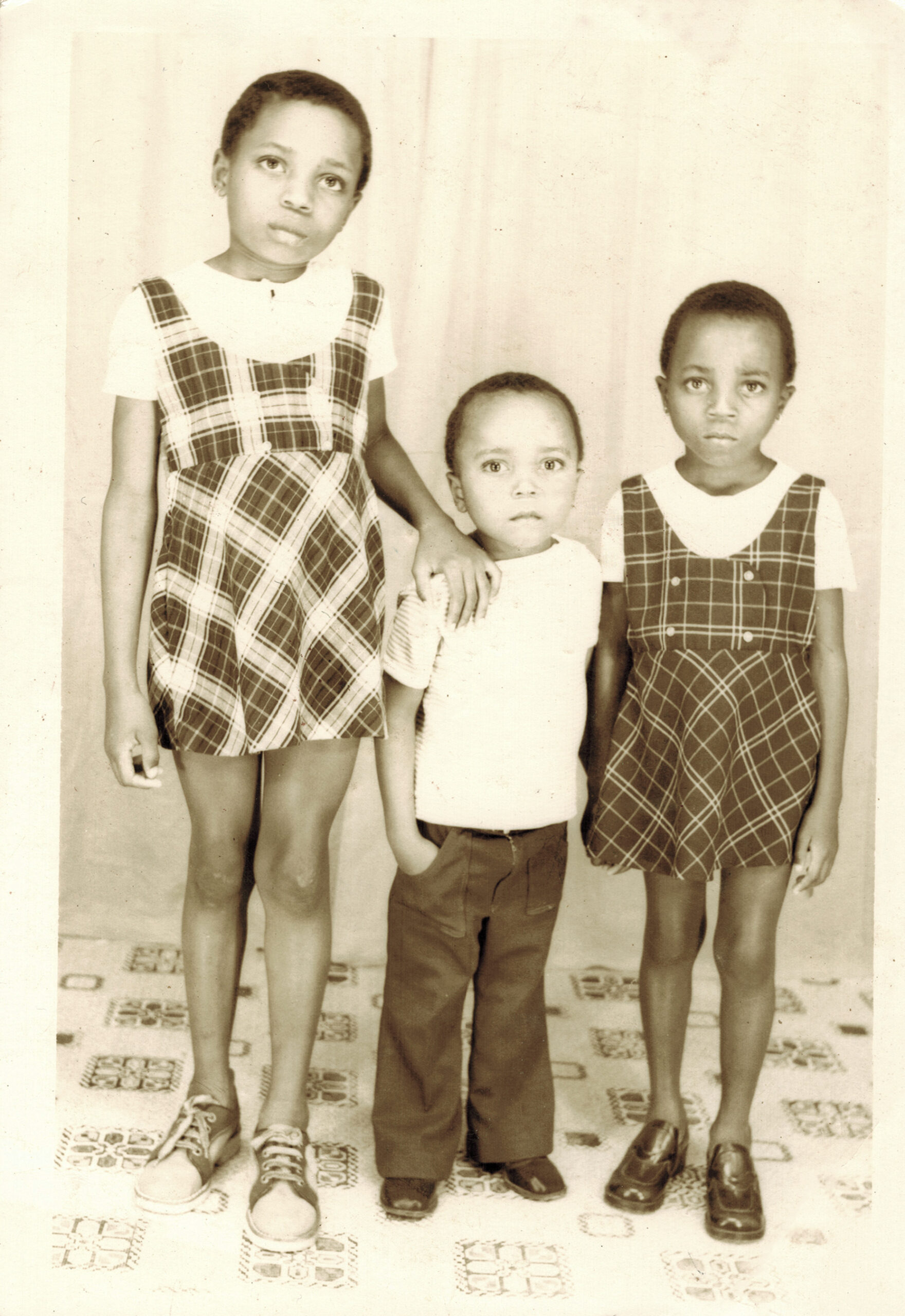

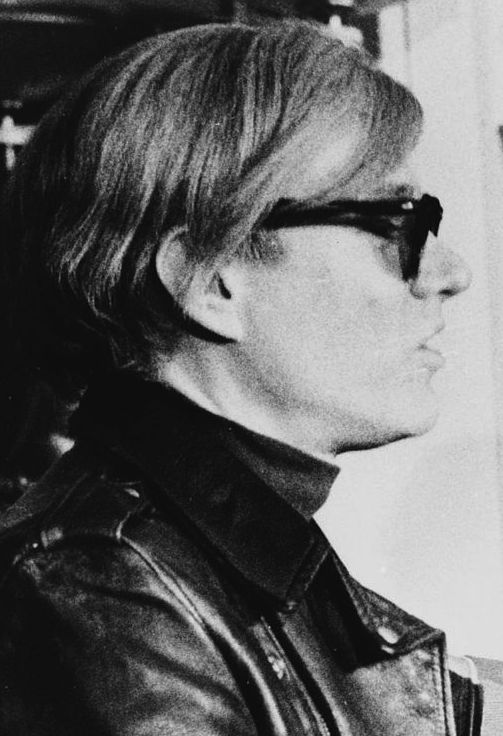
Each month, we comb through dozens of soon-to-be-published books, for ideas and good writing for the Review’s site. Often we’re struck by particular paragraphs or sentences from the galleys that stack up on our desks and spill over onto our shelves. We sometimes share them with each other on Slack, and we thought, for a change, that we might share them with you. Here are some we found this month.
—Sophie Haigney, web editor, and Olivia Kan-Sperling, associate editor
From Olga Tokarczuk’s House of Day, House of Night (newly reissued by Riverhead), translated from the Polish by Antonia Lloyd-Jones:
He was often prone to falling into a mindless state, staring at the world in front of him as if it were a picture. Down below, people walked along the asphalt road, herding cows; dogs were running, a man burst into sudden laughter, little bells tinkled on the sheep’s necks, skin itched, higher up a man carried a hare he’d poached, he waved to someone, smoke from the chimneys drifted into the sky and birds flew to the west. This picture goes on forever; it seems to be eternal. It’s a scene that people happen to, rather than it happening to people.
On the afternoon of New Year’s Eve this young border guard, with a face as ruddy and glowing as a Bath bun, was riding his huge motorbike slowly through the snow.
From Djaimilia Pereira de Almeida’s Three Stories of Forgetting (Farrar, Straus, and Giroux), translated from the Portuguese by Alison Entrekin:
He walked anonymously through the village of yesteryear. There was no greater consolation than to be nobody where he had been somebody. To call the houses he had called his own someone else’s. To see once more with old eyes shops, chimneys, barges, fishwives. No one came to shop doors to watch him go past. It wasn’t hatred or indifference. The faces on the quay announced another century, one that would never be his. What would the eyebrows, the eyelashes of the twentieth century look like? He wished he could see them. But like this: as a ghost who didn’t scare anyone and wasn’t interested in anything, on a scentless walk through the future.
From Peter Handke’s The Ballad of the Last Guest (Farrar, Straus, and Giroux), translated from the German by Krishna Winston:
The bus had long since turned off the highway into the agglomeration. Without warning it kept turning, turn after turn. Yet it seemed as if after every third turn the street was heading out into the countryside again, toward the distant horizons, or, on the contrary, approaching something resembling the center, or one of the centers. Nothing of the sort, however: instead, each time, it ended up on a periphery, never the same one, but also not an off-putting or even hostile one, but rather, perhaps also because of the quite gentle turns, an (almost) friendly one, at least at first glance, an (almost) welcoming one. And it was striking that each of the many high-rise buildings stood all by itself, as did the next one, a lance-throw away, in the “middle ground” by reference to the one in the foreground—in accord (almost) with the rhythm of all the high-rises in the agglomeration—high-rises that at first sight stood “out in the open,” to paraphrase the expression used by a poet to describe a far less tall building from a previous century. It made sense that in this New Town, which spread across the landscape rather than completely filling it, the horizontal lines that crossed one another and headed off in different directions, at least those in the background, seemed to be welcoming him, the stranger, or the one who’d become a stranger here, in the form of mobile tangents—local trains, streetcars, even Metro cars as they traversed their aboveground stretches on elevated tracks, all speeding along inaudibly yet uninterruptedly, to connect the most distant housing clusters to civilization.
From Christian Schlegel’s The Blackbird, a collection of poetry forthcoming from Beautiful Days Press:
i’m a schoolteacher would anyone like to
volunteer what they watch on youtube when they’re tired? lex fridman
ok who is that you don’t know who lex fridman is? he
works at mit he’s a robotics influencer an ai engineer ok what
does he talk about in his videos he interviews smart people
cool what else do we watch on our phones that’s substantial
south park clips good ok so i watch žižek talks on
youtube not to flex i also watch chiropractic videos but that’s a
different piece so i was watching this žižek clip the other day and he was giving a
talk at google where they used to bring in philosophers to lecture before the crash
and he was talking about donald rumsfeld’s categories of things that were
known or unknown during the iraq war rumsfeld infamously gives
this press conference in the early days of the second iraq war where he’s trying to
describe the difficulties that american intelligence operatives such as they were
had making sense of “facts on the ground” amid the “fog
of war” so rumsfeld says look there are three types of knowledge this from
žižek things we know we know so hussein is in charge of iraq we know it
we know we know it there are things we know we don’t know
we don’t know how many wmds there are in iraq but we know that they’re
there we just don’t know how many in what way then there
are things we don’t know that we don’t know and that’s the really scary thing for
rumsfeld and that was used as a pretext for all the terrible things that were done
but additionally there are as žižek points out those things we don’t know
that we know and that’s what i’m going to talk about today
the things we don’t know that we know
From Joe Brainard’s The Complete C Comics (reissued by New York Review Books), with contributions from John Ashbery, Frank O’Hara, Kenneth Koch, Ted Berrigan, Barbara Guest, and others:

From Tarpley Hitt’s Barbieland: The Unauthorized History (Simon & Schuster):
The sculptors had to consider what a boy Barbie might mean. Ken was to be the first new character in the Barbie universe, and so his design raised questions about the norms of that world. Would they build his persona from scratch, or would they try to follow the same formal rules as the original doll? One of Barbie’s distinguishing features, like Lilli’s, was her anatomy. She was not the first “adult” doll, but she was blunter about her age. Any kid could pull down her shirt to find two tremendous emblems of adulthood. Ruth figured Ken should have some too. He needed some suggestion of “the male organs,” she said. “I was ahead of my time in that respect. I did want them.”
Comments (0)