
Remember me
In issue no. 253, we published an excerpt of Eileen Myles’s “Bird Watching,” a poem written in 1978 and unpublished until now. In this essay, Myles reflects on the time when they wrote it—alongside drinking and dancing and falling in love in New York. “It was a movie for sure,” they write.
I think Chelsea Girls is me teaching myself to be a novelist and Bird Watching [and Their First Three Books of Poetry] is me teaching myself to be a poet. Poets have the same rights as all other humans, but each of us in our own exact way has made that be our business. Possibly even being the lawyer of it. Constructing reality inch by inch in language. Making a new space I believe. All poetry is hyperbole. That can’t possibly be true, but it is.
Excepting “Bird Watching,” which I think is the main heave of this volume, the three books here are sort of young me taking my measure, figuring out what I’ve got. This is so different from a selected, because it’s not so much about what matters but what I did. And across it all the person is variously asserting their gender and the blurriness of that enterprise (I’m heartened to see that in my twenties I really didn’t feel I fit in this or that gender. Or sexuality). And gender and genre are linked as always, because despite these being my first public assertions of being a poet, the person making them would often have preferred to be a journalist (wanting to be seen in the world rather than in language) and so the direction of some of the poems’ content feels like I was trying to have it both ways. I mean talking to some imaginary everybody, being fun and broad like the village voice. I even wrote for them a while. And then there’s the self that camped out entirely in feminism, even lesbian feminism, making tons of statements (which embarrassed me and I didn’t include in my selected) sounding to me by now (except for the part about shooting the pope) like a middle-aged man. I was trying to sound like the world or how a lesbian like me sounded in it but the result was some horny geezer, a guy being open about his lust for chicks—yet I was one.
I knew that was wrong but I didn’t know what I meant, or how to be, or, again, who I was at all. What was an Eileen Myles? I did kind of think I was a man ’cause then I really believed, like Donald Trump does today, that there were only two choices. In that spirit I heartily submitted the poem “Misogyny” to the first feminist anthology in my neighborhood and when they rejected me I was so pissed.
By the time I was done writing and publishing these books it had all gotten simpler. I wanted only to be a poet, yes having shit jobs and exactly once the painful pseudo-professional job you’ll hear about in “Bird Watching,” but making poetry was the only thing true, and nothing else wanted me at all so it worked.
I was embarrassed at twenty-eight that I didn’t yet have a book of poetry and then Jim Brodey offered to do a mimeograph book that would be run off on the machine in the office of St. Mark’s Church. St. Mark’s was my Iowa, my Max’s, my dating app, my library, so now it was my publisher too, or printer I guess. I had to do the work, of course, so I typed the poems (this is Irony of the Leash) on these big green stencils that were slapped onto a Gestetner duplicating machine and then a bunch of poets gathered in the parish hall downstairs and collated my book. Though it was supposed to be 200 copies, it was more like 163. And the extra pages wound up being what I typed “Bird Watching” on. You can see it now in my archive at Yale. They dutifully scanned front and back so Skuppy the Sailor Dog is on parade between the pages of the poem.
Jim got some famous rock photographer to take pictures of us (it was a series) for the covers. He lost the roll of negatives, so in the eleventh hour Steve Levine drew a cover, which I love ’cause it looks like an obsessive high school notebook. The whole thing was an act of friendship, which honestly my publishing history has never ceased being, but what I want to say is that this first book was kind of bodily, meaning I wrote the poems by hand, created a physical manuscript out of those gorgeous poems by typing them loudly on a manual typewriter, handing that to Jim and him essentially handing it back and me typing it again onto the stencils, and now Fonograf has retyped it into a Google Doc and I’ve done a lot of the proofing of this entire manuscript—I’m riding the corrections like a heartbeat because essentially they are. It beats like this not that. The night I wrote The Irony of the Leash I was on the phone with Susie Timmons, we had a great conversation, both of us lying on our beds with hangovers, and I had this strong sure feeling when I got off the phone so I started writing on my legal pad and when I was done I remember that particular feeling I’d maybe only had once before, that I nailed it.
I think poetry is a positive outcome of friendship. I’d call that a fact. It was very true that night and the poem proved it. When I was assembling the manuscript I was maybe a year out of workshops and workshops definitely expanded my sense of the kinds of poems you could write, that I could write, and that somebody else’s idea and somebody else’s forms weren’t necessarily fake.
I remember how important it was to be not fake then, but then I began to have a wider idea of what poetry was and what I was. It was just a romp and I really didn’t know and I could bring all my seriousness to it. But Irony was a Whitman’s Sampler, which is a mixed box of chocolate and this is what I could do and I put my best poem to end it.
Barbara Barg and Joel Chassler (and Rose Lesniak) had a loft on Twenty-Seventh Street and they ran Skeezo out of there, and I was overjoyed when they told me they wanted to do my book and I’m pretty sure it already existed. I called it A Fresh Young Voice From the Plains and it was kind of a Louise Glück joke. She and I almost met several times. She always wanted to have coffee and then she’d break the date. I took it to mean she liked my work but she wasn’t sure about me, which was smart. But she was the serious young poet when I first came around and I couldn’t quite get the thing about the Midwest, why did people go to school there, why were they always talking about their voices, it was so corny, and then Louise Glück stood there in a white shirt so I thought I’d do it too. People told me they thought I was doing Patti Smith but no, that wouldn’t even be funny. I don’t think anybody got the joke. I was between cultures still. Meaning I came from Boston, I was just outside somehow. So I was still making stuff up from a jokey position. It’s weird that the one time I was on the National Book Award panel, Louise Glück won. I had my own candidate, but I told people, and there’s a whole snakey thing about panels where when people want something they keep their mouth shut and then spring it at the end. They learn it in department meetings. I am so interested in silence. I unwittingly gave them all these opportunities to shut me down, to critique Fred or Fanny, meanwhile their cards were so close to their chest. It was actually the first book of hers I ever read. I thought the feel of the language was pretty good but the book wasn’t successful. But the other judges were feeling like it was a lifetime achievement award. “Louise!” they all cried. “She has never gotten a National Book Award before!”
I do wish we’d met. I think we would have enjoyed each other in our otherness. But this book (mine, Fresh) was intended to show all the different ways you can do autobiography. That was my interest. Some of the poems are diary-ish, dreams, accounts, riffing on the names in my family, even mapping out my neighborhood. In my first years in New York I was still pretty obsessed by and attached to my family and hoped to explain myself to them, wanting them to be impressed by my writing, and Boston was really the only place I had to go—to get out of New York.
Meanwhile I was trying to be tough and wanted to say I had come from someplace tough. Which I guess was relatively true. So when I read these poems I feel like I’m watching someone shuttling from being vulnerable and then leading with their hide. I call someone “immigranty-looking” when I meant they look like my Polish family if they were sad and broke and possibly homeless. I spout a racial epithet about someone in my neighborhood not because I said that but because they, it, my neighborhood said that. I was being deliberately gross (or racist) to show what it was like. I read a book years ago about Irish farmers playing dumb as a way of protecting themselves, of being coy. I’m not saying this so much in self-defense but that I understand the mechanism intimately by which vulnerable (underclass) people hold their cards close to their chest (to not play them) and politicians espouse offensive beliefs not because they believe them but because they think you probably do (because you are poor, because you are stupid, because you are hurting) and a lot of yous together will make them strong. It’s like weaponizing the statue of liberty. She’s standing in the water, going fuck you.
Today I ask my younger self if I am posturing as a dumb farmer (or a kid) or a devious politician when I call Billy Matheson a “c___.”
I showed the poem to a friend of a friend who is Asian and she recollected the pain of how the word had been used against her by a high school teacher whose intent was simply to be cruel.
Whether I meant it or not the effect is the same, so I’ve included the poem here and deleted much of the word. If anything is fake in that book, that word was. In some explanatory way, I was a liar.
When Fresh came out I went around to bookstores asking if they’d carry a few. Oscar Wilde was a sweet little bookstore on Gay Street. “Let us read it and we’ll get back to you,” they said. “It’s not gay enough,” they told me a week later.
Sappho’s Boat was a number of things. The drawing on the cover was my illustration of a finger dipped in running water or the path of a boat. But the swirl fattens once in a while ’cause I had read Hugh Kenner’s essay on Pound and Sappho and he explained the way we leave things in in poetry, and explains when we take it out as this kind of rhythmic process that related to how we’ve lost large passages of Sappho in time and how every era deals with those absences differently, and I was making a kind of move, a gesture that got heavy once in a while (while the boat or the poem moved) ’cause that’s where the words were. It was lumpy. You leaned on it. You couldn’t use all of them. That’s our beautiful idea.
I had just come out (it did mean debutante, I believe) and the book was full of love poems and I meant it to be lesbian as hell. And it was. By then the bookstore was closed. Throughout my career I have been answering questions that no longer count and that’s my progress. Those two books, Sappho’s Boat and A Fresh Young Voice from the Plains, came out very close together though they were assembled several years apart. It was exciting to be asked for one book and then another one. I was on my way. Sappho was published by Dennis. One poem, “My Rampant Muse, for Her,” was a love poem to her, of course, but also to Robert Creeley’s great book For Love that we were all crazy about and Edward Fitzgerald, who did a well-known translation of Omar Khayyam. It’s in both books. Chassler asked me for an extra poem for Fresh for some reason and I grudgingly gave it, forgetting it was already in Sappho. I knew the book was perfect without it and it was and now it has an extra wheel. Okay.
It’s also worth telling (explaining the Edward Fitzgerald) that Michael Lally had these freelance gigs he handed out to all the poets in which we wrote pamphlets to be slipped into the pockets of leather-bound editions of the classics for people who wanted to own these books but not read them. I first got Hart Crane, which blew my mind, and next Edward Fitzgerald, who figured even more in “Bird Watching.” I contrived to make a relatively well-paying freelance gig a very low-paying job by getting so deeply into the writers whose work I was condensing that I took months (mainly researching) and also had considerable writer’s block, but the payoff was how those texts bled into my poetry. Poetry is always like the game of hearts or any bidding game where you get none of the points, and thus wind up going to heaven. We don’t know where Louise Glück is now.
It really felt like years for those books to come out. And my desperation was huge during that time because of my disposition, which varied from gleeful to really dark depending on what drugs I was using, whether I was drinking a lot, if I had any money or if I was in love and how was that was going. I was convinced I would die before the books came out. That was the end of my twenties.
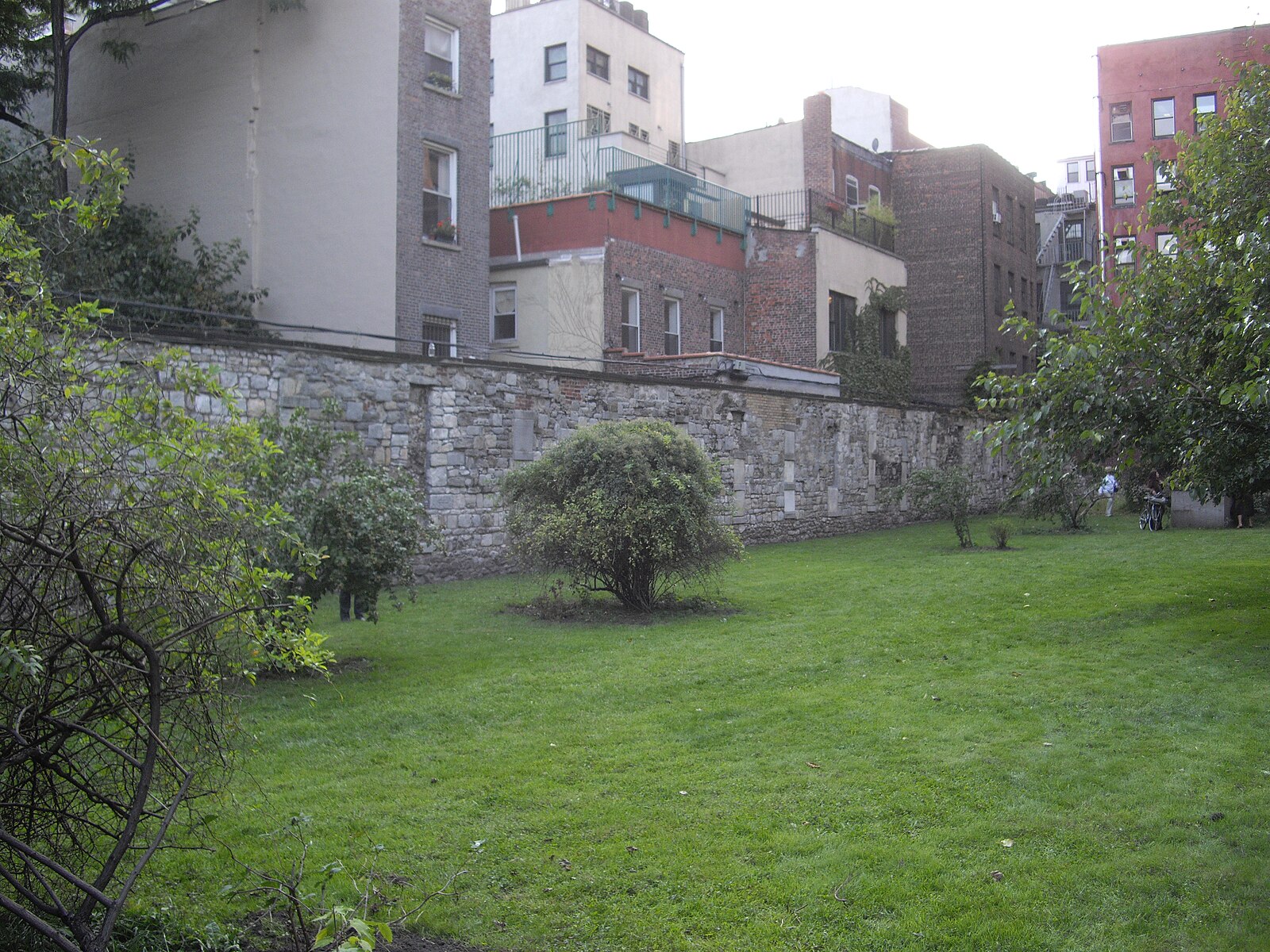
A lot of the poems in the first three books had already been written when I sat down to write “Bird Watching.” But that’s not entirely true. “Bird Watching” kind of came first. I knew we were supposed to write long poems and I rejected that. I wanted to write a novel. But the Philip Whalen idea of writing a poem over a period of time, his “Monday in the Evening,” seemed perfect to me. Bigger, bigger, to be living in a drawing. It had been one year in my new apartment, I had fallen in love with a girl and it didn’t go well. I felt stupendous. I mean, I had this whole apartment on East Third Street that faced the cemetery between Second and Third. and it had a marvelous out-of-time feeling because of how old it was, how present the birds were, how excited and confused I was about who I loved and how I loved, and it all felt like a performance inside and out, how I staged my dilemma and myself. Really the work that this poem most reminds me of is not a poem at all but Chantal Ackerman’s Je tu il elle. It was a practice as much as it was a movie, it was entirely staged, and I think we made these pieces at about the same age, deep Saturn return, deep dyke, deep poet in my case really beginning the show but in the thick of it.
The first date I can find in it is general, it’s a Thursday in June and it’s 1978, which has been a standing joke with a few friends of mine—1978, the last good year. Reagan hadn’t been elected, New York was still a mess, punk was live, poetry was free, and I was sleeping with men and women, taking a lot of drugs, and I couldn’t believe my life. It was a movie for sure. Somebody’s always on the verge of making a film of Chelsea Girls but they ought to make this, or at least read it, ’cause it has the stink of the time in its awkwardness and painful optimism, a mess but also one big fucking wish. To be great, to be great now, to be naked, to be art. To fuck everyone and fuck yourself good. If there’s such a thing as a documentary poem, this is it. The poet in this poem is shocked and delighted when she (I can’t apply they to this Eileen, though it’s just as accurate then as now, but I think pronouns are a lot about knowing and choosing and I honestly didn’t do either yet), I, had a whole lot of unreconcilable influences and I just was, and stumbling a lot, I just ran with it. It was a disco moment too. There were Sylvester songs pouring all night between buildings:
“I Love America” was one, and “You Make Me Feel Real.”
The peacock crescendos of his ecstatically careening voice made a sound portrait of the buildings, backyards and people smoking and drinking and dancing in a casual, obscenely easy, immediate way. Dance was what you did. That was New York, an old funky place and a new place to me. It’s hard to explain the feeling of a piece of paper idly sitting in a manual typewriter, on a desk, in the middle of a room, typed on occasionally, peppered with words; fling the carriage back and it lands over there, and continue, every few days popping in a new sheet, probably for a week at a time going silent, altogether for about two months.
And it becomes your life. A copy, or is it. The vulnerable page, your skin is owning the next little heartbreak or adventure and it was there at the center of a universe of sounds: doors slamming in the building, feet going downstairs, the light tapping of the keys and always the birds and the cars heading up First Ave., not so far away. It would never have occurred to me to know what kind of birds they were. The whole situation was recording itself, I was invariably alone. Someone would come over, they’d leave, the typewriter with a fresh or nearly full sheet sat there, unashamed. That was what I was doing with my life, today. It’s so funny to be “riding the corrections like a heartbeat” (now, tormenting my publisher, Jeff), because everything I did then was entirely random.
Space was important, lots of it on the page, and the page was the day, the pure openness of it. No matter how badly I felt on any given day or even what I thought of the poem, I was glad to share in it, the past present futurity of it felt like everything I’d ever do. Every poem I would write, every film I would make or be in, every girl I’d ever love, the heaviness of the distant Myleses sitting in Arlington, judging me and loving me in my head, every bit of it all was already there, so I just had to play with it and I felt total freedom. It was liquid just to be in it. I don’t know. I think poems, a poem, this poem, are a certain container of time, like a big shirt, and I sat in it because I could and I laughed.
Eileen Myles is a poet, novelist, and arts journalist. Bird Watching and Their First Three Books of Poetry will be published by Fonograf Editions in April. This essay will appear in that edition.
Comments (0)