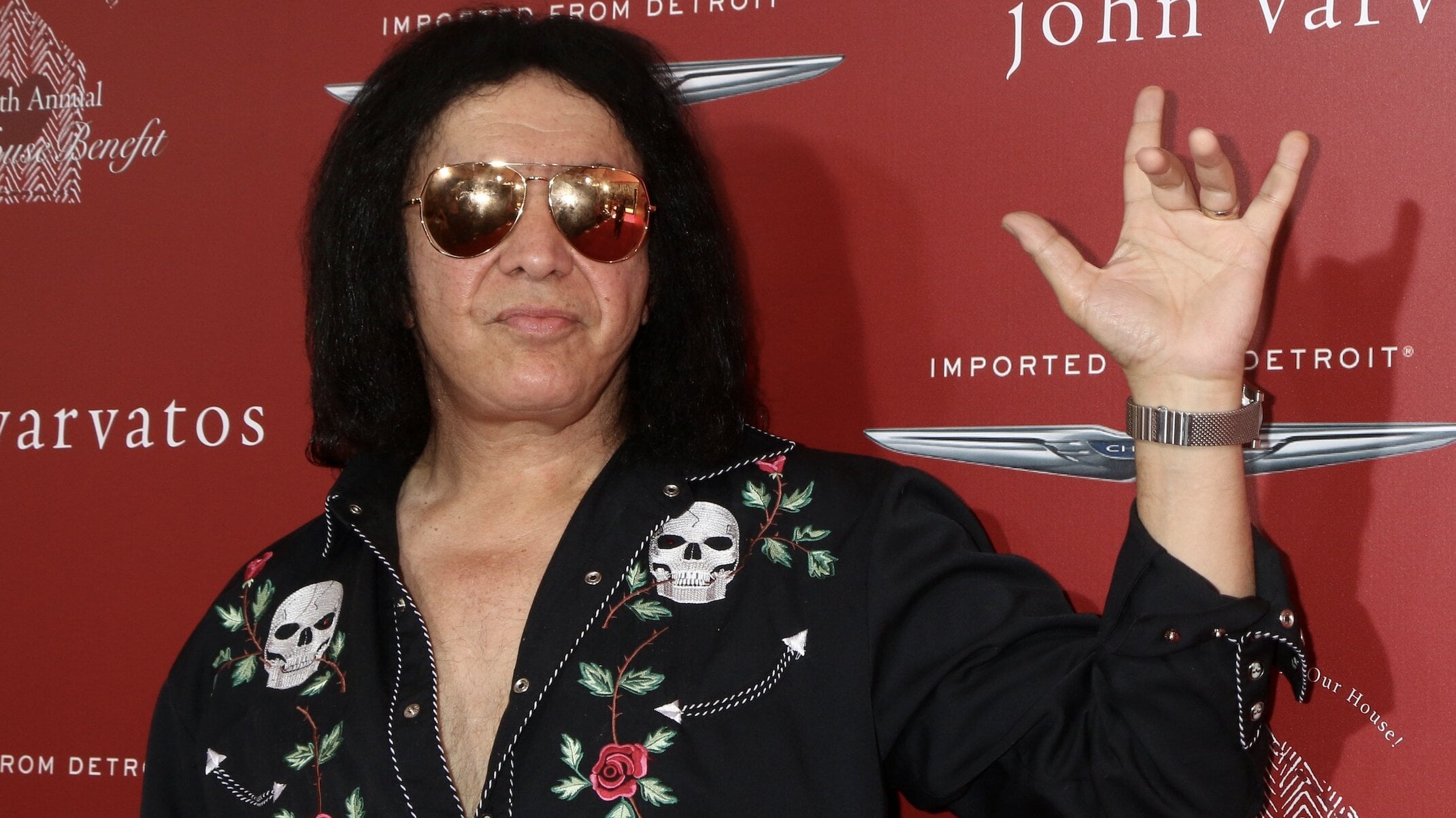
KISS co-founder and co-lead singer Gene Simmons will testify before the US Senate Judiciary Committee’s Intellectual Property Subcommittee on December 9 in support of legislation that would require radio stations to pay performers when their music airs.
musicFIRST, a coalition founded in 2007 “to ensure music creators get fair pay for their work on all platforms,” said the hearing marks the first time since 2009 that the Senate has examined legislation that would close what supporters call the “radio loophole” and require radio companies to properly compensate artists for playing their recordings.
Simmons, who will receive Kennedy Center Honors with KISS this Sunday (December 7), will testify with Michael Huppe, President and CEO of SoundExchange, the nonprofit that collects and distributes digital streaming royalties.
Senator Marsha Blackburn, a Tennessee Republican, and Representative Darrell Issa, a California Republican, reintroduced the American Music Fairness Act, described as “a bipartisan bill that establishes a performance right for sound recordings broadcast by terrestrial (AM/FM) radio.”
The legislation secured support from the Recording Academy and the musicFIRST coalition.
“I look forward to meeting with both Republican and Democratic Senators to discuss why this legislation is crucial for thousands of present and future American recording artists.”
Gene Simmons, KISS
Simmons said: “Having spent my career in the music and entertainment industry, I understand the vital importance of this issue. The American Music Fairness Act represents sound public policy. Artists must be properly compensated for their creative work. I look forward to meeting with both Republican and Democratic Senators to discuss why this legislation is crucial for thousands of present and future American recording artists.”
While streaming platforms like Spotify and Apple Music, as well as satellite radio and internet radio pay performers royalties, traditional radio stations “use the music of hard-working performers and producers without compensating them for their work” due to a loophole in the existing bill, the Recording Academy has said.
When the bill was reintroduced earlier this year, Rep. Issa said: “Now is the time for the United States to finally adopt the proven global standard of compensating our artists for music broadcast over the radio.”
Senator Blackburn said: “The United States is the only democratic country in the world in which artists are not paid for the use of their music on AM and FM radio. This legislation would close an outdated loophole that has allowed corporate broadcasters to take advantage of artists and their songs for decades.”
musicFIRST noted that big radio corporations made $13.6 billion last year in advertising revenue.
“The United States is the only democratic country in the world in which artists are not paid for the use of their music on AM and FM radio.”
Marsha Blackburn, US Senator
The American Music Fairness Act has attracted backing from more than 300 artists who wrote to Congressional leaders in February. That coalition includes performers across genres who argue the current system “robbed us from being paid on terrestrial radio for decades.”
Country music singer Randy Travis testified before the House last year in support of the measure.
“Now is the time for the United States to finally adopt the proven global standard of compensating our artists for music broadcast over the radio.”
Darrell ISSA, US Representative
Community broadcasters — including the Alliance for Community Media, Common Frequency, Media Alliance, the National Federation of Community Broadcasters (NFCB), Prometheus Radio Project, and REC Networks — have also endorsed the legislation.
SoundeExchange’s Huppe said: “I’m pleased for the opportunity to testify before the Senate next week. Recording artists are an essential part of our culture. It’s outrageous that, in 2025, they still are not paid fairly for the work they do. I hope that the Senate will remedy this inequity and act swiftly to pass this important legislation.”
While the bill’s proponents argue that AM/FM radio “refuses to pay performers for their work,” performance rights organization BMI in August declared that its latest agreement with radio broadcasters included its “largest rate increase ever” for royalties paid on music played on the air in the US.
“Recording artists are an essential part of our culture. It’s outrageous that, in 2025, they still are not paid fairly for the work they do.”
Michael Huppe, SoundExchange
According to documents filed with the US District Court for the Southern District of New York in August, AM/FM radio stations will pay a headline rate of 2.14% of their gross revenue for a blanket license to play songs represented by BMI for 2022 and 2023, rising gradually to 2.20% for 2026-2029.
Given that the previous agreement between BMI and the radio stations represented by the Radio Music License Committee (RMLC) set a blanket fee rate of 1.78% for the 2017-2021 period, that means there will ultimately be a 23.6% increase in the rate radio stations pay for playing BMI-represented music on the air, MBW reported earlier.
Music Business Worldwide