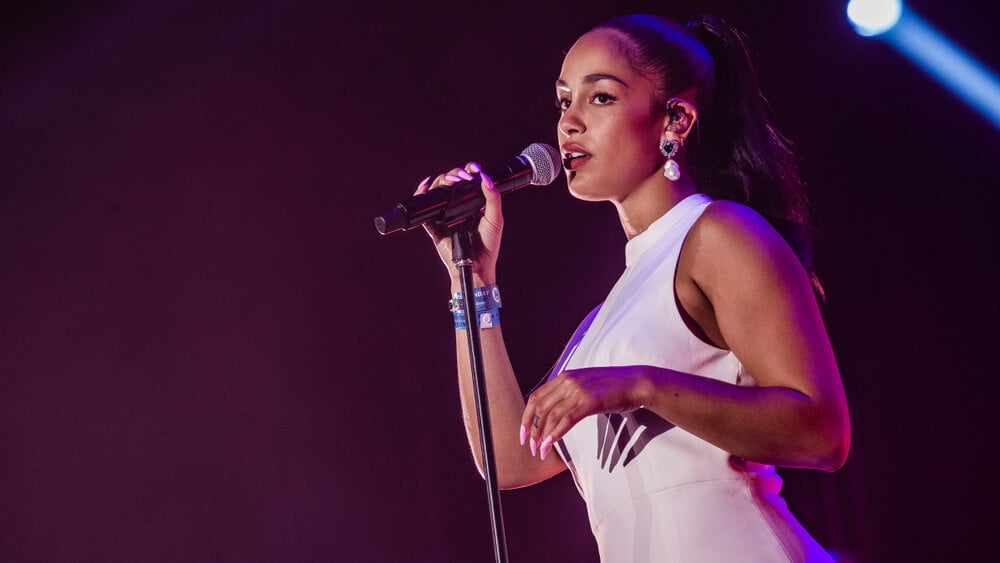
The independent record label of Jorja Smith is demanding a share of royalties from the viral dance track I Run, which it claims was created using AI trained on the British singer’s music.
The track, credited to Haven (the project of producer Harrison Walker), went viral on TikTok in October and was on course to chart in both the UK and US before being removed from streaming services following takedown notices alleging artist impersonation.
In a statement published via Instagram, FAMM alleged that Walker “used AI to make his voice sound like Jorja’s and had used Jorja’s name (without permission) suggesting to the public that it was actually Jorja singing.”
The label claims the track was distributed through four separate distributors to circumvent usual takedown procedures, and that Haven’s team “seemed to rely on public confusion as a key part of the marketing strategy.”
FAMM revealed that Haven’s representatives approached the label after the track went viral to ask whether Smith would appear on a remix.
“They did so as they needed to legitimise the track as the public had been led to believe that they were listening to Jorja Smith’s vocals,” the statement read. “We could have cut a cheque in a backroom deal and gotten paid but we ignored the request.”
Walker and co-producer Jacob Donaghue (Waypoint) have acknowledged using AI music generator Suno to transform Walker’s vocals, claiming they prompted the software for “soulful vocal samples” without specifically referencing Smith.
A Spotify spokesperson is cited by FAMM as saying that the platform “strictly prohibits artist impersonation” and that “this track was detected and removed, and no royalties were paid out for any streams generated”.
The track has since been re-released featuring vocals from singer Kaitlin Aragon, though FAMM maintains both versions infringe on Smith’s rights “and unfairly take advantage of the work of all of the songwriters with whom she collaborates.”
The label says that it is now pursuing compensation, stating that if it successfully establishes AI was used to write the lyrics and melody, it would distribute any awarded royalties pro-rata among the songwriters who have contributed to Smith’s catalog.
“We are in uncharted territory. AI is all around us and already impacting the way we consume music. We need to talk about what that means for creatives.”
FAMM
In the lengthy Instagram statement, FAMM framed the case as a watershed moment for the music industry’s approach to AI regulation.
“We are in uncharted territory,” the statement began. “AI is all around us and already impacting the way we consume music. We need to talk about what that means for creatives.”
The label called for mandatory labelling of AI-generated content and compensation for artists whose work is used to train AI models. “AI technology is being trained on the labour and ingenuity of the very same creators it intends to replace without any due credit or compensation,” it stated.
FAMM’s statement also referenced recent comments made by Victoria Monét, who spoke to Vanity Fair about the AI artist Xania Monét. The Grammy-winning singer acknowledged she couldn’t definitively say the AI was trained on her music, but noted the resemblance felt “uncanny.”
“It’s hard to comprehend that, within a prompt, my name was not used for this artist to capitalise on,” Monét said.
The re-released version of “I Run”, now featuring Aragon’s vocals, entered the UK Top 40 last week. The original version had been withheld from both the Official Charts Company in the UK and Billboard in the US amid the ongoing dispute.
FAMM concluded: “I Run seems to be a clear example of why we all need to step up and push for some guardrails before the moment is completely lost.”
Music Business Worldwide