
Remember me






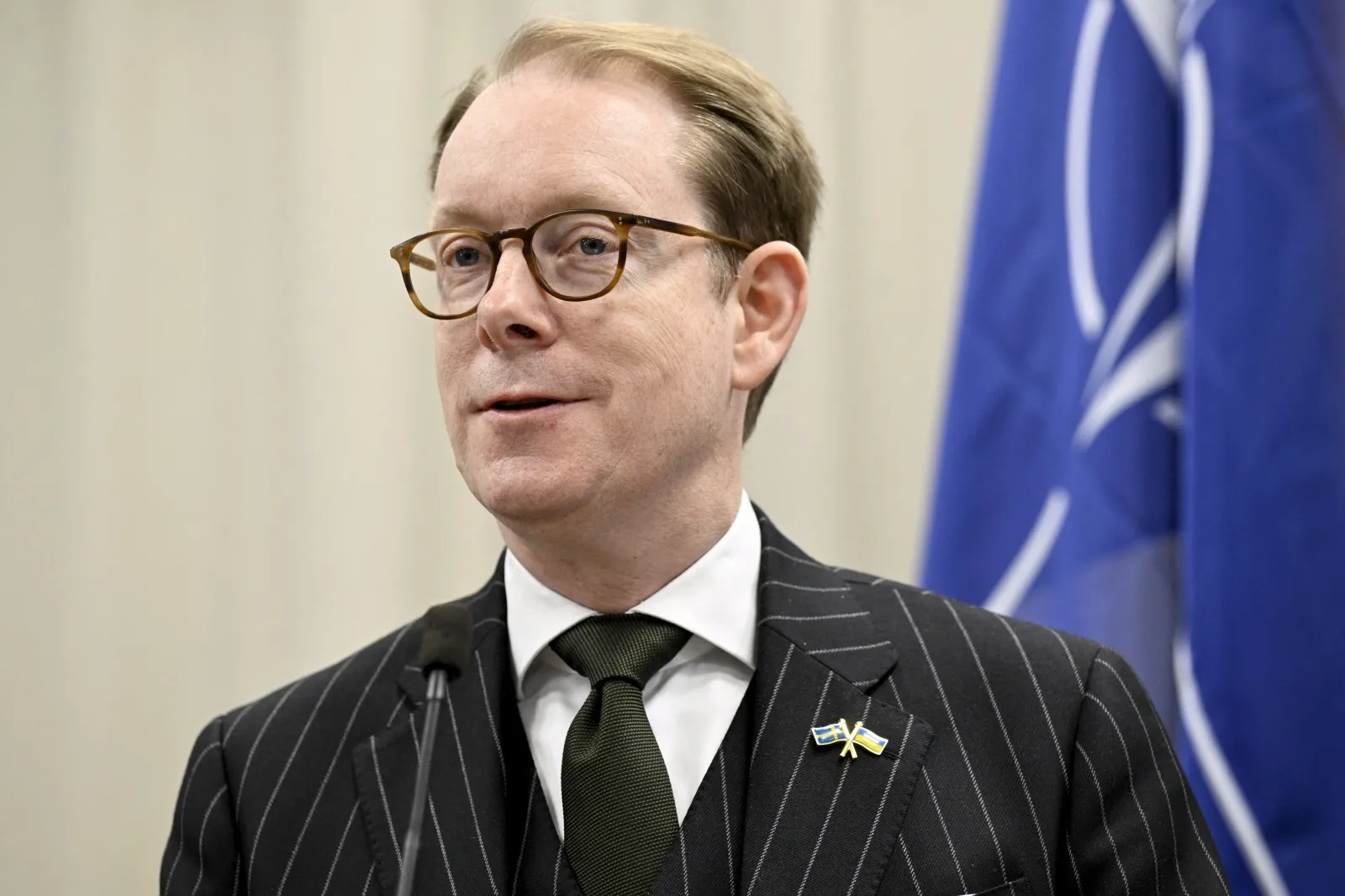
The threat that Russia poses to NATO’s eastern flank “won’t ever stop,” former Swedish Foreign Minister Tobias Billström has told Newsweek, as European leaders contemplate a drone wall to protect the continent from acts of hybrid warfare.
Billström said that regardless of the outcome in Ukraine, Moscow will remain a threat to Europe, which needs to urgently scale up its capacity to defend against Russian aggression, amid growing alarm at drones encroaching on alliance airspace.
Russia has been implicated in drones entering NATO territory, flying over key infrastructure in Poland, Belgium and Denmark, in moves which have focused the minds of European leaders on a proposed drone wall to protect alliance territory.
"Even after the war, we really do have to be aware of the threat that Russia will pose those countries like Sweden and its neighbors on that flank of NATO, " Billström said.
Newsweek reached out to the Russian Foreign Ministry for comment.
 NATO's Warning
Billström was Sweden’s top diplomat when Russia invaded Ukraine in 2022 and when Stockholm became NATO’s newest member in 2024, which was spurred by Moscow’s aggression, after years of non-alignment.
He warned that even when hostilities end, Europe must be prepared for a long-term policy of containing Russia in the coming years, part of which will require an increase in the ability to counter Moscow's hybrid warfare.
NATO Secretary-General Mark Rutte issued a stark warning on Thursday that Russia could use military force against the alliance within the next five years, saying members “must be prepared for the scale of war our grandparents or great-grandparents endured."
That half-decade time frame for a future Russian attack has also been cited by other European military leaders, with German Germany's chief of defense, General Carsten Breuer saying in June it could be even by 2029, given Moscow's heightened military production, which according to the Kiel Institute for the World Economy, numbers around 150 tanks and 550 infantry fighting vehicles, as well as 120 Lancet drones per month.
The United States is pushing for a peace deal in Ukraine, which could pressure Kyiv to surrender occupied territory, though President Volodymyr Zelensky has rejected it. Billström said that Russia is likely to use any halt in hostilities to reconstitute its military and its hybrid capabilities.
“Regardless of the outcome in Ukraine, Russia will be either revanchist if it fails completely or it will still pose a threat if it were to even get a partial success,” Billström said.
“If you don't put a stop to Russia's attempts to recreate its empire at the expense of smaller states on its borders, this will just continue, the undermining, the hybrid attacks, the cyber-attacks, all the things which we are seeing.”
This is why it was important not to waste time to build “the kind of defense that will be necessary” said Billström, who is now director of strategy and government affairs, of Nordic Air Defence (NAD), a Swedish firm whose Kreuger 100XR drone interceptor he hopes will be part of the proposed drone wall for Europe and wider defense for the continent.
A full-scale Russian invasion of Europe right now would, he said, hopefully never take place, but the hybrid threat would still be present.
Putin's Political Existence Tied to WarAdmiral Giuseppe Cavo Dragone, chair of the NATO Military Committee, told the Financial Times this month that the alliance may need to take a more “aggressive” approach to deter Moscow from drone incursions and cyberattacks.
Billström said that, as well as drones, Moscow's measures include propaganda and political interference in NATO's eastern flank.
"You can expect Russia to continue along the same lines," Billström said. "It goes back to Soviet times and perhaps even prior to that, the idea that you are entitled to influence on the smaller states at your border."
Describing Sweden’s accession to NATO in 2024 “the greatest shift in Swedish foreign security policy for 200 years,” Billström said that in the face of Russian aggression, “everybody in this country understood that the war in Ukraine was something different; it was almost an ideological political war for many Swedes, as well."
"It's about the right for smaller individual states to make their security choices as they want to without being harassed, without being threatened by war, by a greater neighbor," he said.
“[Russian President] Vladimir Putin has tied his entire political existence to the question of a positive outcome in Ukraine so for him, this is existential, nothing more, nothing less," he said.
“He will use the ability, the secession and the ability to rebuild his forces and either attack Ukraine again, if it's possible to do so, or find other ways of trying to expand the Russian Empire at the expense of other states.”