
Remember me

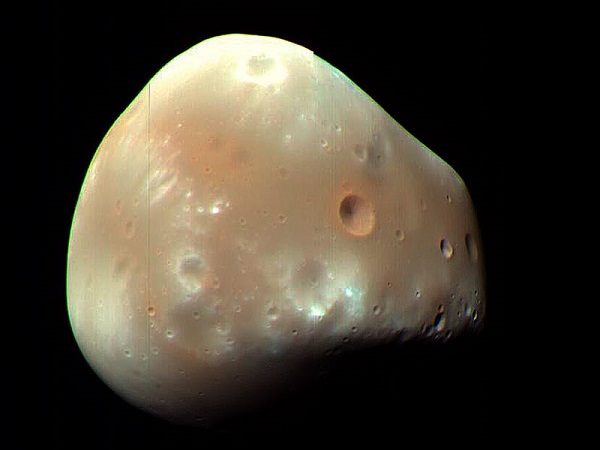
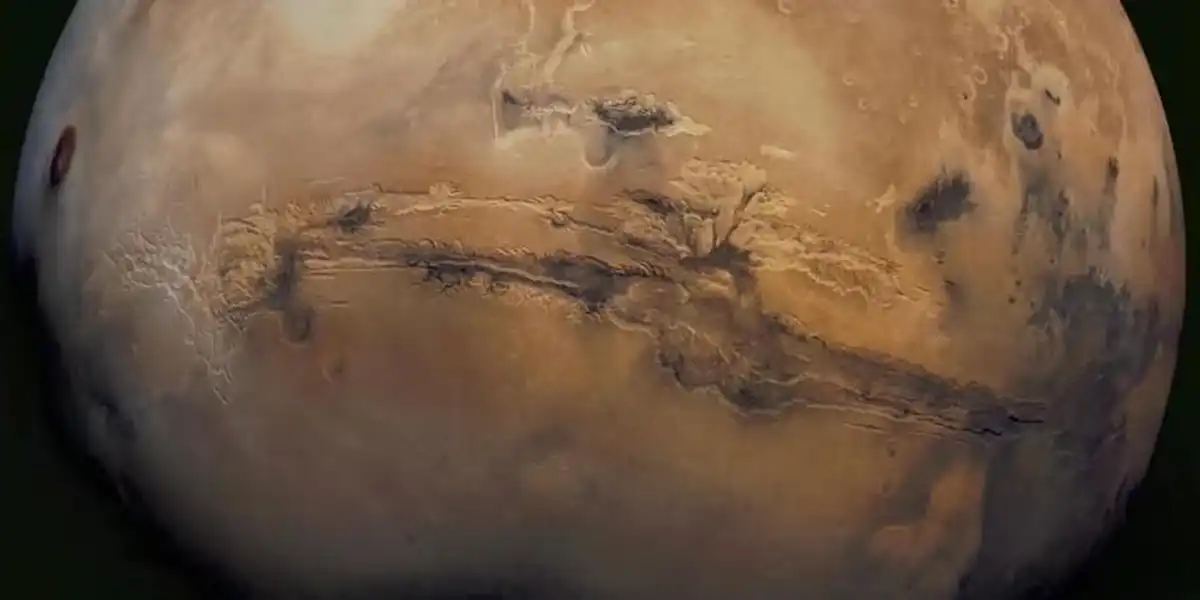
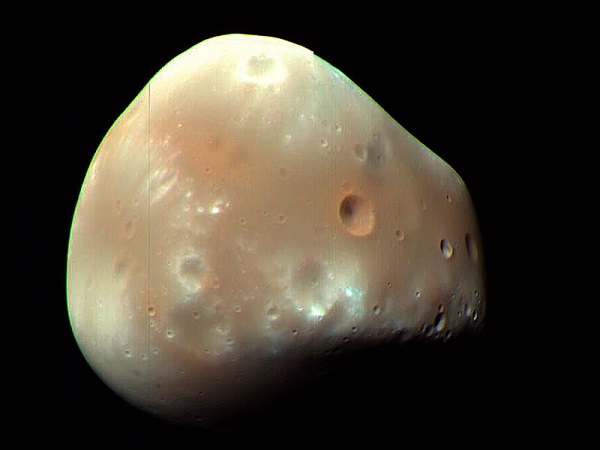 NASA's Mars Reconnaissance orbiter imaged Deimos in 2008. This outermost moon is surprisingly smooth and in a circular, equatorial orbit around Mars.
Deimos, the smaller and farther out of Mars’s two potato-shaped moons, has a unique origin: It might have formed and acquired its present-day orbit only after an earlier version of the moon was reduced to smithereens by its own debris, suggests a new study. Observations from the upcoming Martian Moon eXploration (MMX) could corroborate this idea.
Astronomers have long puzzled over Deimos’s origin. A spectrum of the light the satellite reflects matches that of carbon-rich asteroids, implying that it, too, was once an asteroid. However, the moon’s present-day orbit — which is nearly circular — suggests it wasn’t captured but rather formed where it is. This, along with its smooth surface, has led astronomers to think it might have come together from rocky debris, created long ago when an asteroid smashed into infant Mars.
But such an impact would have formed many moons, and it’s likely that Deimos’s orbital rhythm synchronized with theirs at least once. (Phobos is the only other moon that remains from that long-ago impact; the rest spiraled inward to rain down on the Martian surface.) Any early resonance would have destabilized Deimos’s orbit, making it more elongated and more inclined relative to the Martian equator. Yet now, with its nearly circular and un-tilted orbit, it’s “almost as if Deimos's orbit reset at some point,” says Matija Ćuk (SETI Institute).
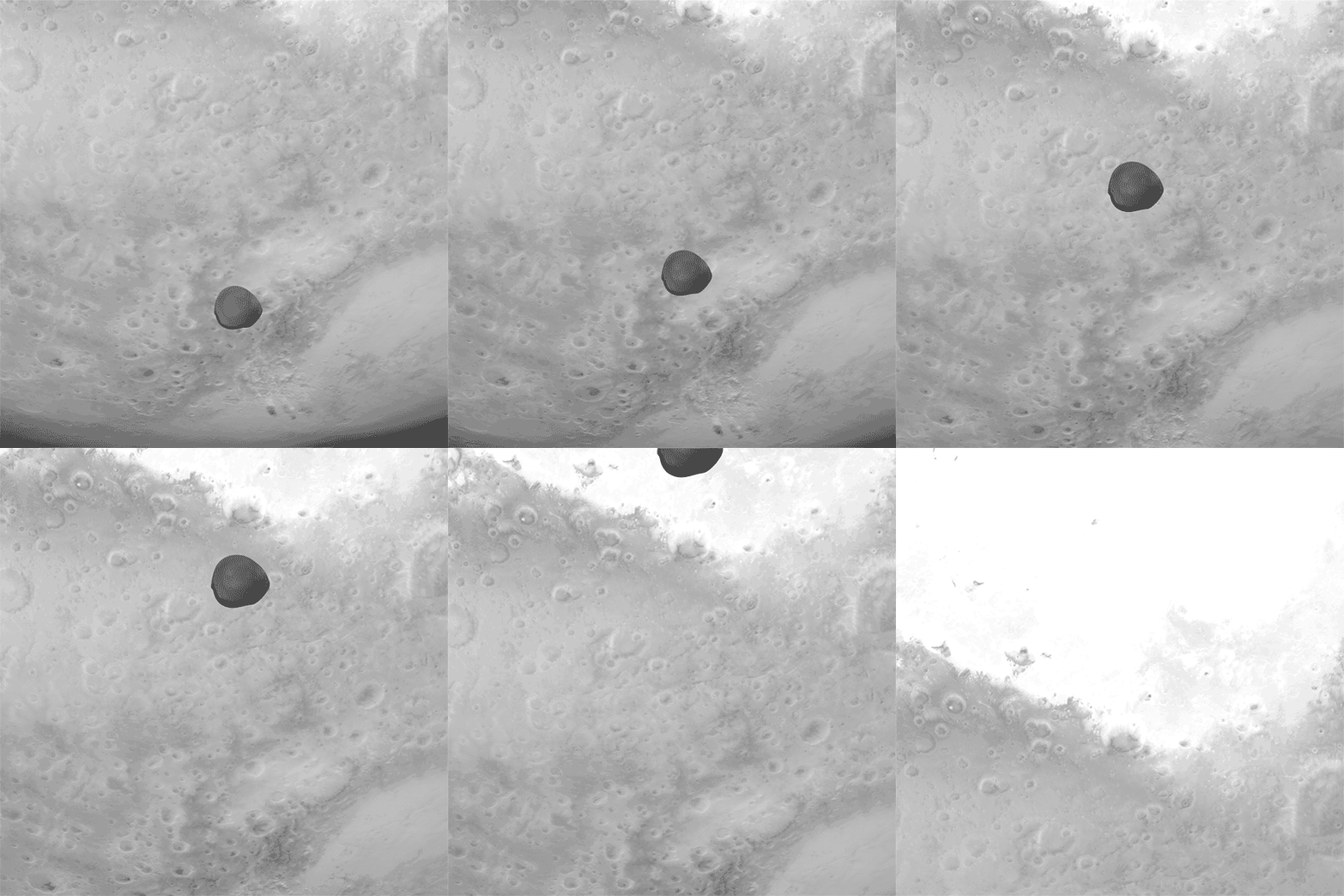 The Hera spacecraft's Asteroid Framing Camera captured these black-and-white images of Deimos, with Mars in the background.
 Now, a study by Kaustub P. Anand (Purdue University), Ćuk, and David Minton (also Purdue), forthcoming in Planetary Science Journal, puts forward an alternative hypothesis to simultaneously explain Deimos’s asteroid-like spectrum and its round orbit: Deimos might have acquired its present-day orbit after it completely fragmented in a sesquinary catastrophe and then reaggregated.
A sesquinary catastrophe occurs when moons are pummeled by impactors. But these aren’t ordinary impactors, coming from elsewhere in the solar system. “[The] material is launched off a moon, escapes the gravity of that moon and independently orbits the planet, and later re-impacts the moon it originally came from,” explains Anand. This pummeling tosses up more debris, repeating the process until the satellite is “sandpapered” down. The repeated collisions would also make the orbit of the re-aggregated Deimos more circular.
The researchers based their reasoning on a 2023 study co-authored by Ćuk, which showed that small satellites on elongated, inclined paths — like the early version of Deimos — would be particularly susceptible to a sesquinary catastrophe.
In the new study, Anand and his team created computer models containing Mars, Phobos, proto-Deimos, and rock chunks that represent the impactors. Each simulation consisted of launching 200 impactors off proto-Deimos’ surface and tracking the movement of each component, along with those generated in subsequent impacts.
These simulations revealed that, regardless of the original orbit, the sesquinary catastrophe reduced Deimos to a rubble ring in less than 10,000 years. Additional calculations revealed that the debris fragmented into smaller pieces with each successive collision. However, the simulations don’t test if the second part of the hypothesis — that modern Deimos re-aggregated from this debris — is actually feasible.
Ryuki Hyodo (Institute of Science Tokyo and Université Paris Cité), who wasn’t involved in the new study, thinks the simulations strengthen the hypothesis that Phobos and Deimos formed after a giant impact. He adds that a potential sequence of events is that a giant impact led to the formation of both Deimos and Phobos, Mars’s other moon. A sesquinary catastrophe on Deimos could then have led to its present-day orbit.
A Visitor for DEIMOS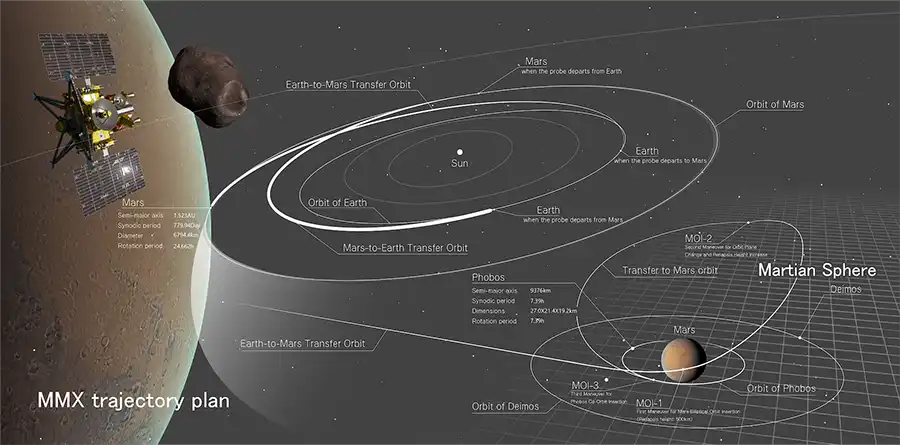 The trajectory of the Martian Moons Explorer (MMX), as currently planned, has the spacecraft match the orbit of Phobos, for a sample return. But MMX will also see Deimos from afar. (The orbit diagram at lower right of this infographic shows the mission's trajectory once at Mars.)
 The sesquinary catastrophe would have influenced Deimos’s geological features, Anand and colleagues say. The debris that reaccreted would have been thoroughly mixed, making its composition homogenous. The impact process would also have ground down the grains, making them much smaller than the boulders that are more typical of asteroids.
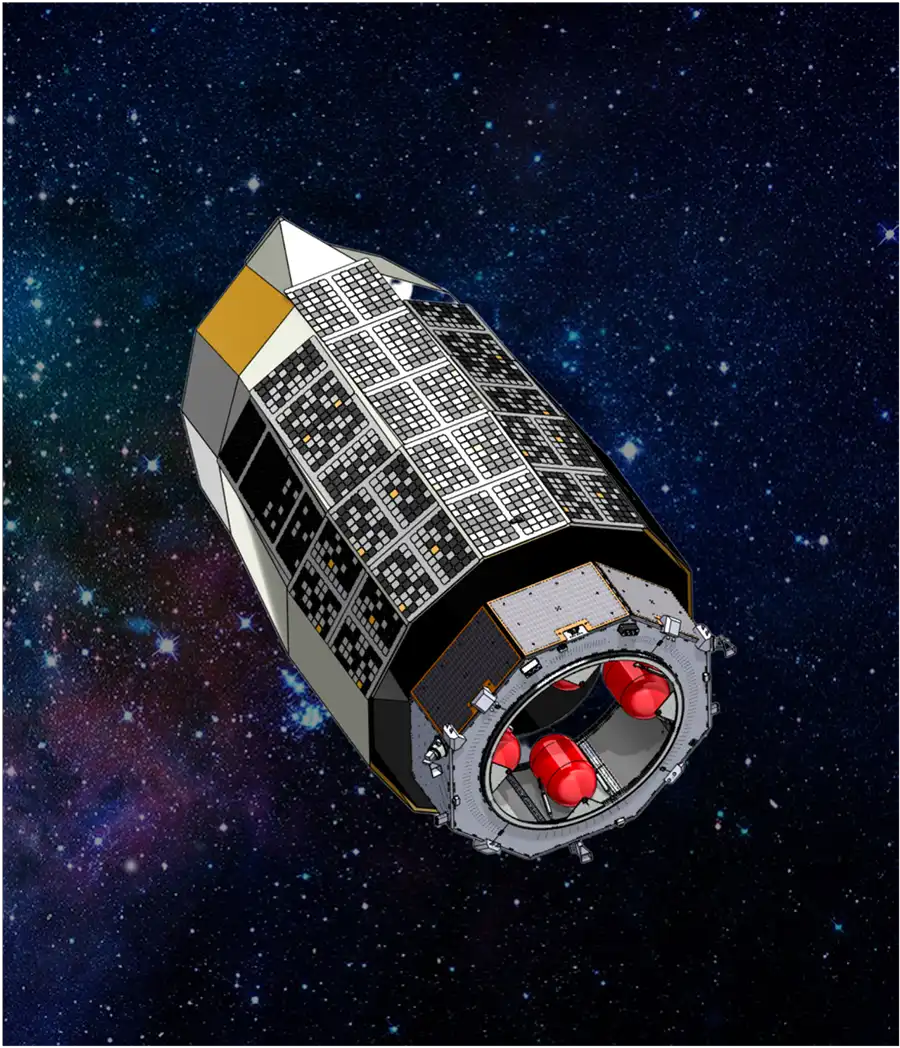
Given these predictions, data to test the scenario may come from Japan’s upcoming Mars Moons Explorer. While the mission’s primary aim is to collect samples from Phobos, it will observe Deimos, too, albeit from a distance.
Hyodo, who is also an MMX team member, says that the sesquinary catastrophe idea might lead the mission to “try to have a new observational plan — but this is up to the mission strategy. Stay tuned!”
Comments (0)