
Remember me
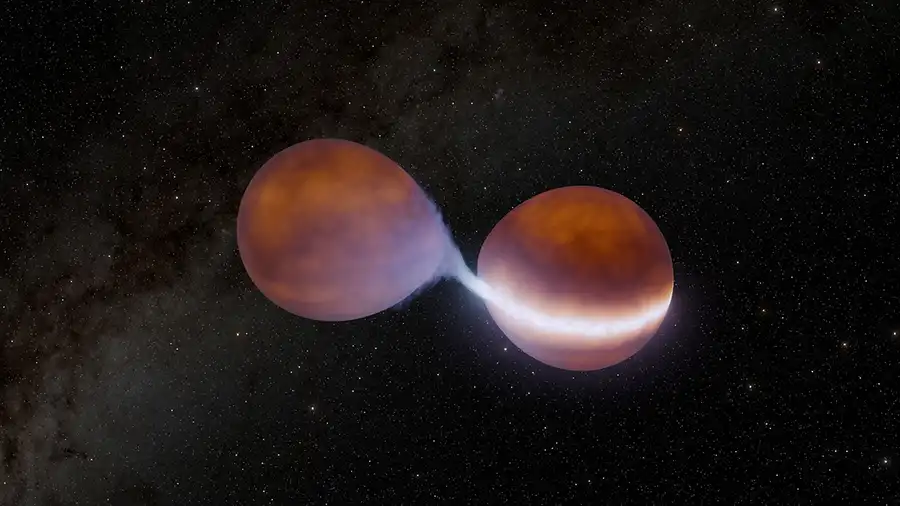
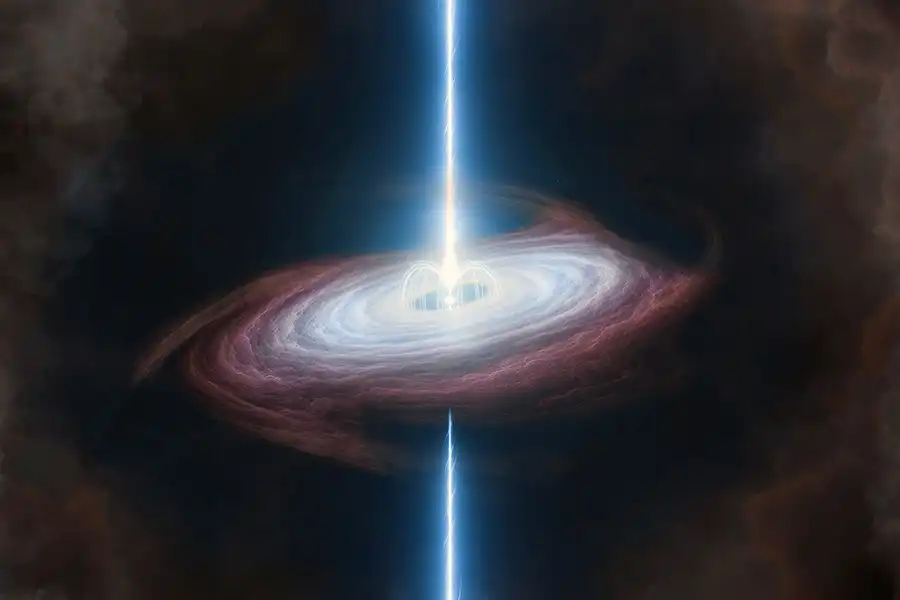
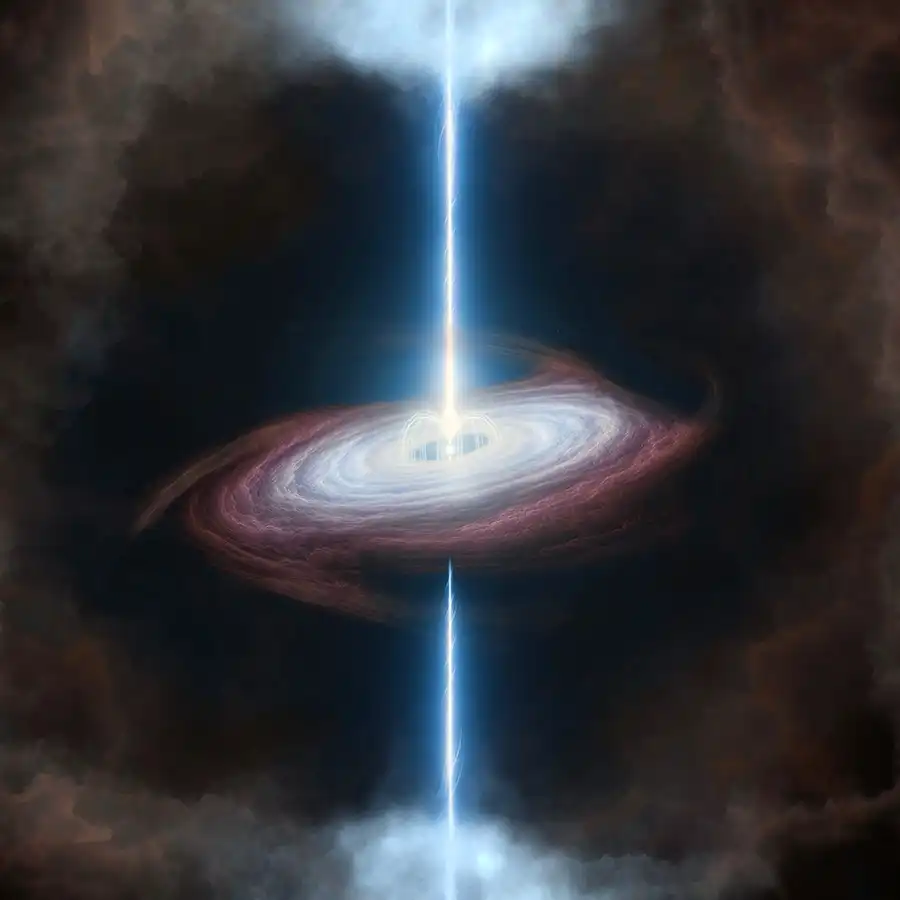 Artist’s conception of a magnetar surrounded by an accretion disk exhibiting Lense-Thirring precession
When the core of an aging massive star collapses, the outpouring of energy creates one of the brightest events in the universe. (If the Sun could go supernova, it would top the radiance of a nearby hydrogen bomb, times 1 billion.) Somehow, certain stellar detonations dubbed superluminous supernovae manage to top even that, radiating up to 100 times as much energy. Explaining all aspects of these brilliant blasts of light requires only the most magnetic objects of the universe — and their bending of spacetime.
The Brightest SupernovaeSuperluminous supernovae likely mark the birth of exotic magnetars. These spinning neutron stars boast magnetic fields of more than 10 trillion gauss — 10,000 times stronger than the most powerful man-made magnet, enough to wreak havoc on any lifeforms that happen by. The spin along with those powerful magnetic fields power the supernovae’s brilliance.
But while magnetar birth cries explain the blast of energy, they don’t explain what happens afterward. All supernovae fade over time, as measured in their lightcurves, and the lightcurves of the superluminous variety tend to have bumps and wiggles on the way down — briefly brightening again, only to dim again.
To understand why, Joseph Farah (University of California, Santa Barbara, and Las Cumbres Observatory) led a team that followed one such supernova, SN 2024afav, for the better part of the year. “In absolute terms, our supernova had a luminosity . . . brighter than the output of the entire Milky Way Galaxy combined,” he notes.
The Liverpool-Gravitational-wave Optical Transient Observer collaboration spotted the first brilliant glimmer in December 2024, then Farah and his collaborators monitored it using the Las Cumbres Observatory’s Global Supernova Project, a network of telescopes that work together to observe supernovae as the world turns. The Fred Lawrence Whipple Observatory also contributed data.
All in all, the team watched the fading supernova for about 200 days, with new observations roughly every 12 hours. Those observations caught five diminishing “bumps” in the lightcurve as the supernova brightened and faded again and again — like watching a tennis ball bounce, each time achieving less height.
The team realized that those diminishing bumps could correspond to a known phenomenon: Lense-Thirring precession. The crushed stellar core, about as wide as Manhattan is long, is rotating around every 4.2 milliseconds. At that rate, general relativity kicks in, and the magnetar drags spacetime with it as it spins.
“The way to think of it is like a ball spinning in a silk sheet; it will drag the sheet along with it, knotting it up,” Farah explains. “If you were an ant sitting on the sheet near the spinning ball, even if you don’t move yourself, you will get moved because the sheet below you is moving.”
The effect wouldn’t be noticeable if the magnetar were on its own, but it’s not — some of the material that attempted escape during the supernova will spiral back, falling onto the newborn neutron star. And because of the Lense-Thirring effect, that disk will precess in a way that exactly explains the dips and bumps in the lightcurve of SN 2024afav.
“I think this is a very exciting result!” says Griffin Hosseinzadeh (University of California, San Diego), who wasn’t involved in the study.
In 2022, Hosseinzadeh and colleagues published results on other “bumpy” superluminous supernova lightcurves, proposing that the stars’ ejected outer layers might crash into surrounding material. “However, we never had any positive evidence in favor of circumstellar interaction,” he notes. “These authors do have evidence for the Lense-Thirring model, in the form of several cycles of ‘chirped’ oscillations in the declining lightcurve.”
Others, while impressed by the scenario proposed for this example, don’t think this explanation rules out other possibilities, or that it needs to apply to all superluminous supernovae. “At present, no single model can account for all bumpy SLSNe,” says Zi-Gao Dai (University of Science and Technology of China). “In our view the Lense-Thirring precession model of magnetars cannot explain all such events.”
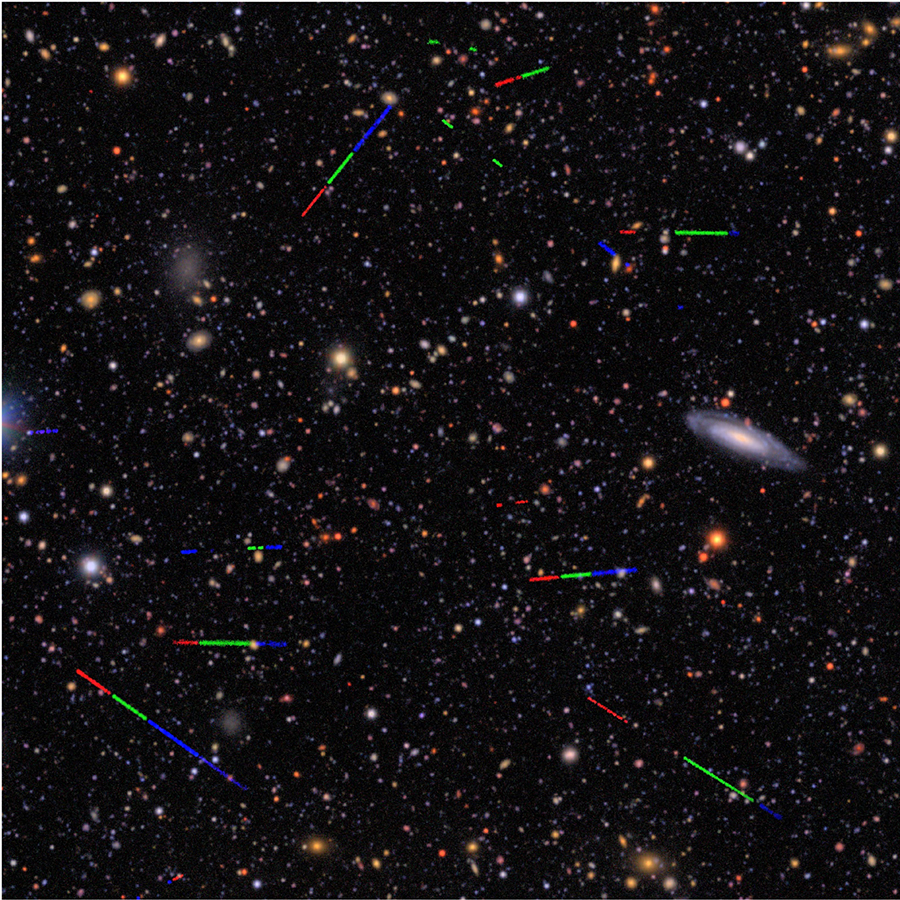
Thousands to Come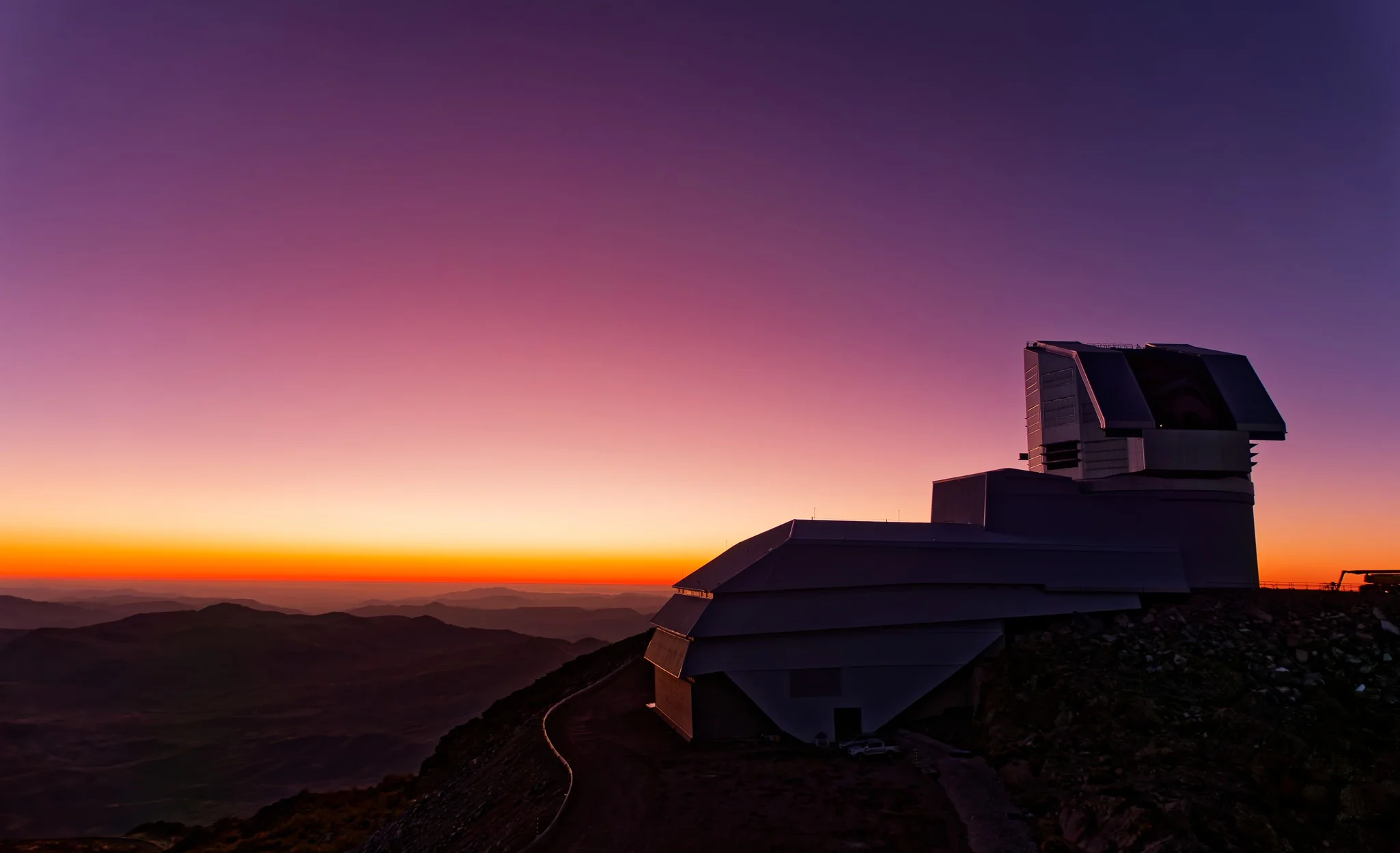 Night begins at the Vera C. Rubin Observatory.
All three astronomers agree that testing the various scenarios requires more supernovae — a lot more. And as Farah’s team points out in their paper, the Vera C. Rubin Observatory’s Legacy Survey of Space and Time will provide, with the discovery of thousands to tens of thousands of superluminous supernovae expected over the next decade.
Hosseinzadeh adds that most supernovae don’t have the kind of data that Farah’s team was working with — global monitoring projects like the Las Cumbres Observatory offer crucial follow-up data as those supernovae fade.
“I’m optimistic that upcoming surveys will make data sets like this more common,” he adds, “so we can test this type of prediction.”
Comments (0)