
Remember me


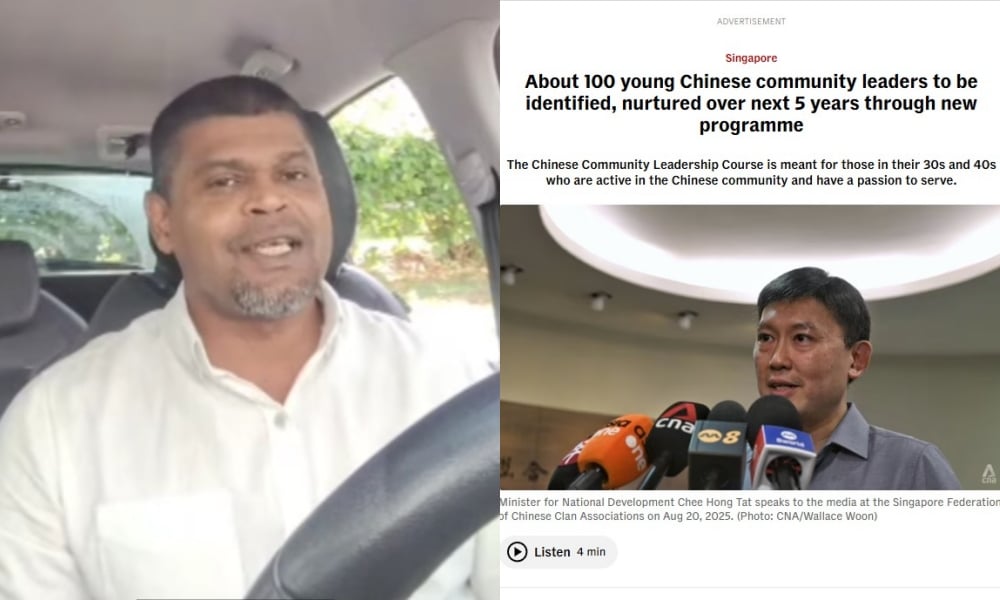

SINFAPORE: Food and beverage entrepreneur and part-time sports coach Jay Ish’haq Rajoo has shared new concerns months after receiving a correction direction under the Protection from Online Falsehoods and Manipulation Act (POFMA).
In a Facebook video posted on 23 November 2025, he said he is now being investigated by the Singapore Police Force and has been summoned to the POFMA office regarding a Facebook post made in August 2025.
He described the experience as troubling and questioned why he is being investigated for expressing what he characterised as personal views on a publicly reported speech.
Background to the September correction directionThe POFMA correction direction was issued on 7 September 2025 in relation to comments Jay made on 26 August about the government-supported Chinese Community Leadership Course.
According to earlier information released by the Ministry of Culture, Community and Youth, officials said Jay’s video contained false statements about the objectives and eligibility criteria of the programme.
Jay said that his initial comments were based on a report by CNA on remark made by National Development Minister Chee Hong Tat to Chinese clan associations in August. Chee is also the chairman of the Chinese Community Liaison Group (CCLG).
On 20 August 2025, Chee announced that CCLG will train about 100 young leaders in their 30s and 40s over the next five years.
The programme aims to deepen participants’ understanding of Singapore’s strategic issues, leadership skills, and the Chinese community’s role in fostering social cohesion.
Participants will be nominated by community groups and undergo a selection process, with modules on leadership, networking, policy insights, and integrating new immigrants.
Jay reiterates his long-held views on social cohesionIn his latest video, Jay emphasised that he has consistently advocated two principles. He said Singaporeans must be prioritised over immigrants when opportunities are allocated.
He also said Singaporeans of all races, religions, colours and creeds should stand together to protect social cohesion.
Jay stressed that these are positions he has championed for years.
Jay said the post that triggered the investigations was intended to express personal opinions about Chee’s remark he had read.
He questioned whether comments attributed to Minister Chee could potentially unsettle racial harmony and argued that it was ironic that he is instead being investigated for disturbing harmony through raising those concerns.
First issue: leadership opportunities for Chinese community participantsJay said that according to the CNA report, the minister had noted that one hundred Chinese leaders would be groomed and placed in leadership positions.
He said he had no objection to leadership development, but he questioned why no equivalent national-level programmes were mentioned for other communities.
He added that when he checked publicly accessible sources, he did not find similar references to matching programmes for other Singaporeans.
He said this created the impression that opportunities were being specially curated for only one group.
Jay argues clearer communication from officials is neededJay said that if leadership programmes for other Singaporeans do exist, it would have been beneficial for the minister to mention them at the same time.
He argued that government officials must anticipate how their words might be understood by a broad audience.
He said that when speaking to the media, especially outlets with diverse readership such as CNA, ministers have a responsibility to communicate fully and clearly.
He said ambiguity could lead to unnecessary assumptions and potentially create tensions that could otherwise be avoided.
Second issue: reference to “new immigrants” in leadership pathwaysJay highlighted a second part of the CNA report which he said concerned him.
According to the report he cited, the minister noted that younger members in these programmes may come from different backgrounds, including some born and raised in Singapore and some “new immigrants.”
“Why are we giving opportunities to new immigrants, when the same opportunity of any and all positions, should have been filled up by our locals?”
He asked how “new” a new immigrant might be, and what immigration status that individual might hold.
Jay raised concerns about placing recently arrived individuals in positions that he believed should be filled by Singaporeans or those who had undergone education, national service, and social integration in the country.
Concerns about cultural understanding and responsibilityJay said community-based organisations such as Chinese clan associations, Indian associations and Eurasian associations help maintain social cohesion.
He said their leaders need to understand the lived experiences of Singaporeans.
He argued that an individual who had only recently arrived could not fully grasp the nuances of the Singaporean identity.
He said this identity had to be lived rather than learned theoretically.
Jay added that leadership roles in these community settings carry significant social responsibility.
He questioned whether it would be prudent to place newcomers into such positions without extensive integration and experience.
Comparison with workplace competitionJay also expressed a worry that Singaporeans were already facing strong competition from foreigners in professional sectors.
He suggested that giving leadership opportunities to new immigrants in community associations could exacerbate anxieties about fairness.
He stressed repeatedly that his view is that Singaporeans should lead Singaporeans, with space made for immigrants who have grown up locally and fully integrated.
Follow-up remarks posted on 26 November
In another video published on 26 November, Jay expanded on why he questioned whether such leadership opportunities should prioritise locals rather than foreigners.
He said major news outlets had claimed the programmes were only for Singaporeans.
However, he noted that the CNA report described participants as Singapore-born youths and “some new immigrants.”
Jay argued that the term might create confusion if the programmes were intended strictly for citizens.
He suggested that if his post was flagged under POFMA, then reporting that contributed to the ambiguity should also be reviewed.
MCCY reiterates course is only for Singapore citizensAccording to an earlier statement by MCCY, the Chinese Community Leadership Course is being developed by the Singapore Federation of Chinese Clan Associations and the Singapore Chinese Chamber of Commerce and Industry.
The government stated that only Singapore citizens who are active in the Chinese community and have demonstrated a commitment to serve are eligible to participate.
It clarified that foreign nationals, including those from mainland China, are not eligible.
MCCY also said the course is part of a broader effort to develop leaders across all communities.
It highlighted other programmes such as the Our Singapore Leadership Programme and Youth Corps Singapore, along with government-supported initiatives run by self-help groups including MENDAKI and SINDA.
Notice: We now publish our news at Heidoh. Follow us on WhatsApp Follow us on Telegram

Comments (0)