
Remember me



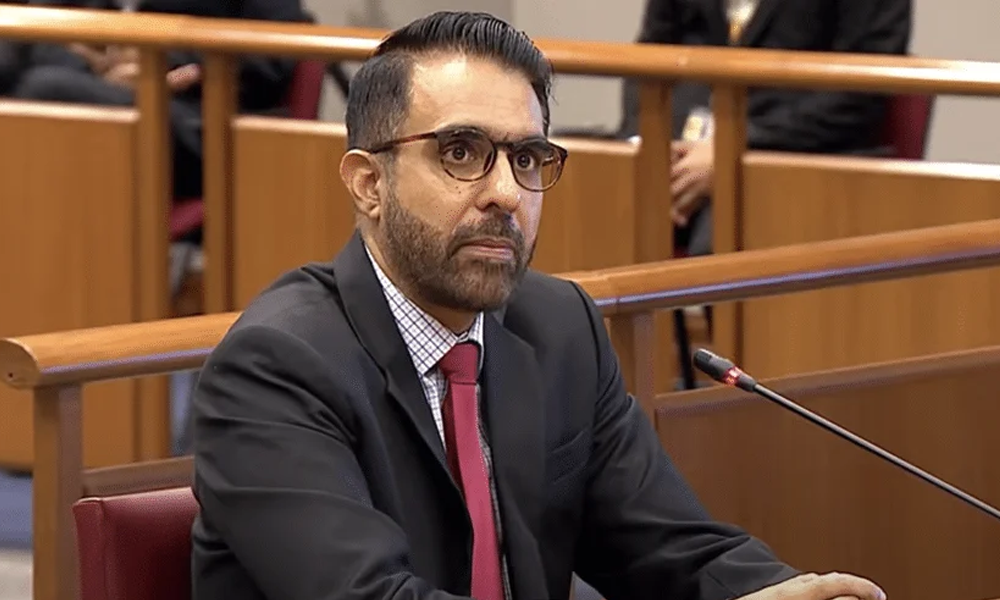




The High Court’s decision to uphold Workers’ Party (WP) leader Pritam Singh’s conviction for giving false evidence to Parliament’s Committee of Privileges (COP) sends a clear signal: what is said before a COP carries real criminal consequences, not just political one
The ruling underlines that MPs are expected to be fully truthful when questioned, and that misleading such a committee can attract serious personal liability.
Yet once we move beyond the formal legal reasoning, the judgment also raises uncomfortable questions about how responsibility is allocated, how heavily circumstantial evidence is being relied on, and what this all means for opposition politics in Singapore.
This commentary does not question the court’s integrity or good faith. Rather, it asks whether, even accepting the legal framework the judges applied, the outcome risks concentrating blame in a way that feels asymmetric and politically chilling – placing the weight of a messy, shared failure largely on one man’s shoulders.
A tightly framed legal question – and everything outside it falls awayThe appeal is framed very narrowly. The court is not deciding:
whether it was wiseact or ethical for WP leaders to handle then-WP Member of Parliament Raeesah Khan’s lie the way they did; whether other actors – including Khan herself, her close associates, and other WP leaders – share moral or political responsibility; or whether the COP process is structurally fair in politically sensitive cases.Instead, the focus is on two specific points:
What Singh said to Khan on 8 August (the “take it to the grave” allegation); and What he meant on 3 October when he told her “I will not judge you”.Once the court concludes that he did tell her to bury the lie and did give her a choice to maintain it, any alternative narrative – including “he was misled”, “he mishandled things but didn’t intend to lie”, or “he was confused in a chaotic political crisis” – largely falls away.
His later testimony to the COP is then treated as a deliberate falsehood rather than a flawed or self-serving recollection.
From a strictly legal perspective, the reasoning is tidy once those factual findings are accepted. But that neatness depends on a very particular reading of the evidence.
In our view, it looks less like an outcome that naturally emerges from the full, messy picture, and more like a chain of logic built around a narrow set of facts that point in one direction. Politically and morally, it is hard to escape the sense that a great deal of shared responsibility has been compressed into a very tight frame with one man at the centre.
Heavy reliance on WhatsApp messages and inferences from inactionA major pillar of the judgment is the weight placed on:
Khan’s WhatsApp message to her friends shortly after the 8 August meeting (“they’ve agreed that the best thing to do is to take the information to the grave”); and Singh’s inaction over the next two months in pushing her to correct the record, despite engaging her on other parliamentary matters.The court sees these as mutually reinforcing:
The contemporaneous message is treated as a candid, near-real-time account of what the WP leadership told her. The subsequent lack of follow-up by Singh is treated as objectively consistent with a decision to keep the lie buried.There is a logic to this. But there are also weaknesses that the judgment does not fully grapple with:
WhatsApp as decisive corroboration
A single private message to close friends, sent in the middle of a personal and political crisis, is assumed to be an accurate and neutral record of what party leaders decided.
Yet such a message may be coloured by the sender’s own hopes, fears, or misunderstandings. The judgment acknowledges deletions and redactions in other chats, but is ultimately untroubled by the possibility that self-presentation and self-protection may have shaped what was written and preserved.
Inaction as proof of intent
The court treats the two-month delay in correction as strong corroboration that there was never any real intention to clarify. An alternative reading is that this reflects something more human – procrastination, wishful thinking that the issue might not resurface, or simple paralysis in the face of a politically explosive mistake.
Treating inaction as near-conclusive evidence of an agreed cover-up pushes ambiguous behaviour into quite a harsh light, especially in a context where political calculation, fear of fallout, and emotional loyalty are all in play.
It is not that the court’s reading is impossible. It is that other, less incriminating explanations are also plausible – and the judgment’s confidence in dismissing those alternatives will strike many as a strong tilt towards a prosecution-friendly interpretation of ambiguous conduct.
The missing narrative: that Singh, too, could have been misled and boxed inIn our view, one important gap in the judgment is that it hardly engages with a very basic human possibility: that Pritam Singh himself may not have had a full, clear picture of what was going on.
There were at least two moving parts:
The defence suggested at one stage that Khan and her friends were trying to protect themselves and shift blame away from their own role. The court rejects this, partly because the theory was not properly put to those witnesses during the trial, and partly because it considers there to be no solid proof of any deliberate “plot”.
That is a legally neat answer. But in our opinion it overlooks a more down-to-earth possibility that does not require any grand conspiracy:
that Singh was not masterminding a cover-up, but was a party leader trying – clumsily and too slowly – to manage a mess created by someone else’s lie, while not fully knowing what Khan and her confidantes were saying and doing behind the scenes.
Once the court accepts that he told her to “take it to the grave” and later gave her room to keep lying, it treats his COP evidence as a conscious lie about those decisions.
In our reading, there is very little space left for a middle ground where he was also confused, misled, or backed into a corner by how events unfolded and by how others around Khan behaved.
Respecting the court, questioning the systemTaken on its own terms, the judgment is a careful application of existing evidential rules. It sets out why, in the court’s view, the WhatsApp messages and Pritam Singh’s subsequent conduct justify the finding that he knowingly gave false evidence to the COP.
What is striking, however, is how tightly the lens is trained on his culpability in what was plainly a multi-actor failure.
By treating the WhatsApp messages as decisive and reading two months of inaction in the most incriminating way, the judgment leaves little space for alternative explanations – including the possibility that Singh himself was misled, slow to act, or boxed in by the evolving conduct of others.
Legally, that may be sufficient to sustain the conviction; politically and morally, it feels like a very sharp line has been drawn around one man in a crowded room.
The result is a distribution of responsibility that looks lopsided. The original lie, the role of close confidantes, and the involvement of other party leaders all recede into the background, while criminal liability crystallises only around the Leader of the Opposition.
That is not a criticism of the court’s integrity, but of a system in which COP proceedings – inherently political in character – can so readily become a pipeline into criminal prosecution for selected individuals.
In a parliamentary democracy, respect for the courts should go hand in hand with the freedom to scrutinise how power and blame are allocated. This judgment settles the legal questions before it. It does not, and should not be taken to, close the wider debate on how Singapore chooses to police truth in Parliament, how evenly accountability is shared, and whether the law is being applied in a way that deters misconduct – or simply deters opposition.
Asymmetry of power: who gets checked, and who gets sent to COP?Beneath the legal arguments lies a more basic imbalance that the judgment never really confronts: ministers and opposition MPs do not live under the same conditions of scrutiny, nor do they face the same risk of being hauled before the Committee of Privileges in the first place.
When a minister makes an inaccurate statement, the full machinery of government sits behind the truth. Ministries, agencies and police can quickly pull records and data; if something is wrong, it can be detected, managed and, where necessary, corrected on the minister’s own initiative.
We saw this in the widely reported TraceTogether episode. Then–Foreign Minister Vivian Balakrishnan had assured the public that TraceTogether data would only be used for contact tracing. It later emerged that such data could also be accessed under the Criminal Procedure Code for police investigations.
He returned to Parliament, accepted “full responsibility” for the mistake, explained when he realised it, and worked with Cabinet colleagues on legislative changes to limit police access. The error was serious, but it was ultimately treated as a matter of political accountability and policy correction, not as a potential contempt-of-Parliament case, much less a crime.
Now flip the scenario.
When an opposition MP speaks in Parliament, they have no equivalent apparatus to verify a minister’s claims or their own assumptions about what the state has done.
In Khan’s case, the Ministry of Home Affairs was able to check police records and establish that her account was untrue. In the opposite direction, if a minister gives an inaccurate or misleading picture of events within the government, the opposition has almost no independent way to test that in real time. They must rely on what the state chooses to disclose.
On top of that informational imbalance sits a procedural one: the ruling party’s supermajority means it effectively decides which cases are serious enough to be sent to the COP at all.
A lapse by a minister can be handled through a clarification, an apology, or a policy change without ever crossing the threshold into a privileges inquiry. Even when a minister offers a highly convenient explanation for a sensitive matter – for instance, that there was no need to seize a phone because its messages auto-delete – there is no realistic way for the opposition or the public to test that claim unless the state itself chooses to disclose more.
By contrast, when an opposition MP errs, the same majority has both the power and the political incentive to escalate it to COP – which, as the Pritam Singh case shows, can now be a short step away from criminal prosecution.
The issue is not that ministers should be marched before COP every time they slip up, nor that opposition figures should be immune from consequences. It is that a system which couples COP findings to criminal charges, in a Parliament where one party controls both the information and the referral machinery, will almost inevitably bite harder on the weaker side.
That asymmetry – of information, of institutional backing, and of who decides what becomes a “COP matter” – is what makes this judgment feel, to many observers, less like a neutral enforcement of truth and more like a structure in which a political mess is far more likely to become one man’s crime when that man sits in the opposition.
Notice: We now publish our news at Heidoh. Follow us on WhatsApp Follow us on Telegram

Comments (0)