
Remember me


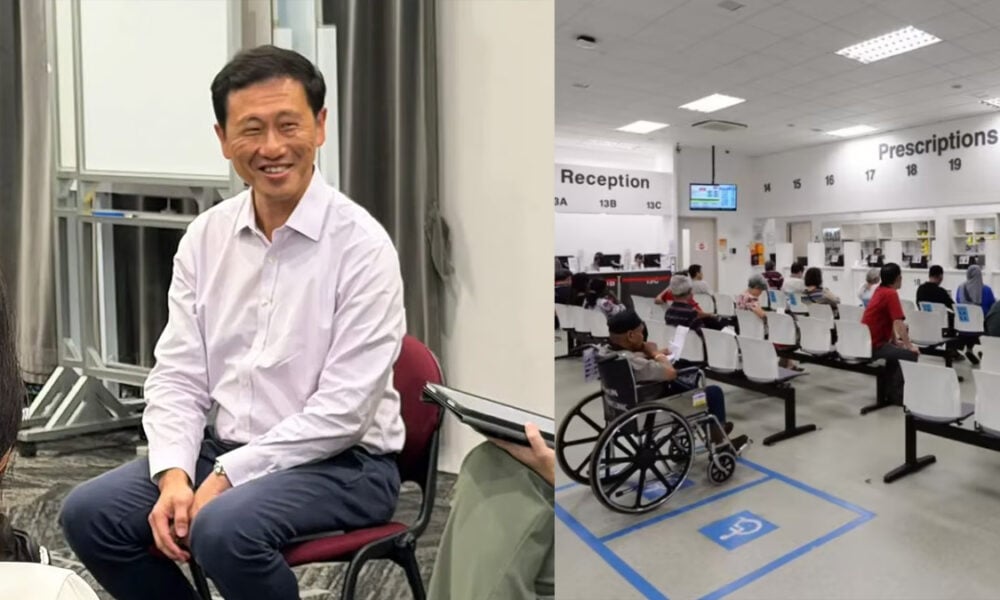

Health Minister Ong Ye Kung has found a very quotable way to defend Singapore’s healthcare model – and that quote has been quietly evolving.
Back in 2023, he told Parliament that about seven in ten Singaporeans in subsidised wards pay nothing out of pocket, eight in ten pay less than S$100, and nine in ten pay less than S$500 in cash when they are hospitalised. In other words: most people pay little, and almost everyone pays under S$500.
By March 2025, during the Budget debate, that line had been trimmed. Ong repeated that “seven in ten patients in subsidised hospital wards pay nothing out-of-pocket, zero; while eight in ten pay less than S$100” – but the final part about nine in ten paying under S$500 quietly disappeared. The most comforting figures survived; the tier paying several hundred dollars or more dropped out of the story.
Then came his recent briefing to Malaysian journalists, where the numbers were upgraded again.
This time, Ong claimed that “nine in ten Singaporeans pay nothing for treatment at public hospitals”, because subsidies, MediShield Life and MediSave combine to bring cash payment to zero.
“What is out of your pocket? Zero. For nine out of ten subsidised patients, it becomes zero,” he said – counting even large MediSave deductions as if they were not really out-of-pocket at all.
On paper, it is a neat narrative arc: from seven in ten paying nothing, to eight in ten under S$100, to nine in ten supposedly paying “zero” once MediSave is thrown into the mix.
It suggests that if you are an “ordinary” Singaporean in a subsidised ward, the system will catch you. You won’t have to worry very much about money.
That rhetoric might work in front of foreign journalists or on a PowerPoint slide. But set it against how ordinary residents actually behave and feel about healthcare – delaying treatment, worrying about costs, shocked by their bills – and the slogan starts to look less like reassurance and more like denial.
A comforting statistic with a catchThe first problem is definitional. When Ong says “seven in ten pay nothing out-of-pocket”, “out-of-pocket” means cash at the counter. It does not include what is deducted from your MediSave account.
To a policymaker, that distinction is convenient. To an ordinary worker, it is artificial.
MediSave is not some abstract government fund. It is 8–10.5 per cent of your monthly salary, compulsorily set aside. It pays for hospitalisation, surgery, some outpatient care, and your insurance premiums. Every dollar spent from MediSave is one less dollar available for future illness or old age.
Counting MediSave as “not out-of-pocket” is like telling HDB lessees that their mortgage is painless because it is “only from CPF”. Technically true. Practically misleading. Everyone knows, at the back of their mind, that they are drawing down their own savings.
So when the minister says nine in ten subsidised patients “pay nothing”, what he really means is closer to this:
Nine in ten subsidised bills can be settled without extra cash, if you have sufficient MediSave and insurance, and if your illness is the sort that fits within the design assumptions of MediShield Life.
That is a very different proposition from: “Don’t worry, healthcare is effectively free for almost everyone.”
The second problem is that, while Ong likes to emphasise how many people pay nothing, the Ministry of Health (MOH) has been quietly pushing policy in the opposite direction.
From 1 April 2026, new Integrated Shield Plan (IP) riders:
will no longer be allowed to cover the minimum deductible for hospital care; and will face a doubled co-payment cap – from S$3,000 to S$6,000 a year – on top of that deductible.MOH has been frank about why. Officials complain that “very comprehensive” riders which cover “almost to the last dollar” give patients “absolute peace of mind” and encourage over-consumption of healthcare.
In other words, the ministry believes people should feel some financial pain when they use healthcare, so they will think twice before consuming it. That is the logic of co-payment and “skin in the game” that MOH has held to for decades.
But if you truly believe that, then the “nine in ten pay nothing” line is not just incomplete – it is fundamentally at odds with your own policy direction.
You cannot tell the public, on one hand, that most people don’t need to pay, and then tell insurers, on the other hand, that you are tightening riders precisely so people do feel the cost.
The result is not discipline. It is confusion.
The view from the waiting room: fear, delay and confusionA recent report, Patient Voices Singapore: Towards More Informed and Seamless Care, commissioned by Prudential and conducted by Economist Impact, offers a rare look at how people actually experience the system that Ong is so eager to summarise as “nine in ten pay nothing”.
The numbers should disturb the Ministry of Health far more than the erosion of its nine-in-ten benchmark.
Surveying 1,024 adults between April and May 2025, the study found that 83 per cent of respondents had postponed medical treatment in the past year.
Nearly a quarter of those who delayed care said they did so because of cost concerns. More than six in ten worried they could not afford the care they needed, and around half said their bills were higher than expected.
Confusion is rampant. Sixty-one per cent felt they lacked sufficient information to make informed treatment decisions. Sixty per cent often did not know where to go when they needed medical attention.
So while the minister now tells foreign journalists that nine in ten subsidised patients “pay nothing”, and tells Parliament that seven in ten need not fork out cash, the lived reality is that eight in ten adults are delaying care, and the majority worry they cannot afford it when they finally do seek help.
Those are not the statistics of a population enjoying “peace of mind”. They are the symptoms of a population that expects healthcare to be financially risky, administratively confusing, and potentially disruptive to work and family life.
Singaporeans are not a particularly fussy people. Culturally, many will still say “okay lah” even when their experience was mixed. If roughly one in ten is openly not satisfied with care after going through it, and more than half have already had a nasty surprise on their bill, that is not a rounding error. That is a red flag.
Policy logic versus citizen mindsetFrom MOH’s vantage point, the logic is internally consistent.
The ministry wants to avoid the “pitfalls” of free healthcare. It believes in co-payment as a disciplining device. It designs MediShield Life to cover major health episodes so that nine in ten subsidised bills are largely taken care of, with the rest paid from MediSave. When rising costs erode that coverage, it focuses on raising claim limits and adjusting benefits so the nine-in-ten target can be restored. At the same time, it tightens IP riders to discourage what it sees as unnecessary use of private care and to slow premium growth.
On spreadsheets and in committee rooms, all this can be made to add up.
But ordinary people do not live in MOH’s spreadsheet. They live in a world where:
it is hard to fully understand the difference between MediShield Life, IPs, riders, deductibles, co-payments and panels; workplace culture still punishes time off, especially for lower-wage workers; family members worry about being a “burden”; and the horror stories they hear about big bills, MediSave depletion and exclusions are often more vivid than abstract promises about nine in ten subsidised bills.So when the system sends them mixed signals – “healthcare is affordable, nine in ten pay nothing” on the one hand, and “you must have skin in the game, we are raising co-payment caps” on the other – they err on the side of caution.
They delay. They wait. They hope the pain will go away. They tell themselves they cannot afford to fall sick, so they will pretend they are not sick.
When they finally do seek care, many discover that the bill is more complex than they imagined. Some are pleasantly surprised that subsidies and insurance cover most of it. Many are not.
From a public-health perspective, this is exactly the wrong outcome. Minor conditions deteriorate into major ones. Chronic diseases go uncontrolled until complications force expensive intervention. The people who were most afraid of the system end up being the ones most deeply entangled in it – medically and financially.
The invisible 10 per centOng’s preferred framing – seven in ten pay nothing, eight in ten less than S$100, nine in ten less than S$500 – centres the comfortable majority.
But it is the last ten per cent who should concern us most.
International experience shows that a small minority of very sick patients account for a large share of health spending. Those in the “tail” – late-stage cancer sufferers, people with multiple chronic conditions, the unlucky few with rare or complex diseases – are the ones most likely to face repeated admissions, large cumulative co-payments and serious MediSave depletion.
They are also the ones most likely to tell a surveyor, despite cultural reluctance to complain, that they were not satisfied with their care.
For them, the system’s contradictions are not theoretical. They are lived daily: encouraged to seek early, preventive care under initiatives like Healthier SG, yet confronted with high deductibles, rising rider co-payments and deep uncertainty about what will actually be covered.
They are reminded that MediFund exists as a “final safety net” – but only if they can find their way through the maze and accept the stigma of applying. Meanwhile, the official narrative continues to repeat that nine in ten subsidised patients pay nothing, as if that alone closes the debate.
Stop hiding behind “nine in ten”There is no perfect healthcare system. Ong is right that every model faces a trade-off between quality, accessibility and affordability.
But the first step toward managing those trade-offs honestly is to stop hiding behind the “nine in ten pay nothing” line.
A serious conversation about healthcare in Singapore must start from what the Prudential–Economist Impact study has made impossible to ignore:
Most people delay seeking care. Most people are worried about cost. Most people find the system confusing.Against that backdrop, proudly repeating that seven in ten subsidised inpatients do not hand over cash at the counter is not reassuring. It is irrelevant.
The real test of a public health system is not whether it can declare victory for a median subsidised ward bill, but whether an ordinary person – with an ordinary salary, ordinary responsibilities and an ordinary fear of bills – feels safe enough to walk into a clinic early, instead of waiting until it is too late.
Right now, the gap between MOH’s rhetoric and that ordinary mindset is widening. The more the minister leans on the “nine in ten” statistic, while tightening riders and preaching discipline, the more that gap looks less like a policy nuance and more like a credibility problem.
And if Singaporeans stop believing that the system will be there for them when they need it most, no amount of clever financing design will save it.
Notice: We now publish our news at Heidoh. Follow us on WhatsApp Follow us on Telegram

Comments (0)