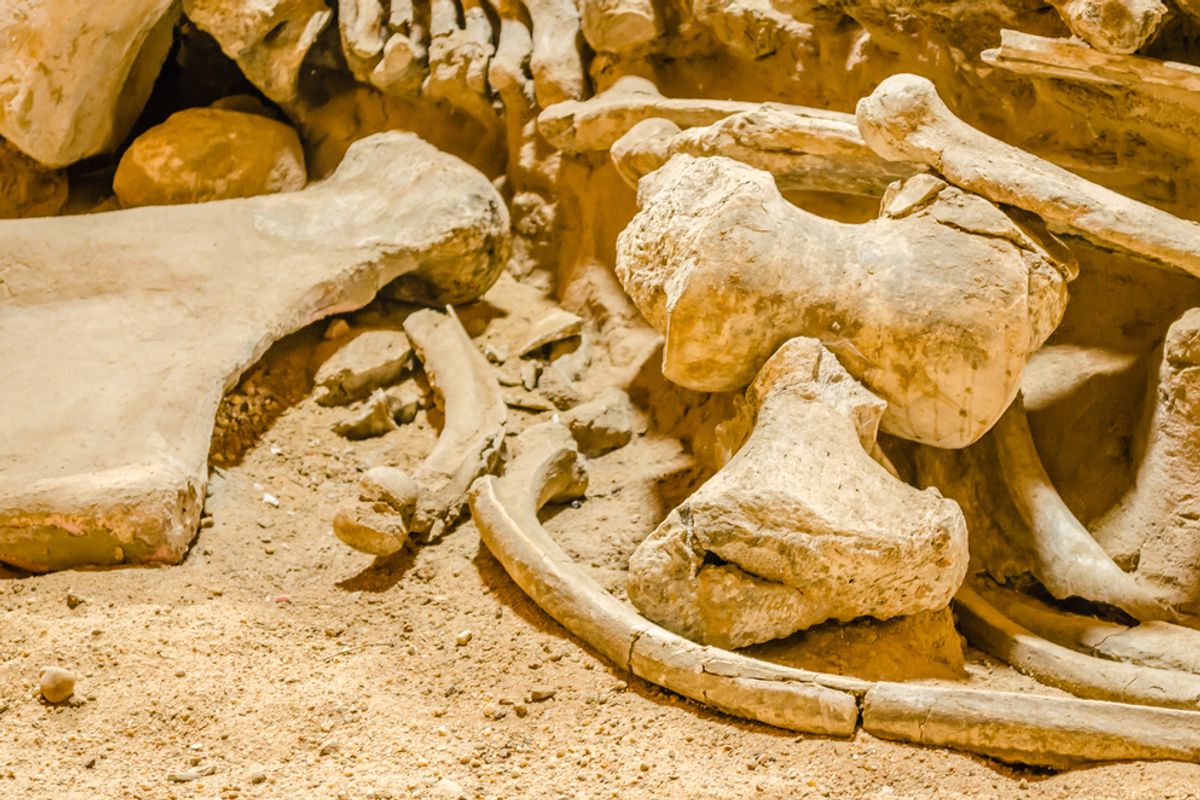
The woolly mammoth is an iconic symbol of the Ice Age, and as it began to go extinct about 13,000 years ago, smaller populations remained on islands around Alaska and Russia until about 4,000 years ago, according to a new study in the Journal of Quaternary Science.
However, when researchers recently analyzed certain mammoth bones, radiocarbon dating placed them only 2,000 years ago — thousands of years younger than any previously dated mammoth. Hardly able to believe the date on the bones, researchers reanalyzed the remains and found that instead of a mammoth, they belonged to a different giant.
“I was pretty much gobsmacked,” said lead author Matthew Wooller, a researcher from the University of Alaska, Fairbanks, in a press statement. “But then the rational science side of my brain kicked in — ‘We’ve got to do more forensic work here.’”
Read More: With Bushy Hair, This Engineered Woolly Mouse Could Help Revive the Woolly Mammoth
Searching For the Youngest Mammoth Fossil
Within the University of Alaska Museum of the North’s collection, there are about 1,500 mammoth fossils. Wooller and the Adopt-a-Mammoth Project (which partners with Colossal Biosciences) are looking for the youngest mammoth fossil yet.
According to the University of Alaska, Fairbanks, mammoths inhabited St. Paul Island in Alaska until about 5,600 years ago, while evidence indicates that mammoths lived on Wrangell Island in Russia about 4,000 years ago.
But one day, Wooller received a call from a radiocarbon lab saying that one of the fossils from the museum’s collection was only about 2,000 years old.
Deciphering Mammoth Bones
Scientists uncovered the fossils in question from Dome City, an abandoned gold-mining town in Alaska. They appeared to be two brown discs that would have made up the mammoth's backbone.
Once Wooller received the call, he and Patrick Druckenmiller decided a DNA analysis was needed before they could confirm the youngest mammoth fossil had indeed been found. When the results finally came in, they were surprised yet again.
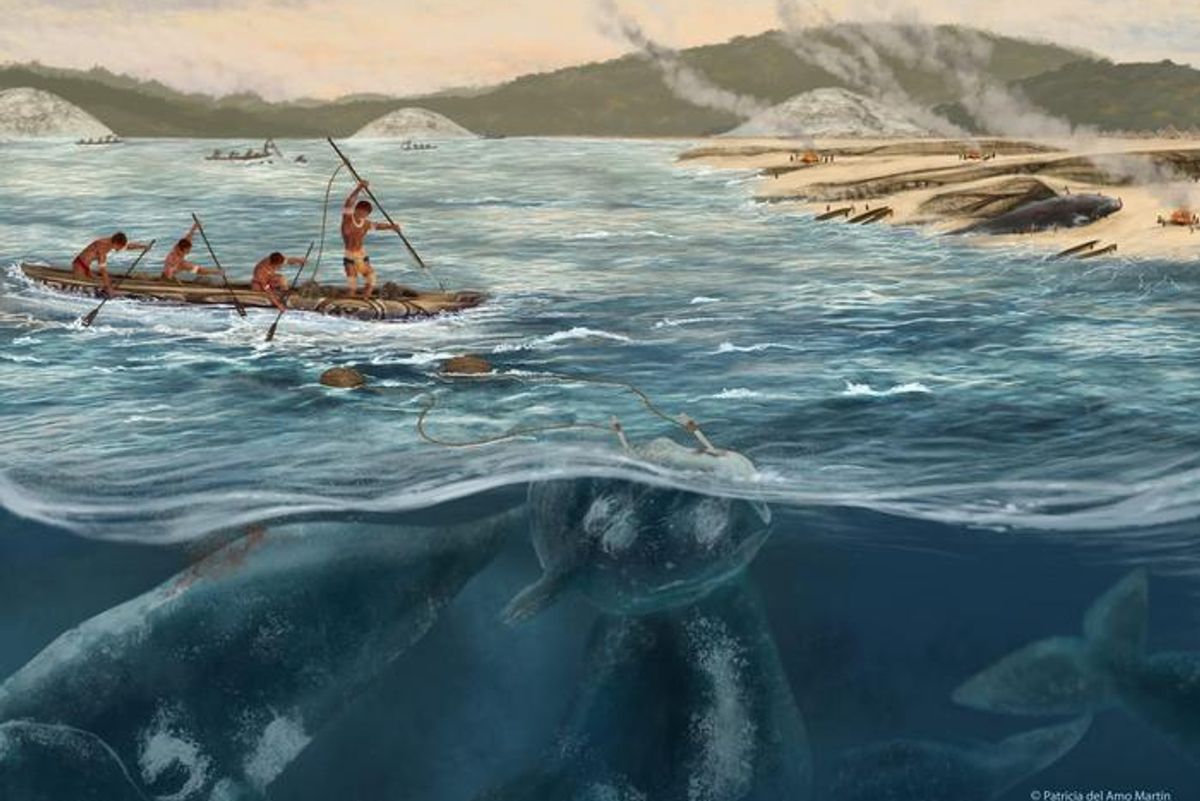
The two fossils were not from a woolly mammoth; they were actually bones from two different whale species, a minke whale and a right whale.
“Here we had two whale specimens — not just that, but two separate species of whale,” Wooller said. “It just kept getting weirder and weirder.”
A Whale of a Mix-Up
Though the bones were not from a mammoth, the researchers quickly learned that whales and mammoths apparently had similar connector bones between their vertebrae, each with a spongy, dinner plate-like appearance.
Because of their similarities, Wooller and Druckenmiller weren’t surprised that they had been misidentified. That and the fact that Dome City is well within mainland Alaska, and hundreds of miles from the sea. How did whale bones get all the way out there?
Wooller and Druckenmiller propose several theories. It could be that wolves, bears, or other predators brought the bones into the mainland, or that at one point the whales swam up the ancient Tanana or Yukon rivers. Another theory is that ancient humans may have transported the bones.
“It might have been used as a plate, a platter, or for carving,” Druckenmiller said in a press statement, “but (the bone) hasn’t been modified.”
However, the duo's most likely theory is that the fossils were mislabeled and ended up in the wrong museum collection. According to the university, on the same date that fossils from Dome Creek were processed at the museum, fossils from Alaska’s west coast were also filed. It’s possible a switch-up could have happened there.
Read More: 40,000-Year-Old Woolly Mammoth RNA Offers Insight to Megafauna's Final Moments
Article Sources
Our writers at Discovermagazine.com use peer-reviewed studies and high-quality sources for our articles, and our editors review for scientific accuracy and editorial standards. Review the sources used below for this article: