Filing your taxes, cleaning your inbox, and assembling flat-pack furniture. Life is full of boring but necessary tasks, and it is not always easy to find motivation.
Now, scientists writing in Current Biology believe they have identified a pathway in the brain that serves as a biological brake and influences our ability to initiate a task. The hope is that one day, the research will help those who suffer from a severe lack of motivation triggered by conditions such as depression and schizophrenia.
Read More: Non-Invasive Sound Therapy Helps Target Alzheimer’s Plaques in Monkeys — Could It One Day Help Humans?
Finding Motivation From Monkeys
When deciding whether or not to initiate a task, the brain essentially conjures up a pros and cons list, weighing up the benefits (or reward) versus the drawbacks (or cost) of completing said task.
But while it is known that motivation tends to drop when a task is considered unpleasant or the costs appear too high, it is not known how the brain translates this value judgement into a decision not to act.
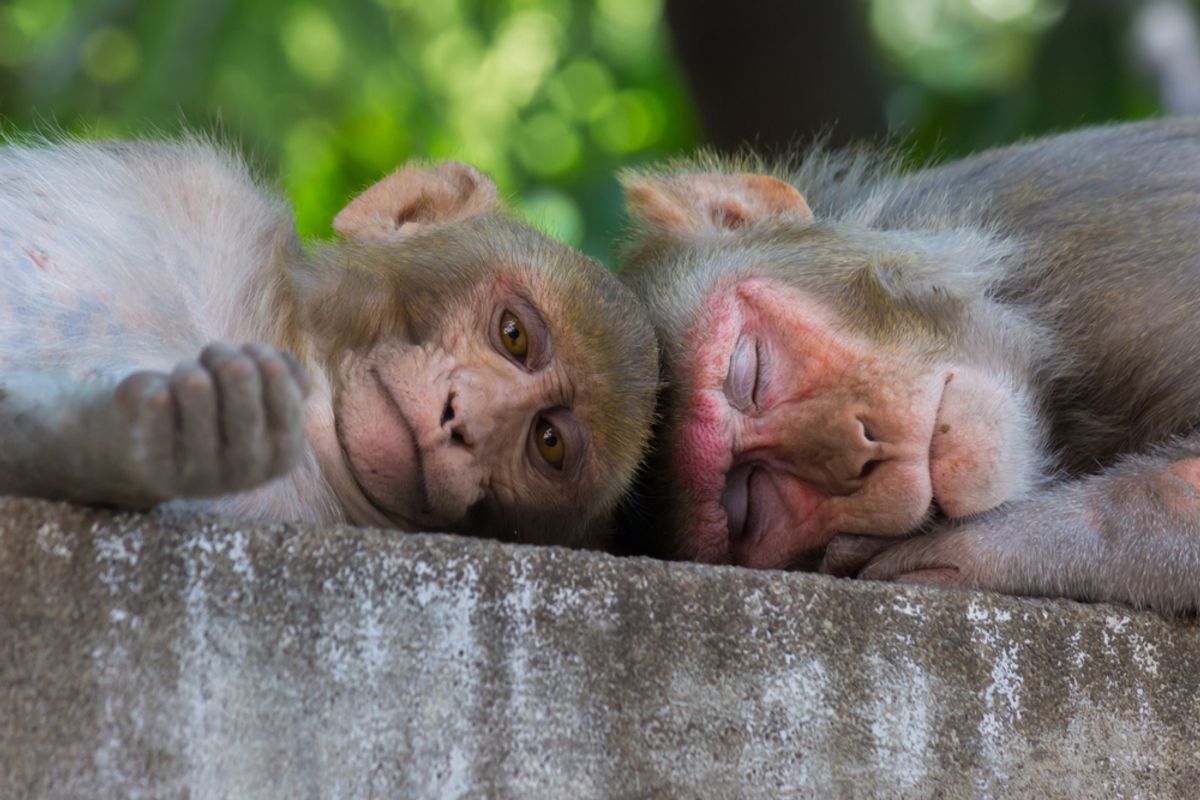
To find out, scientists at Kyoto University, Japan, recruited two male macaques — a highly intelligent species that shares many of our cognitive processes.
The macaques were trained to complete tasks under two scenarios: the first earned the monkey a water treat ; the second earned the monkey a water treat accompanied by an irksome puff of air to the face. In each situation, the task was preceded by a cue, and the macaque was given the choice whether or not to participate.
The researchers note that when the monkeys were rewarded with a water treat, they set about the task without pause. This was not the case when they were rewarded with a water treat and punished with a puff of air to the face. In the latter scenario, the monkeys often hesitated.
Brain Regions Responsible for Motivation
There are two regions of the brain that play an integral role when it comes to motivation: the ventral striatum (VS) and the ventral pallidum (VP). Research has shown that disruptions between the two can result in apathy or, conversely, compulsive behavior.
In this experiment, the researchers found that during the second, more stressful scenario, activity in the VS rose while activity in the VP fell. Increased activity in the former could inform the monkey that a particular task is stressful, researchers explain. Meanwhile, decreased activity in the latter suggests neurons in the VS have “a potential inhibitory influence” on activity in the VP during aversive scenarios.
Interestingly, the team was able to modify this response by dampening brain connectivity between the VS and VP. Doing so essentially loosened the motivation brake, enabling the monkeys to start the task, even when it resulted in a puff of air to the face.
“This chemogenetic study provides causal evidence that the VS-VP pathway regulates the initiation of goal-directed behavior under aversive conditions while exerting minimal effects on outcome valuation,” the study’s authors wrote.
In other words, it does not impinge on the monkey's ability to weigh the pros and cons of carrying out the task, but it does affect their ability to initiate the task in the first place. Those who decided to go ahead with the task despite the puff of air in the face did so with less hesitation.
What Are The Real-World Implications?
All but the most motivated of us can probably imagine a time when we have struggled to drum up the motivation to complete an unpleasant task, whether that is revising for an exam or rewriting a CV. However, some people struggle with a particularly severe lack of motivation, called avolition, which can make it difficult to perform even simple tasks, such as showering.
Avolition is not apathy (which is tied to a lack of interest and enthusiasm), nor is it laziness (which involves a choice). Avolition encompasses a sense of paralysis and the inability to start or complete an activity the person knows they need to perform, and is often associated with conditions such as depression, schizophrenia, and Parkinson’s disease.
The scientists hope that by deepening our understanding of the biological mechanisms behind motivation, the study lays the groundwork for future research seeking effective treatment for avolition.
Read More: Around 25 Percent of Your Mental Health Risk Is Tied to Your Personality
Article Sources
Our writers at Discovermagazine.com use peer-reviewed studies and high-quality sources for our articles, and our editors review for scientific accuracy and editorial standards. Review the sources used below for this article: