
Remember me








/https://tf-cmsv2-smithsonianmag-media.s3.amazonaws.com/accounts/headshot/matchar.png)
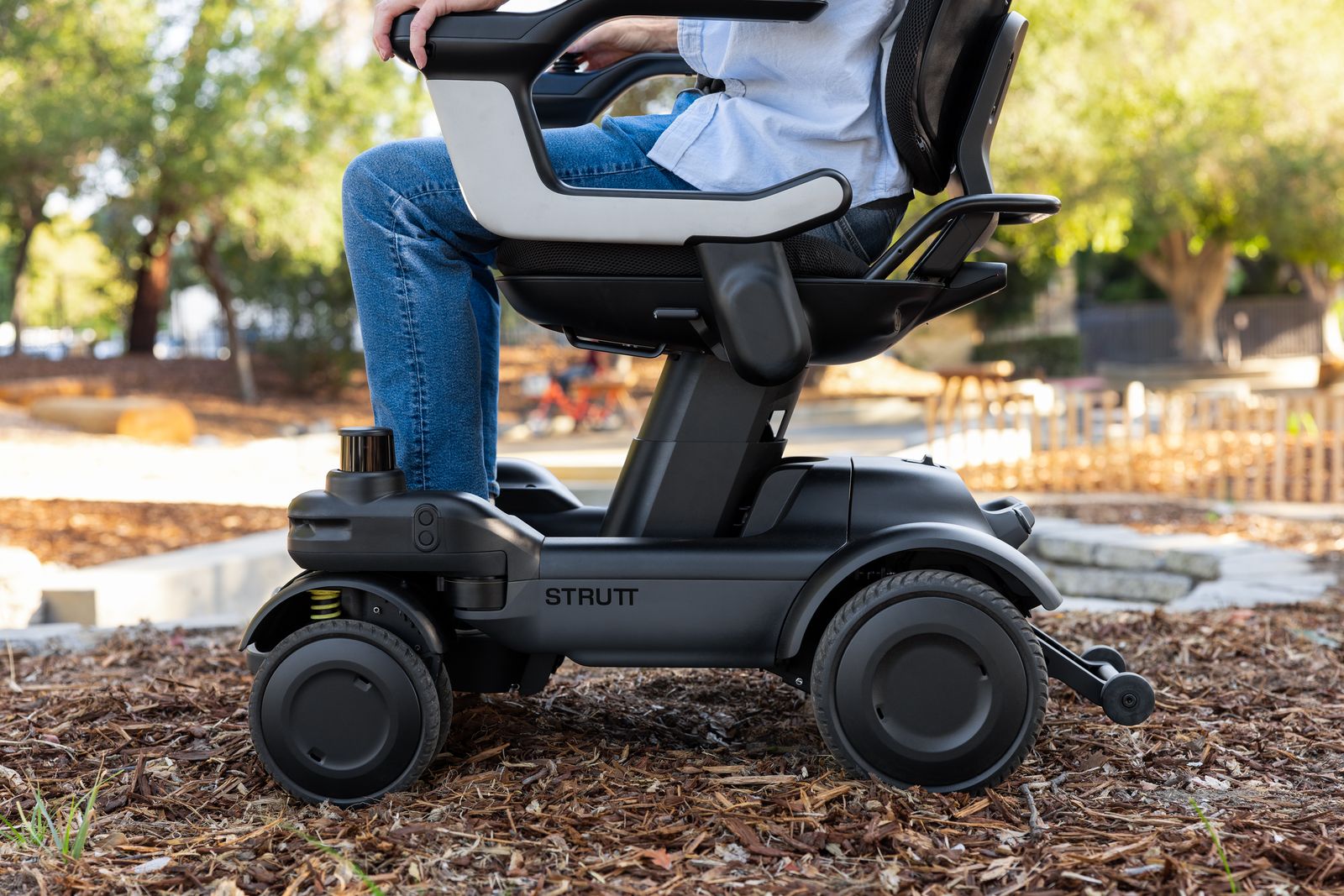
:focal(1500x1007:1501x1008)/https://tf-cmsv2-smithsonianmag-media.s3.amazonaws.com/filer_public/01/3b/013b038a-5ea7-42a7-b6bd-1d517dd2efa4/the__ev1-closeup-5.jpg) The Strutt EV1 electric motorized chair is marketed to everyone, whether they have mobility challenges or simply want a cool, voice-controlled ride.
Strutt
The Strutt EV1 electric motorized chair is marketed to everyone, whether they have mobility challenges or simply want a cool, voice-controlled ride.
Strutt
Unsurprisingly, “A.I.” was the watchword at this year’s Consumer Electronics Show (CES), the world’s largest tech show, back for its 59th year. The Las Vegas Convention Center teemed with tens of thousands of visitors perusing booths full of everything from A.I.-imbued mattresses to A.I.-powered digital employee clones to an A.I.-controlled skateboarding penguin.
Some of the gadgets on display were just for fun—one much-buzzed-about item was a lollipop that conducts music through your skull bones while you eat it—while others aimed to boost health, improve accessibility and clean the environment.
We’ve rounded up seven of the most interesting and potentially useful of the batch.
Quick facts: History of CES The very first Consumer Electronics Show was held in 1967 in New York City. More than 17,000 people came to the Hilton and Americana hotels over four days in June to see some 200 exhibitors. This year, CES expected more than 140,000 attendees and upwards of 4,100 exhibitors. A rolling solar-powered chargerNeed a convenient, clean-energy charger that doubles as a robot pet? California-based company Jackery has got you covered with its new Solar Mars Bot. Resembling an iPhone on a roller skate, the bot sprouts helicopter-blade-like solar panels when it senses sunlight, drawing power to charge your gadgets. Headed to the beach and want to power your outdoor speakers? The bot’s autonomous cruising capability allows it to tag along behind you like a puppy—or zip there solo. When solar rays are low, it will automatically route itself back to a charging base. The Solar Mars Bot has a 5,000-watt-hour reserve, enough to power a small cabin for several days. It also has the juice to help in more serious situations, with its weather-resistant exterior and the ability to cross rugged terrain to aid in rescue operations. No price or release date yet.
One ring to rule them all (your laptop keys, that is)We’re used to seeing wearable health-tracker rings these days, but the plastic Prolo Ring has a different purpose. Slip it onto the index finger of your dominant hand while typing, and tap its touch surface with your thumb. Voila: full cursor control, no mouse or touchscreen necessary. The makers of the Prolo Ring say it can speed workflow when used as a full mouse, a keyboard shortcut tool, or a remote controller for a phone or tablet. Plus, it looks sort of like Roman centurion armor, but for your finger. The basic edition can be pre-ordered for $159; the Pro version, with more gestures and customization options, goes for $229.
A supersmart wheelchairBilled as a “smart everyday vehicle,” the Strutt EV1 electric motorized chair is marketed to everyone, whether they have mobility challenges or simply want a cool, voice-controlled ride. The EV1 uses lidar and an array of other sensors and cameras to make a continuously updated 3D map of the area around the chair, giving it obstacle avoidance similar to that of a driverless car. Users can control the chair themselves (though the “evSense system” won’t allow you to collide with anything) or allow it to pick the best route toward a given destination. Reviewing the EV1 for New Mobility, former Paralympic wheelchair rugby player Seth McBride writes, “For what it is—essentially a super advanced travel chair—it’s an incredibly useful, well-designed piece of technology.” The early-bird price for pre-orders is $5,299.
An A.I. tennis partnerNone of your friends are free to play tennis? Don’t feel like shelling out for a coach? Lumistar, a sports-focused A.I. company, has just unveiled a potential solution: The Tero Pro A.I. tennis launching machine. Using algorithms, computer vision and multiple sensors, the Tero Pro is designed to predict movements, track ball speed and trajectory, and calculate the landing point. As a coach, the sleek rolling cylinder (imagine a very elegant bucket of tennis balls perched on a small cannon, on wheels, all topped with a tiny robot head) can analyze shot quality and adjust its own return within one-tenth of a second. Users control the Tero Pro with voice, gestures or an app, and get instant post-session reports, which are stored to track progress over time. Tero Pro presales start in April; full sales will begin in May. Price TBA.
A smart stove shutoffThe iGuard’s not flashy or sleek or A.I.-equipped, but it is potentially lifesaving. The advanced motion sensor helps cooks avoid kitchen fires by shutting off the stove when it detects lack of movement for five minutes. This is especially crucial for older adults, who may have memory issues or a decreased sense of smell, making them more likely to forget a pot on a hot stove—most people killed in cooking fires are 55 or over. iGuard also allows remote access, so caregivers can check on the stove’s status or disable it from outside the home. The iGuard, available for gas and electric stoves, is $399 and will ship later this year.
A health-assessing mirrorDoes a mirror that predicts how long you’ll live sound nifty or deeply unnerving? If the former, you might be gratified to learn that NuraLogix’s Longevity Mirror is going on sale early this year for $899. To receive the mirror’s judgment, stand before it for a video, then wait 30 seconds while it analyzes your facial blood-flow patterns. You’ll receive scores from 0 to 100 on various wellness indicators, like metabolic health, physiological age and mental stress, all based on an algorithm trained on hundreds of thousands of patient records. If the mirror tells you that you’ve got one wrinkly foot in the grave, an A.I. assistant can offer personalized recommendations for improvement. The mirror’s initial purchase fee includes a year of membership; after that, annual memberships are $99.
A plastic compactor to boost recyclabilityFile Clear Drop’s Soft Plastic Compactor (SPC) under “unglamorous but useful.” The trash-can-like appliance takes soft plastics—plastic bags, mailers, food packaging—and squishes them down into dense, recycling-ready bricks. Although many of us already toss these items into the recycling bin, most municipal recycling programs can’t actually process them, and they wind up in landfills, degrading into microplastics that contaminate the environment. An SPC can hold about a month’s worth of soft plastics; when it fills up, users put their compacted plastic bricks in prepaid mailers and send them to authorized Clear Drop recycling partners. The SPC requires a subscription, which costs $200 on sign-up and then $50 a month.
Get the latest stories in your inbox every weekday.
Comments (0)