
Remember me








/https://tf-cmsv2-smithsonianmag-media.s3.amazonaws.com/accounts/headshot/Margherita_Bassi.png)
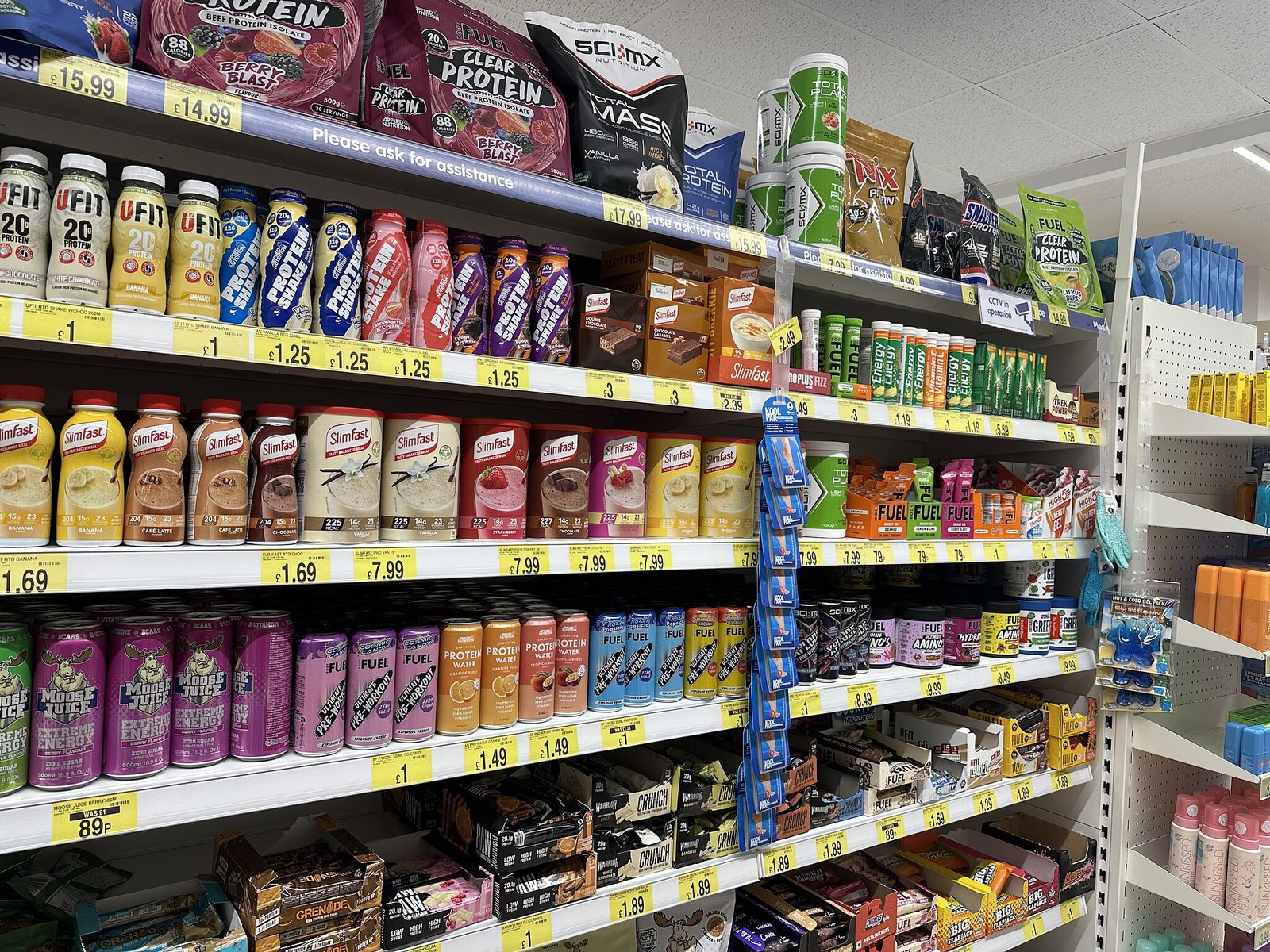
:focal(1024x770:1025x771)/https://tf-cmsv2-smithsonianmag-media.s3.amazonaws.com/filer_public/8c/df/8cdfa785-3a23-4303-88d6-6de000010dda/2048px-shelves_with_protein_drinks_supplements_and_other_packaged_foods_at_bm_134-142_high.jpg) Researchers investigated the associations between preservatives and the risk of developing cancer and type 2 diabetes.
Sunolafjagtenben-hur via Wikimedia Commons under CC0 1.0
Researchers investigated the associations between preservatives and the risk of developing cancer and type 2 diabetes.
Sunolafjagtenben-hur via Wikimedia Commons under CC0 1.0
Adding preservatives to food can protect the quality of edible items, prevent spoilage and reduce waste. But after tracking more than 100,000 participants for 14 years, two studies published last week have found associations between higher consumption of certain preservatives and a heightened risk of developing cancer and type 2 diabetes.
“These are very important findings for preservatives that are not only widely used in the French and European markets, but also in the United States,” Mathilde Touvier, co-author of both studies and a nutrition epidemiologist at the Center for Research in Epidemiology and Statistics in France, tells CNN’s Sandee LaMotte. However, because the papers are the first of their kind, “we must be very cautious about the message,” she adds. “Obviously, the results need to be confirmed.”
Researchers behind both papers followed French participants of the NutriNet-Santé study from 2009 to 2023. Nearly 80 percent were women.
Need to know: What’s the NutriNet-Santé study?The NutriNet-Santé study is an ongoing nutrition study of volunteers ages 15 and older that examines participants’ self-reported information and connects it with French national health databases. As of 2023, it had more than 174,000 participants.
In the cancer study, published January 7 in the journal BMJ, Touvier and her colleagues investigated 17 individual preservatives. Eleven of them were not associated with cancer incidence, and the team didn’t find a link between total preservative intake and cancer.
The researchers did, however, find an association between higher consumption of preservatives called non-antioxidants—which impede the growth of microbes or slow chemical changes that make food go bad—and cancer risk. People who ate lots of these preservatives were about 16 percent more likely to develop any cancer and 22 percent more likely to develop breast cancer compared with non- or lower consumers.
Broken down even further, high consumers of acetates—which are in processed meats, breads and other foods—were at a 15 percent increased risk of developing any cancer and a 25 percent increased risk of breast cancer compared with non- or low consumers. And those who ate large amounts of sodium nitrite, also often in meats, were at a 32 percent increased risk of prostate cancer relative to the comparison group, the team found.
While “a major strength of this study was its detailed assessment of preservative intake … given the modest increased risk estimates, causality cannot be established,” write Xinyu Wang and Edward Giovannucci, nutrition epidemiologists at the Harvard T.H. Chan School of Public Health who were not involved in the new studies, write in an accompanying editorial in the BMJ. “For example, nitrites and nitrates were consumed mainly through processed meats, whereas sulfites were consumed predominantly from alcoholic beverages—both classified as carcinogenic to humans.”
In the type 2 diabetes paper, published January 7 in the journal Nature Communications, researchers investigated the total amounts of preservatives in the participants’ food records and 17 individual additives. People with a high preservative intake were 47 percent more likely to develop type 2 diabetes compared with those who ate the lowest amounts. Higher preservative consumers tended to be younger, be less physically active, have a reduced family history of type 2 diabetes and have a lower prevalence of other metabolic diseases, like hypertension, relative to the other group.
Greater consumption of non-antioxidant preservatives, specifically, was associated with a 49 percent increased risk of type 2 diabetes, and antioxidant additives—which preserve foods by controlling oxygen exposure in packaging—with a 40 percent increased risk compared with people who ate the lowest amounts of the substances. And a higher intake of 12 of the 17 individually examined preservatives, including sodium nitrite and sodium acetates, was also linked with a heightened risk of the disease.
“These are the first epidemiological studies in the world to quantify exposure to preservatives and the risk of developing cancer and diabetes,” Touvier tells Le Monde’s Mathilde Gérard. “We need to be cautious about the percentage increases in risk, as they come from just one study,” she notes. “But these data already show a significant association and are consistent with experimental research suggesting that several compounds may have harmful effects.”
William Gallagher, a cancer biologist at University College Dublin who was not involved with the studies, tells the Guardian’s Andrew Gregory that he agrees. “These higher rates of cancer are modest but are significant when taken at a population-based level in terms of potential impact,” he says.
Get the latest stories in your inbox every weekday.
Comments (0)