
Remember me






Powerline adapters feel like magic the first time you use them. You plug one box in by your router, another somewhere else, and suddenly you’ve got “wired internet” without turning your hallway into an Ethernet obstacle course. No drilling, no cables taped along the wall, and no judgment from your partner. Just vibes. And to be fair, they do work. That’s the problem. Because “working” is not the same thing as working well. I ran powerline for longer than I’d like to admit. It connected.
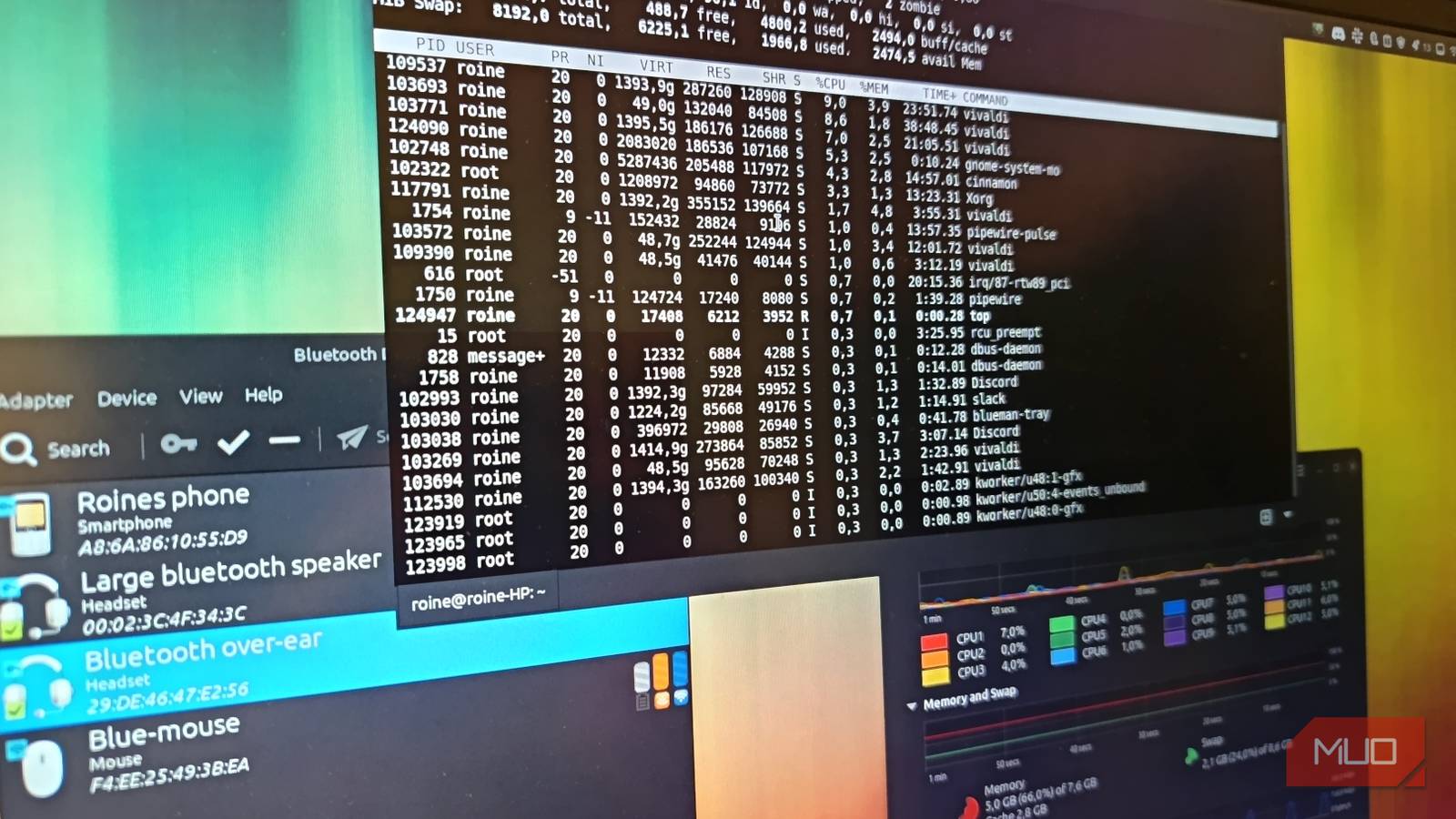
It passed traffic, and nothing exploded. But the experience was … moody. Speeds would randomly dip. Latency spikes would show up uninvited. Some days it felt snappy, other days it felt like my network had a hangover. And the worst part? Nothing looked wrong. System monitors were calm. The CPU is chilling, RAM unbothered, and the disk idle. Meanwhile, my actual experience was whispering: something’s off. Then I switched to MoCA, and suddenly, all the weirdness I had normalized just disappeared.
Powerline adapters aren’t unreliable, they’re unpredictable Your electrical wiring was never invited to this party Credit: Jonathon Jachura / MUO
Powerline networking sounds clever because it hijacks something your home already has: electrical wiring. No setup. No planning. Just plug and pray. But here’s the uncomfortable truth. Your electrical system was designed to deliver power, not data. It’s basically being forced into a second job it never applied for. And it shows. Every appliance in your home becomes a potential chaos generator. Microwaves, phone chargers, LED lights, and switching power supplies can all inject electromagnetic noise into your wiring, degrading signal‑to‑noise ratio and powerline throughput.
So your connection isn’t just handling traffic. It’s fighting your toaster. And that noise isn’t consistent. It changes throughout the day depending on what’s running. That’s why your connection can feel perfectly fine at noon and slightly cursed at 8 PM. Then you add wiring quirks on top of that. Different circuits, old cabling, weird routing inside the walls. Move an adapter to a different outlet and suddenly your speeds either double … or fall off a cliff. Powerline doesn’t fail dramatically. It just refuses to behave the same way twice, and that’s worse.
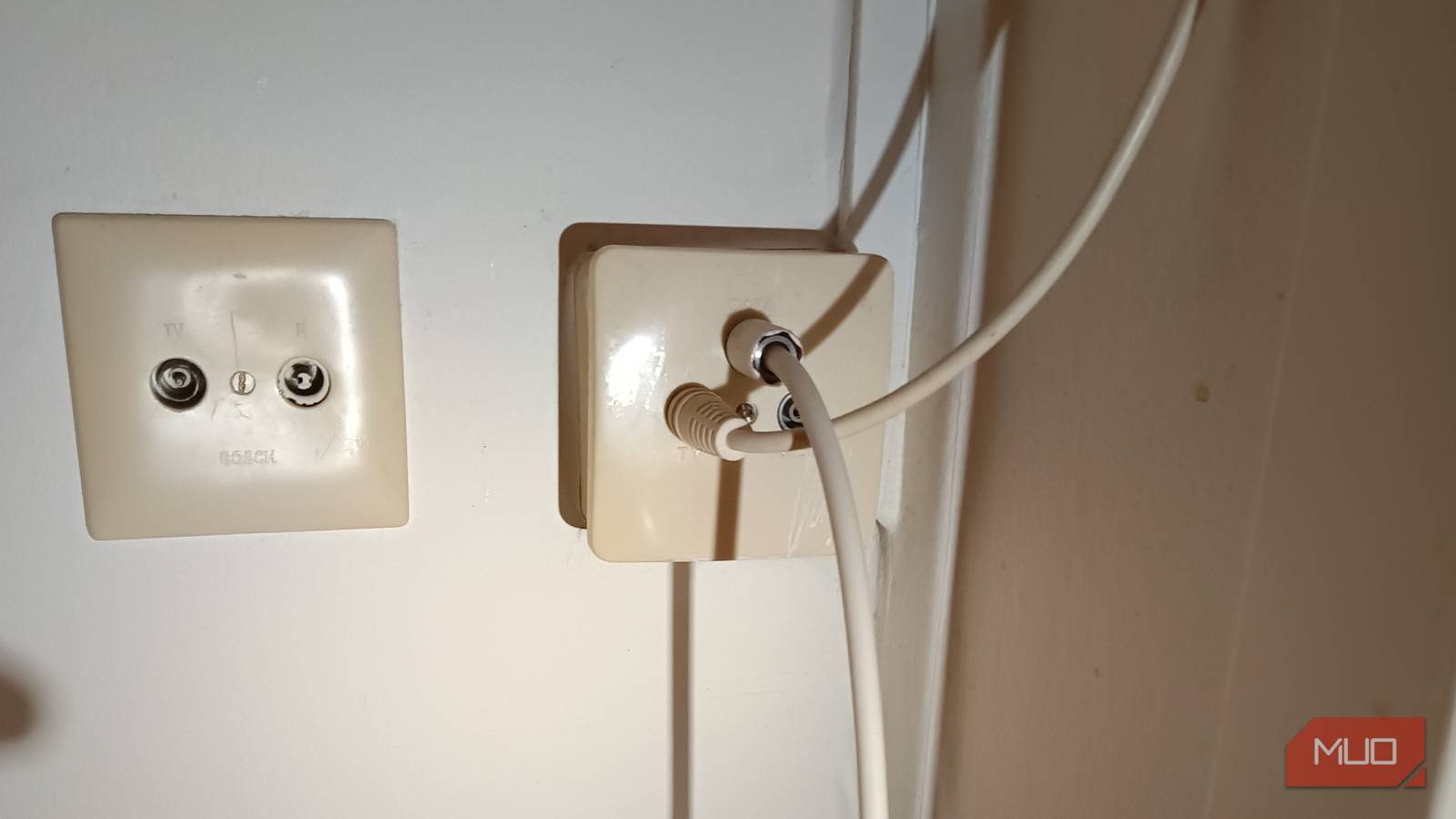
MoCA uses something that actually makes sense Your coax cables have been waiting for this moment Credit: Shaun Cichacki/MUO
MoCA takes one look at your electrical wiring and says, “Yeah, no.” Instead, it uses coaxial cables. The same ones originally installed for cable TV. Here’s the difference. Coax was built for signal transmission. Shielded, stable, designed for high-frequency communication. It’s basically networking hardware in disguise. Which means it doesn’t freak out when you turn on a lamp, or want to reheat those dino nuggets. When I switched to MoCA, the difference wasn’t subtle. It wasn’t a benchmark improvement. It was a feeling.
Everything became … calm. No random dips. No weird spikes. No “why is this slow right now?” moments. Just consistent speeds and predictable latency, all day, every day. Setup felt less like a workaround and more like unlocking a feature my apartment had been quietly offering the whole time. Plug one adapter into your router and a coax outlet. Plug another wherever you need it. Done. And not “done, but keep an eye on it.”
The biggest upgrade isn’t speed, it’s sanity You stop blaming your system for your network’s bad behavior
Here’s where it gets interesting. Switching to MoCA didn’t just improve my network. It changed how I troubleshoot everything.
With powerline, every slowdown turns into a mini investigation. You start questioning your entire setup:
Is it the ISP? The router? A background process? Did my OS decide to get creative today?You open system monitors, you check logs, and you restart things that probably didn’t need restarting. You become that person. I’ve been that person. With MoCA, that layer of doubt just disappears. File transfers stay stable, streaming stops throwing tantrums, remote sessions feel snappy instead of slightly haunted, and browsing finally remembers how it’s supposed to work. Your network stops being a suspect in every investigation. And that alone is worth the switch.
Powerline is popular for one reason “Good enough” is a dangerously comfortable liePowerline adapters are everywhere because they solve a real problem quickly. Bad Wi-Fi in another room? Plug this in. Done. And technically, that promise is delivered. You get a connection, it works, and most of the time it’s even fast enough. That’s where people stop thinking. Because “fast enough” and “stable enough” are not the same thing. But once something works, we tend to normalize its flaws. The random slowdowns fade into background noise, the inconsistencies become expected, and before long, you’ve quietly adapted.
MoCA doesn’t benefit from that same kind of visibility. It asks for a tiny bit more awareness, like realizing those coax outlets aren’t just leftovers from the cable TV era but actual network infrastructure waiting to be used. That small mental leap is enough to keep most people from even considering it. So powerline keeps winning. Not because it’s better, but because it’s obvious.
 Related
If you have coax, you’re sitting on a better network
This isn’t an upgrade, it’s a correction
Related
If you have coax, you’re sitting on a better network
This isn’t an upgrade, it’s a correction

If your home has coax outlets in multiple rooms, you already have everything you need for a significantly more stable network. MoCA isn’t about chasing peak speeds to flex in a speed test screenshot. It’s about consistency, low latency, and predictability. It’s about your network behaving like infrastructure instead of a suggestion. Yes, there are edge cases. If you don’t have coax, this isn’t your path. If your Wi-Fi is flawless, you might not care.
And sure, powerline still has a place as a temporary fix when you’re out of options. But it shouldn’t be your default anymore. Powerline had its moment. It was clever. It solved a problem when alternatives were less obvious. But if coax is already running through your walls, you’re not upgrading by switching to MoCA. You’re just finally using the right tool for the job. And once you experience a network that behaves the same way at 3 PM as it does at 11 PM … Going back to powerline feels less like a compromise and more like willingly reintroducing chaos into your life.