
Remember me






 Jerry Oltion
In the early days of amateur astronomy, if you wanted a telescope, you built it yourself. Commercially manufactured telescopes were few and far between, and those that were available were horribly expensive. Often, they had to be commissioned as one-off, hand-built items. Even when companies like Edmund Scientific started selling budget Newtonian reflectors, the cost was still well beyond most families’ budgets.
On the other hand, the price of a glass blank and some grit was fairly reasonable, typically a few dollars for a 6-inch mirror. Once completed, the mirror could be chemically silvered (not aluminized) for a few dollars more. Adding a cardboard tube got you an optical tube assembly (OTA), some pipe fittings got you an equatorial mount, and with a Ramsden or Huygens eyepiece for a few dollars more you were in business.
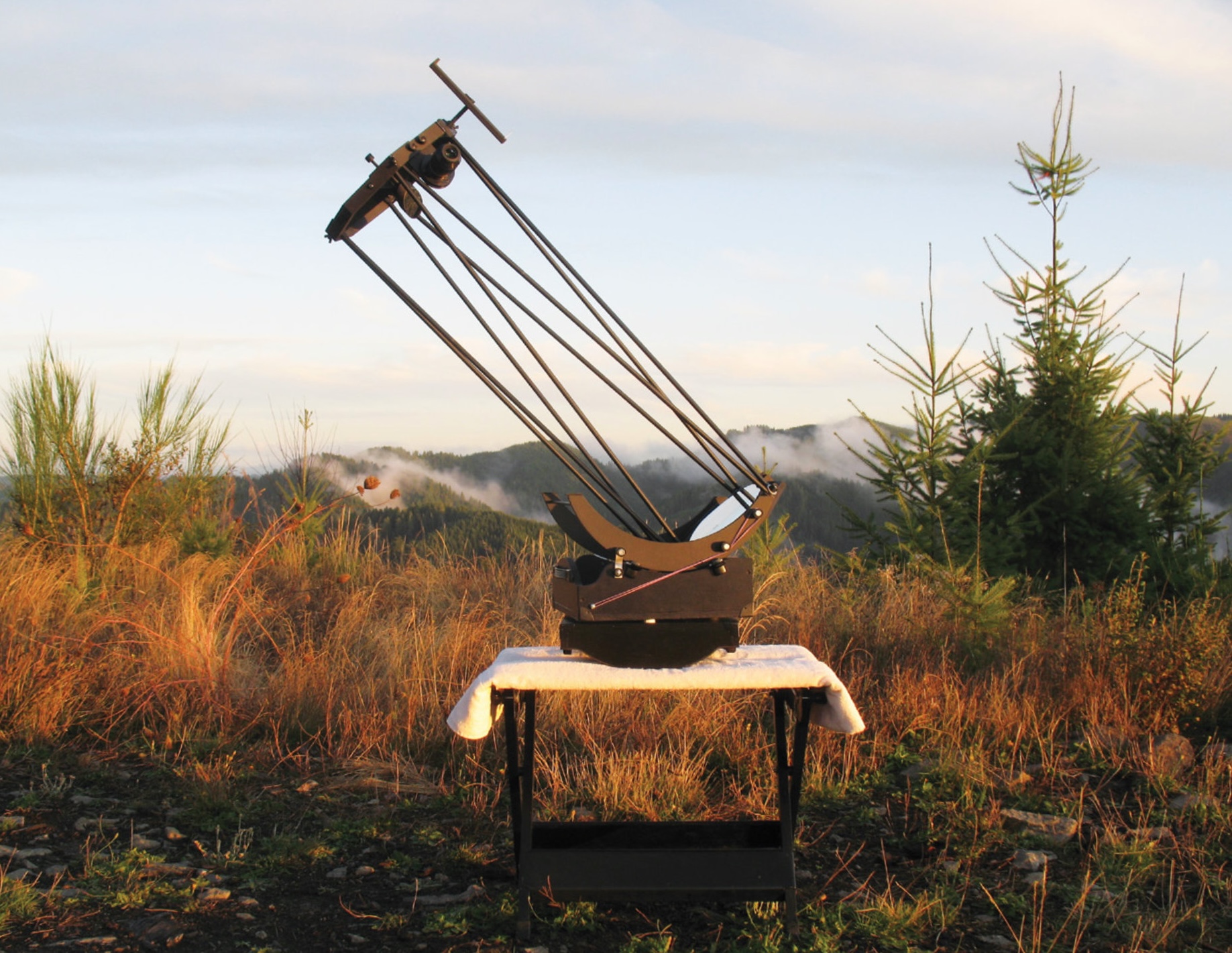
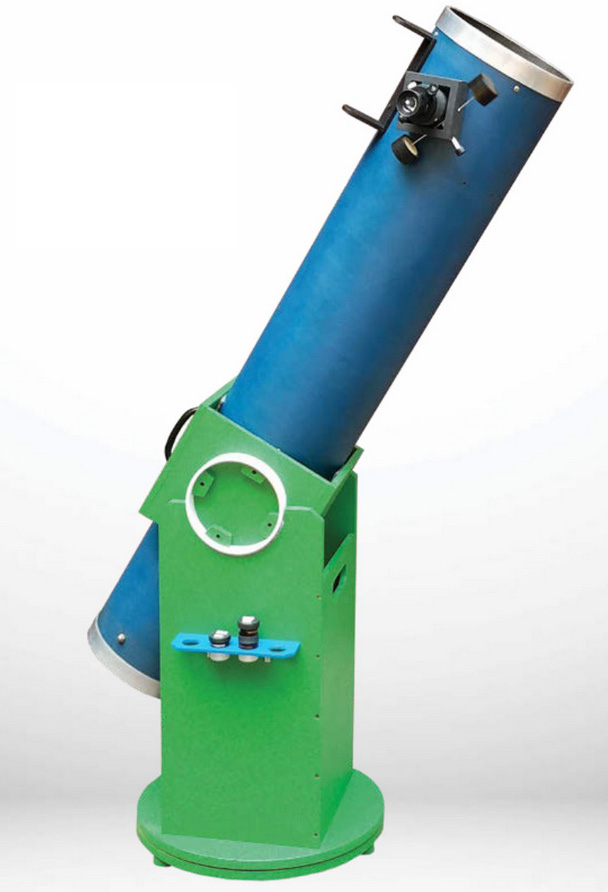 BUILT WITH CARE A home-built 8-inch Dobsonian telescope can rival a commercial scope in quality, usability, and price.
 John Dobson revolutionized both the size and ease of mounting homemade Newtonian telescopes, bringing scopes as large as 24 inches in diameter well into the realm of possibility for amateur telescope makers. But commercial telescopes remained wildly expensive: A 6-inch f/8 Newtonian went for $228 in 1971, which is $1,466 in today’s dollars.
This situation persisted well into the 1970s, mostly because nobody could come up with a decent way to automate the mirror-making process. Paying someone in a telescope factory to grind a mirror was way more expensive than doing it yourself (assuming you worked for free).
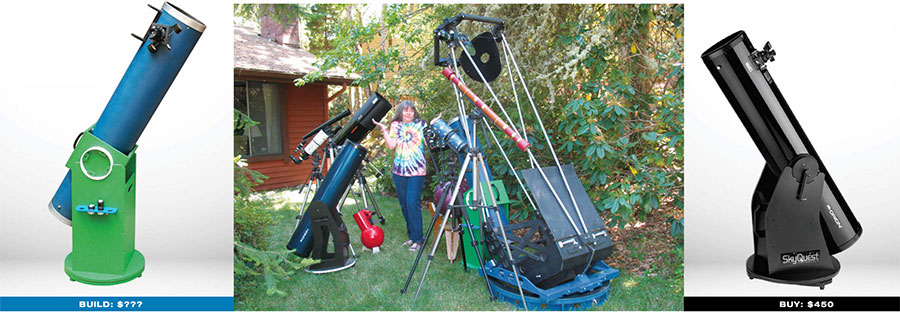
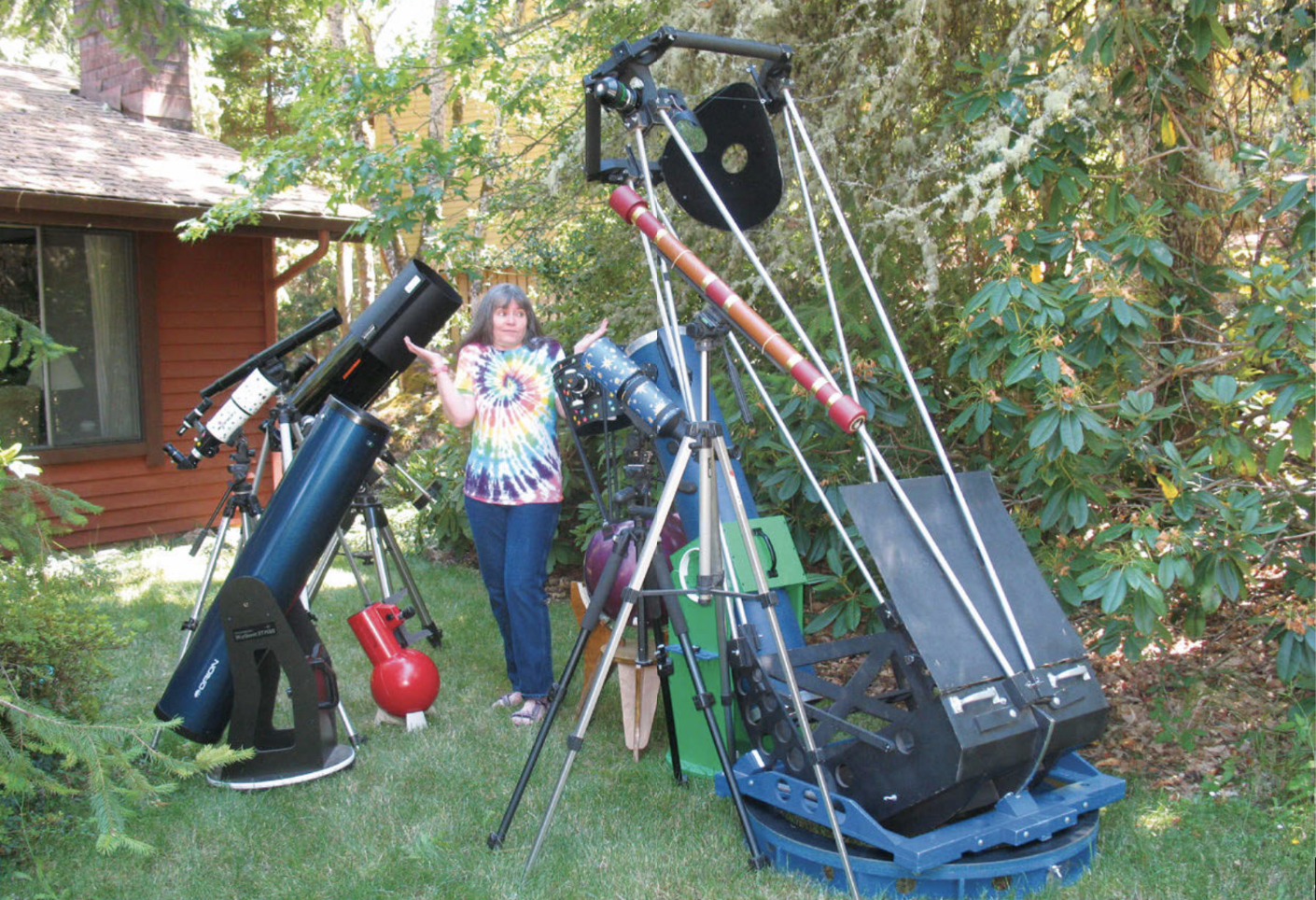 DECISIONS, DECISIONS . . . The price of a commercially manufactured telescope has never been more affordable. But is it still cheaper to build your own rather than purchase a scope outright?
Then the Coulter Optical Company came along and started selling medium-large (10′′ and 13.1′′) Dobsonian reflectors for only a few hundred dollars. Suddenly the equation flipped, and it became cheaper to buy than to build. Or nearly so, depending on how much scrounging of parts you were prepared to do.
Coulter’s mirrors were hit-and-miss, though. Some were very high quality, others not so much. If you wanted a truly excellent mirror, you were still better off making it yourself.
However, Coulter opened the floodgates. By the turn of the 21st century, multiple other companies had joined the fray. Their increasing technical expertise raised the quality of their mirrors until nowadays it’s relatively rare to get one that isn’t at least quarter-wave accurate, what’s often called “diffraction limited” (which means theoretically it can’t get any better, although you could probably start a bar fight if you insisted that was true around more than a couple of other astronomers).
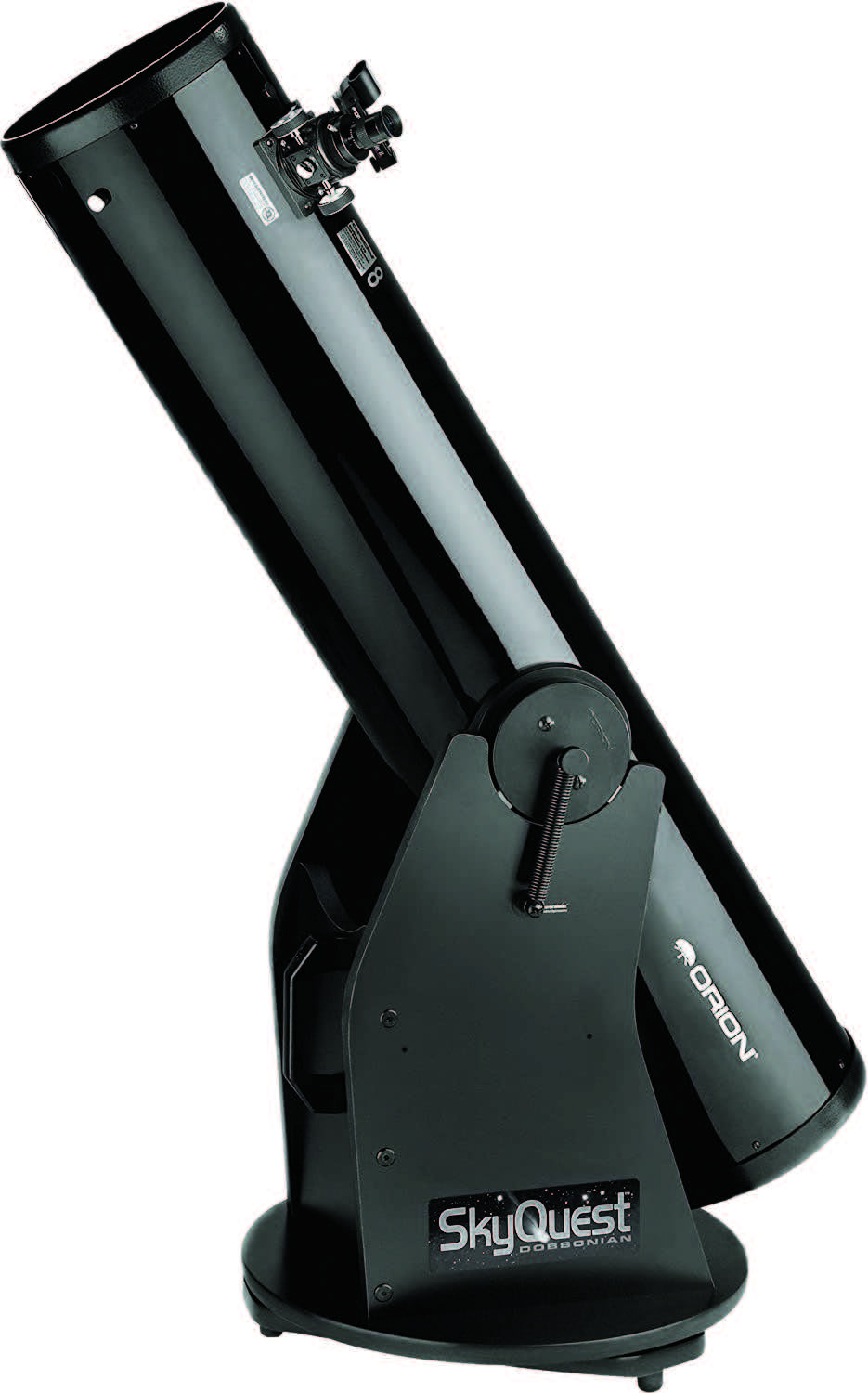 STIFF COMPETITION The Orion SkyQuest XT8 Dobsonian telescope is our benchmark. It’s an economical model whose price is tough to equal, much less beat.
So, what’s the story today? Can you buy a good telescope cheaper than you can build one?
I can show you how you can make your own 80-mm refractor with a factory-made lens and focuser, some galvanized flashing, and an oatmeal canister. Total cost is about $60. That’s considerably cheaper than what it would cost to buy a complete 80-mm refractor. But an 80-mm scope isn’t really enough for a serious amateur astronomer. Most of us will quickly lust after something more.
The 8-inch BenchmarkAn 8-inch Dobsonian is arguably one of the most versatile telescopes in existence. It’s easy to transport, yet large enough to show you some serious eye candy. As I write this in June of 2021, Orion Telescopes & Binoculars (telescope.com), Sky-Watcher (skywatcherusa.com), Zhumell (zhumell.com), and several other companies will sell you a very good one for about $450. This is more than usual due to the surge in demand brought about by the stay-at-home orders during the Covid-19 pandemic, but it’s still pretty reasonable. So $450 is our target. Can we make an 8′′ scope for that? Let’s have a look at the numbers.
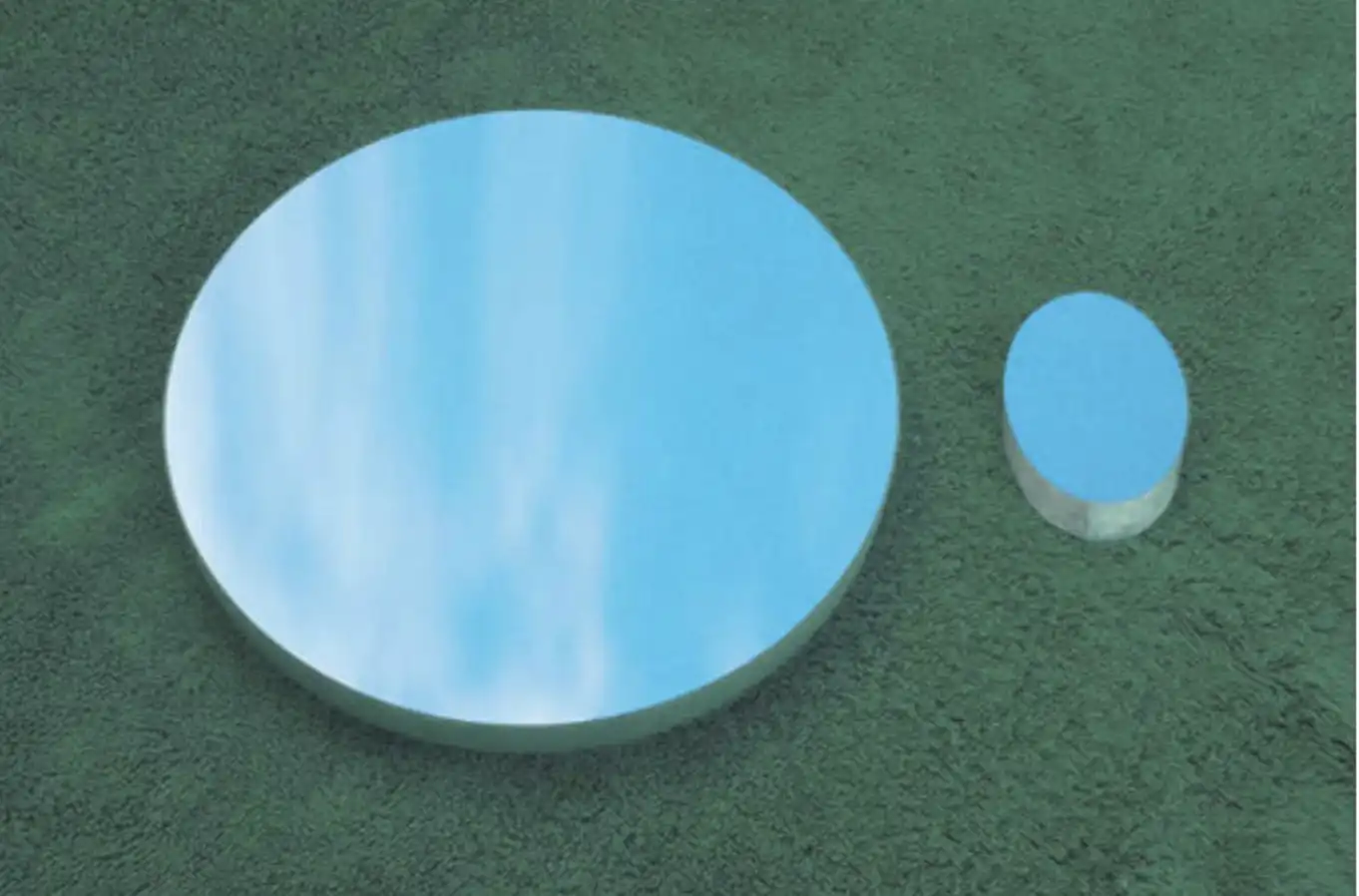 NEWTONIAN ESSENTIALS The primary and secondary mirrors are the heart of a reflector telescope.
The heart of every reflecting telescope is its primary mirror. All else is, well, secondary. And it’s pretty much a given that if you’re going to make your own telescope from scratch, you’ll want to grind your own primary.
To start with, you need a piece of glass. The cheapest blank I can find online is from Got Grit (gotgrit.com) and goes for $55 when it’s in stock. That’s for 3⁄4′′-thick plate glass, which is perfect for an 8′′ mirror. In the old days the rule of thumb was that your glass should have a thickness of one-sixth of its diameter to avoid sagging due to gravity, but that has proven to be overly cautious; 3⁄4′′ is plenty for an 8-inch mirror.
An 8-inch grinding kit from Got Grit provides you with all the grit, pitch, and tool supplies you’ll need, and it currently costs $64. So you’re out $119 to get started.
Anywhere from 40 hours (if you’ve done this before or if you’re lucky) to 100+ hours later (if you’re fussy and/or over-zealous in the final figuring like I am), you’ll have a parabolized mirror ready to be coated. Several different companies offer vacuum-deposited aluminum coating services, which is the standard telescope mirror coating nowadays. (A list of companies that provide the service appears in our March 2019 issue, page 38.) Their prices for an 8-inch mirror average about $100. Shipping both ways is about $50 more. The adventurous might consider silvering their own mirror for a bit less (S&T: Jan. 2020, p. 74), but let’s assume you’re having yours aluminized. So now we’re up to $269, and we have a shiny primary mirror in hand.
Interestingly enough: You can buy a completed 8′′ f/5 mirror for about $240. Add in shipping costs and it’s a wash. Arrgh!
The Secondary MirrorI have a mirror-making friend who says he doesn’t hate anyone enough to teach them how to make their own secondary mirror. Grinding and polishing a truly flat mirror is way harder than making a parabola. So, most amateur telescope makers simply buy them.
The size of the secondary depends upon the primary diameter and the focal ratio of the scope. F/5 is a very common focal ratio for an 8′′ scope, so let’s assume that’s what we’ve ground our primary mirror to. The diameter of the secondary mirror is also heavily dependent upon how far from the optical axis your focuser sticks out, but it’s common practice to add 3.5′′ to the radius of the mirror (4′′ in this case) to account for the focuser’s average travel. A little math (secondary diameter = centerline-to-focal-plane distance divided by focal ratio) tells us we need a 1.5′′ secondary mirror (3.5 + 4 / 5 = 1.5). You can buy secondary mirrors from many vendors. The average price I’ve found for a 1.5′′ is about $40.
We’re now at $309.
The Optical Tube AssemblyYou need something to put these mirrors in. Most 8′′ f/5 scopes go in tubes rather than in truss assemblies, because tubes of that size are easier to deal with, they protect the optics from dust when you cap the ends, and they provide excellent light baffling. The easiest way to get a tube is to buy a cardboard concrete form, often called a Sonotube (even if it’s made by someone other than Sonotube). For an 8′′ f/5 scope you’ll need about 3.5 feet of tube. You’ll most likely have to settle for a 4-foot length of 10-inch-diameter tube, which will cost you about $11 at just about any home improvement store.
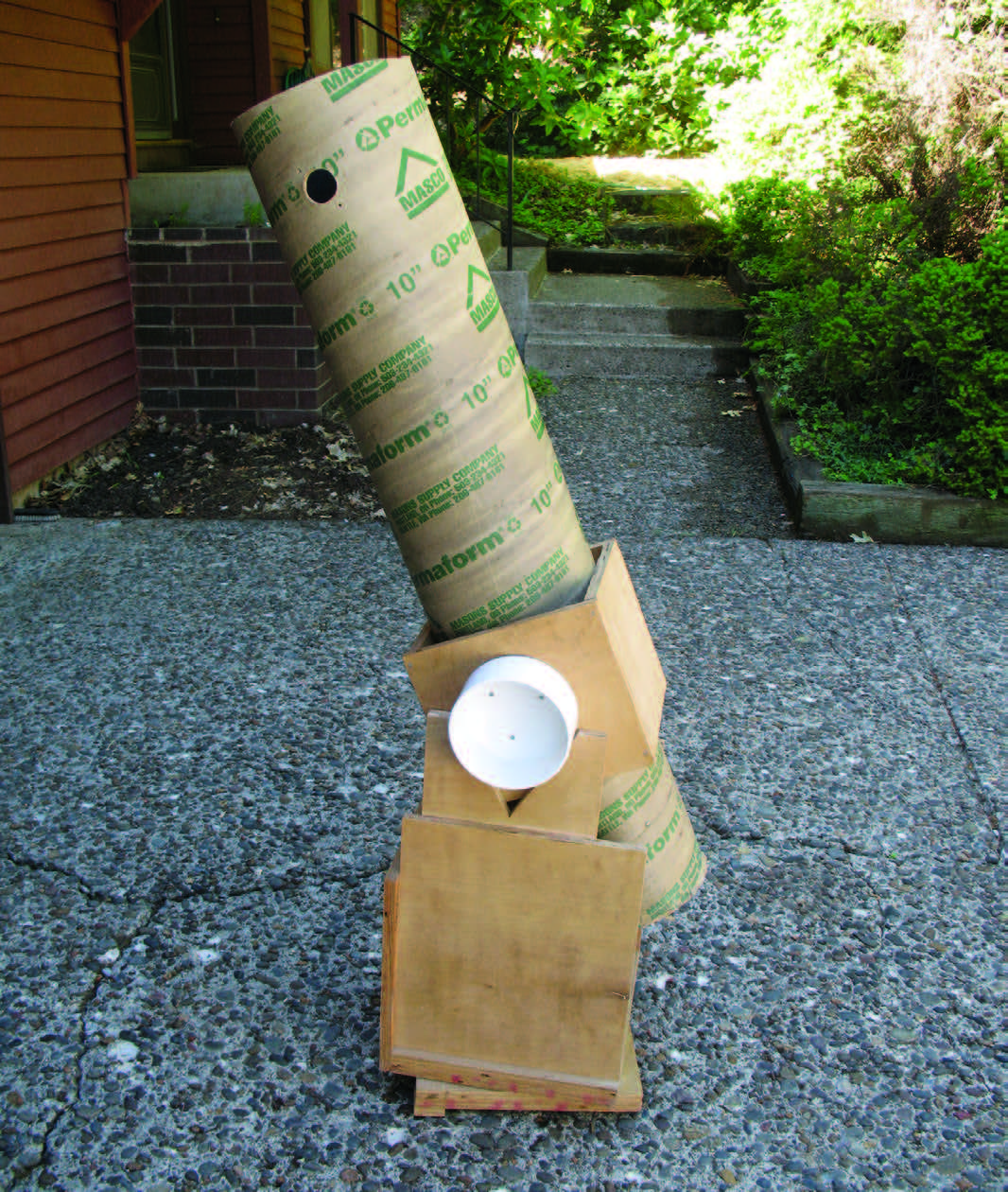 OPTICAL TUBE ASSEMBLY Cardboard concrete forms make excellent, inexpensive telescope tubes.
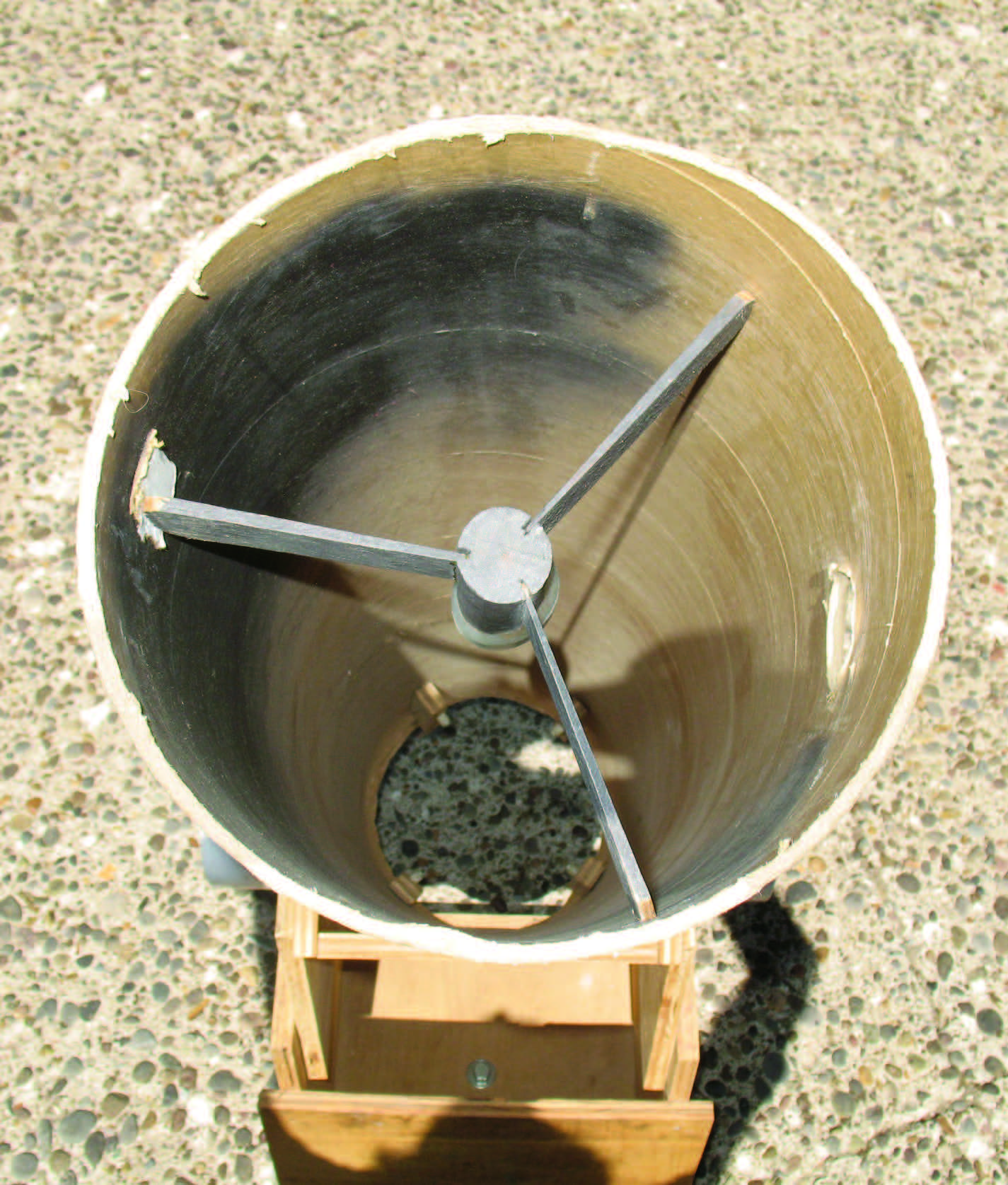 You can buy a secondary spider, but as John Dobson himself showed, you can easily make one from materials as basic as cedar shingles.
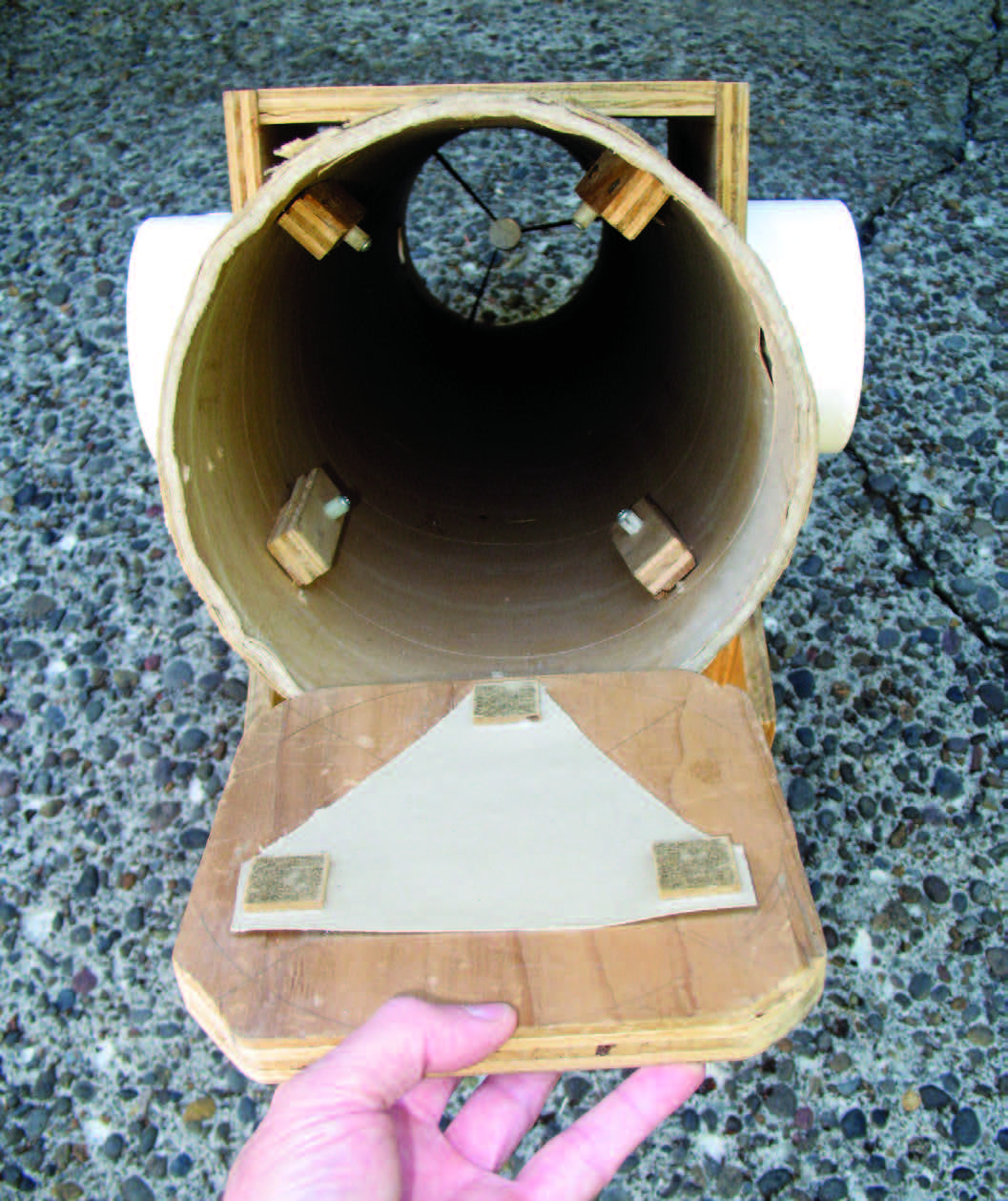 The primary mirror cell can be as simple as three bolts sticking up through a slab of plywood, padded with squares of Masonite held in place using cardboard from a cereal box.
So now we’re at $320.
You’ll need something to hold the secondary mirror in the tube. That’s called the “spider,” and it’s usually made of four vanes of metal and a 45°-angled mirror holder. You can make your own out of hacksaw blades, metal rulers, strips of galvanized tin, or even — harkening back to the days of Dobson’s original sidewalk telescopes — cedar shingles (S&T: Apr. 2020, p. 36). I make mine out of wire nowadays.
You can also buy one. There are several vendors and the prices range pretty widely, but a spider for an 8′′ scope will cost you about $40 to $100. To heck with that! Let’s assume you’ve got some hacksaw blades or shingles and some ingenuity, so your spider will cost you a whopping $5.
That brings us up to $325.
You need something to hold the primary mirror at the bottom of the tube and let you collimate it. You can spend as much as you want to on a mirror cell, but with a 3⁄4-inch-thick primary you can make your own out of plywood, some cork or hardboard padding, a triangle cut out of a cereal box, and three bolts (S&T: Apr. 2020, p. 72). Assuming you do it that way, your cost is only another $5.
We’re now at $330.
Coming into FocusYou’ll need a focuser, too. A good two-speed Crayford will set you back anywhere from $150 for the decent ones made by Guan Shen Optical (GSO), to you-don’t-want-to-know for a precision high-end model. If you buy the GSO focuser, that puts your total cost at $480, which (buzzzzzzzzzzzz!) puts you over the cost of the commercial scope. So guess what: You’re going to have to make your own focuser.
Fortunately, I showed you how to do that in the February 2015 issue (page 68). Materials will cost you about $10, or a little less if you or your significant other knits and lets you repurpose a knitting needle to use as the focuser’s pinion.
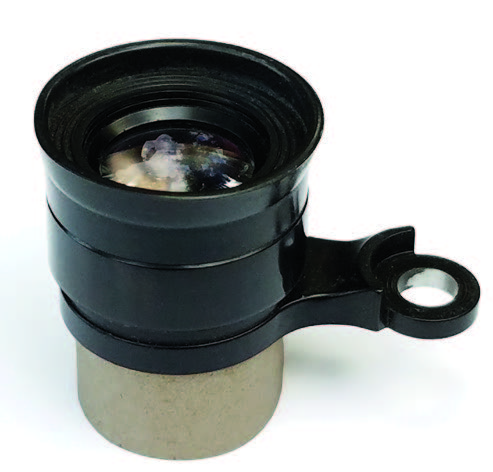 SCAVENGED OCULAR A binocular eyepiece works just as well in a telescope as it does in binoculars.
We’re now at $340.
A commercial scope usually comes with at least one eyepiece — usually a 20- or 25-mm Plössl. You can buy one from Orion for about $40, or you can make your own like I described on page 74 of the September 2020 issue. That design used lenses from Surplus Shed (surplusshed.com), which cost $8.50. Then again, you can do as John Dobson did and buy a pair of binoculars at Goodwill and rob the eyepieces from that. That’ll probably cost you about $10. So, let’s go with the $10 figure, bringing us to $350.
Of course, a telescope of this size needs a finder. A Rigel QuikFinder would be really nifty, but that’ll set you back $46 at Scopestuff (scopestuff.com) and even more elsewhere. Better build your own finder. I’ve described several different ways to do that over the years (S&T: June 2013, p. 66, and June 2020, p. 72). Most of them can be made with scrap materials, so let’s say the finder doesn’t cost you anything other than time and effort.
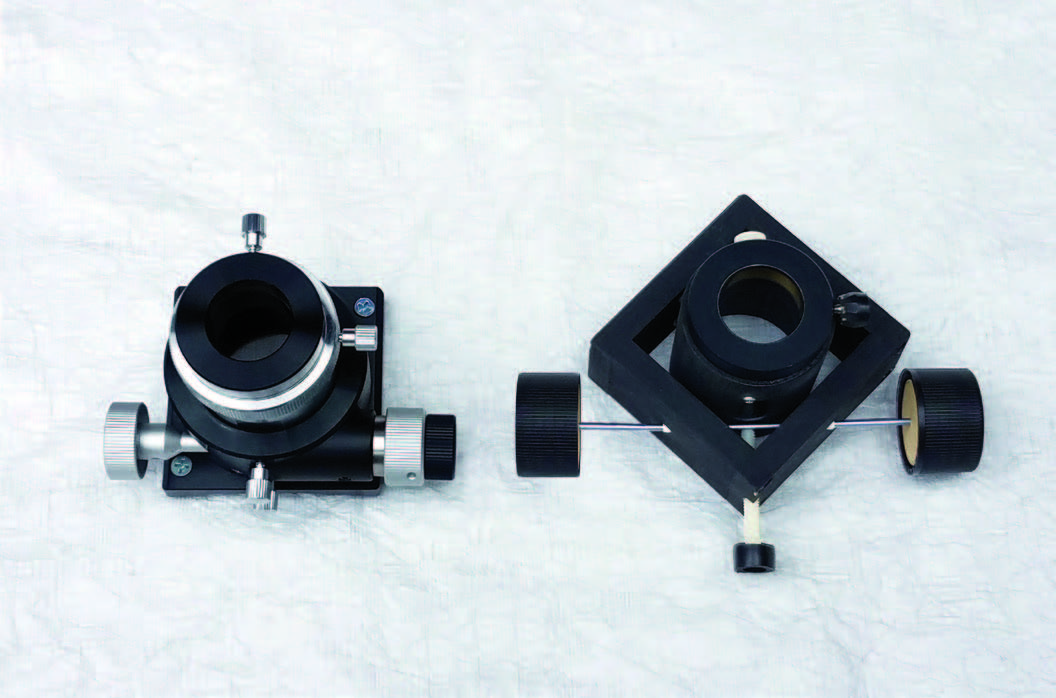 SIMPLE BUT EFFECTIVE Left: Commercial Crayford focusers, like the one at left, are nice, but you can build the one at right for practically nothing.
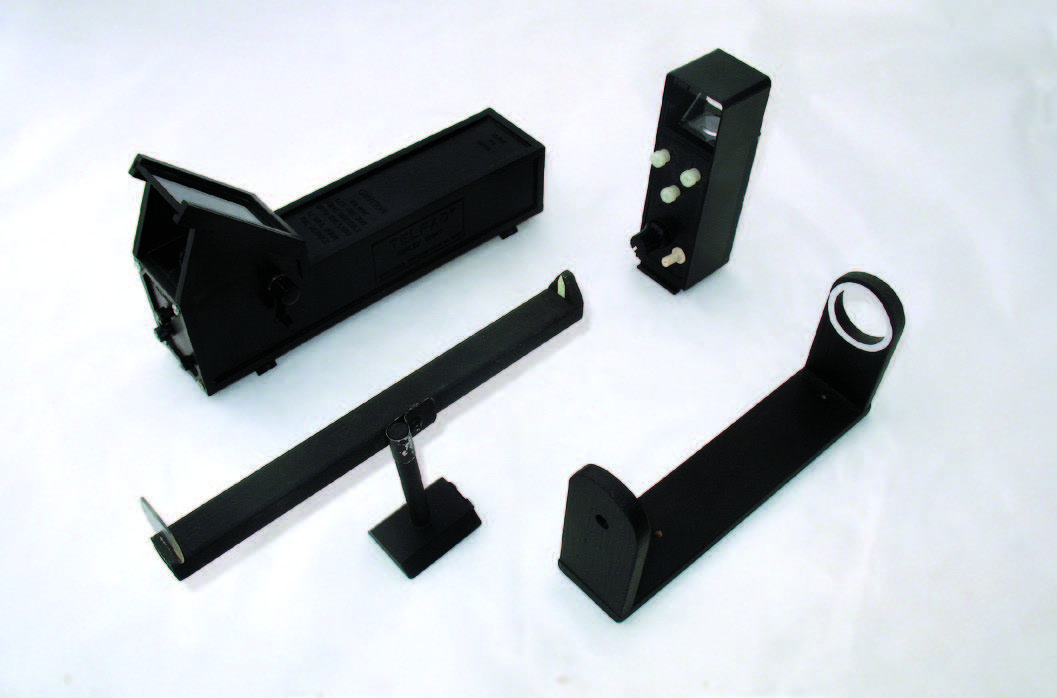 While unit-power finders by Telrad or Rigel are great (top left and right, respectively), you can make simple-yet-effective aiming devices using scrap wood or plywood left over from building your scope’s mount.
Now that the OTA is finished, it needs a mount. John Dobson designed his to use seven identical pieces of plywood, plus a couple of cradle boards cut from the same sheet. The cost of plywood has gone through the roof lately due to everyone
doing home improvement projects when they’re supposedly working from home, so this isn’t as trivial an expense as it used to be, but it’s still relatively cheap. You can buy a 4 × 8 sheet of A-D grade plywood for about $50, and you’ll use about two-thirds of it for your mount, so call it $33.
You’ll also need some Teflon for the mount’s bearings, an old phonograph record for the azimuth bearing surface (no kidding), three feet for the scope to rest on, and some bolts, screws or nails, and glue. Let’s add another $15 to cover that stuff. You can probably scrounge up some paint from the garage or basement for free, so we’re at $48 for the mount.
You’ll want a couple of shower caps for dust covers. Let’s assume you can scrounge those for free at a motel or from your own stash.
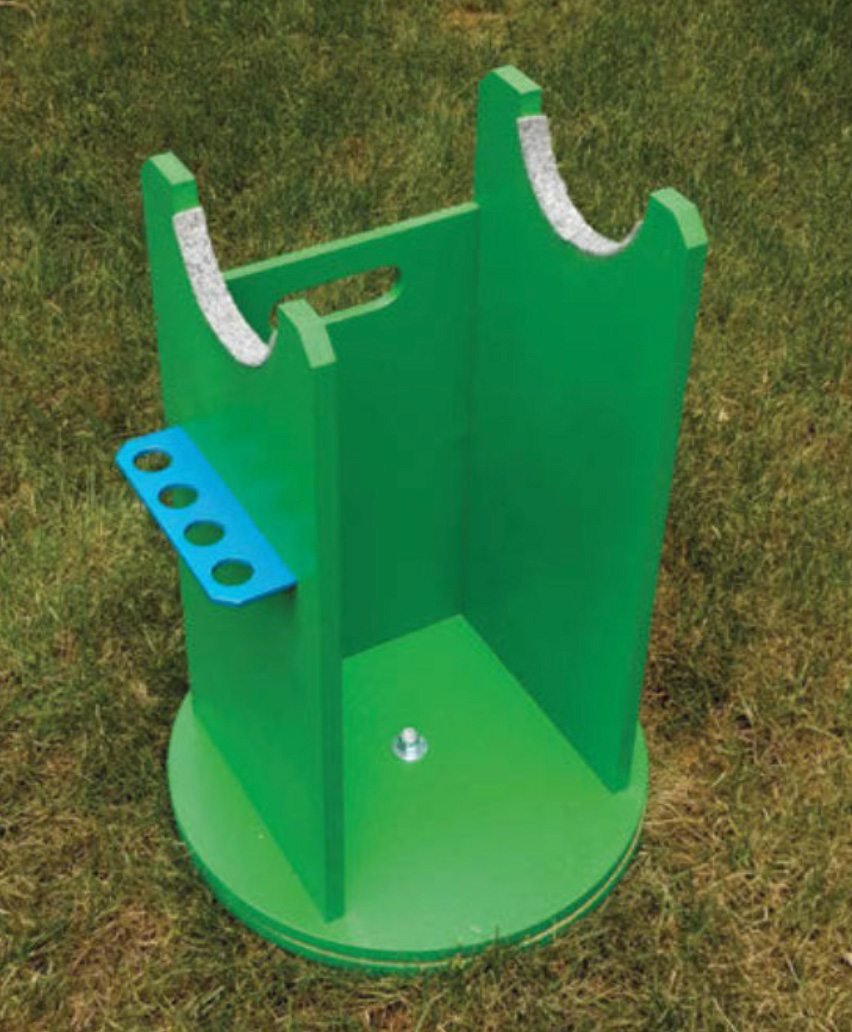 OPTICAL CANON The Dobsonian mount is simple to construct from plywood and miscellaneous hardware.
 We’re now at $398 for our finished homemade 8′′ Dobsonian scope, as opposed to $450 to buy one ready-made. I’m sitting here in front of my keyboard with my mouth a bit agape, surprised at the outcome. I was prepared to say that you couldn’t build your own 8′′ Dob cheaper than you could buy one, but if you’re willing to make the focuser, finder, mirror cell, and spider, you can just manage to squeak in under the commercial scope price.
Larger ScopesI chose an 8-inch as a good compromise between aperture and portability, so what about bigger ones? As the size of a scope increases, the cost also increases, but not in a linear fashion. The cheapest 16-inch Dob I can find is the Meade LightBridge Plus for $2,219. Without going through the above all over again, I’ve added up the cost of doing it yourself, and I’ve come up with a figure of about $1,500. You could afford to buy a commercial 2-speed focuser and a Rigel QuikFinder and still come out ahead.
The larger the aperture, the more sense it makes to build the scope yourself. But even an 8′′ home-built scope can come in under the cost of a commercial version if you’re willing to fabricate some of the subsystems and don’t pay yourself a wage for your time. Also, you can grind the mirror to whatever focal length you desire, paint your custom scope any color you want, install setting circles, and so on.
And, of course, there’s the incredible joy of using a scope you built literally from scratch. No camera will ever capture it, but I swear globular clusters look twice as nice in my homebuilt scopes as they do in a commercial scope of the same aperture.
This article originally appeared in the November 2021 issue of Sky & Telescope.
Comments (0)