
Remember me
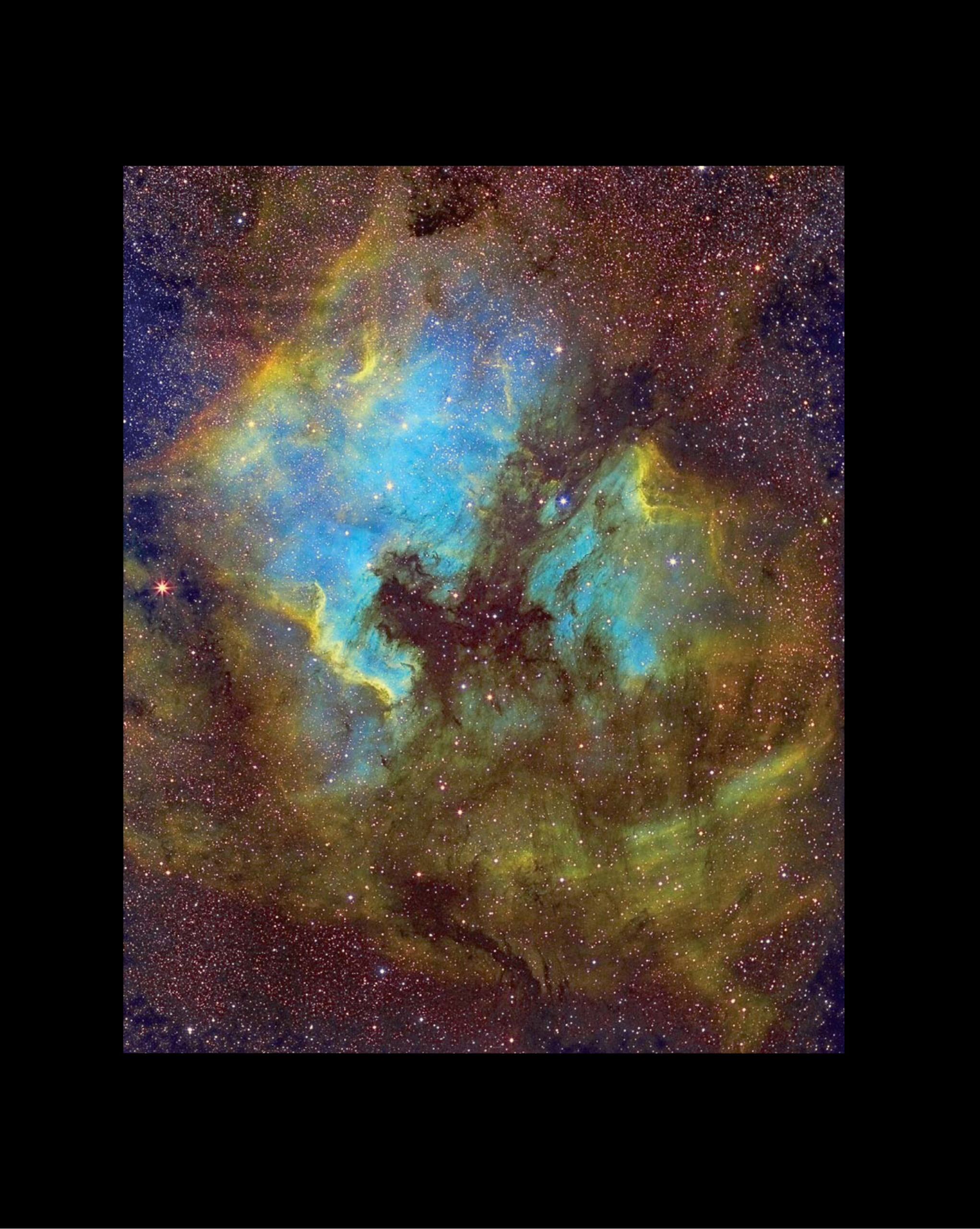
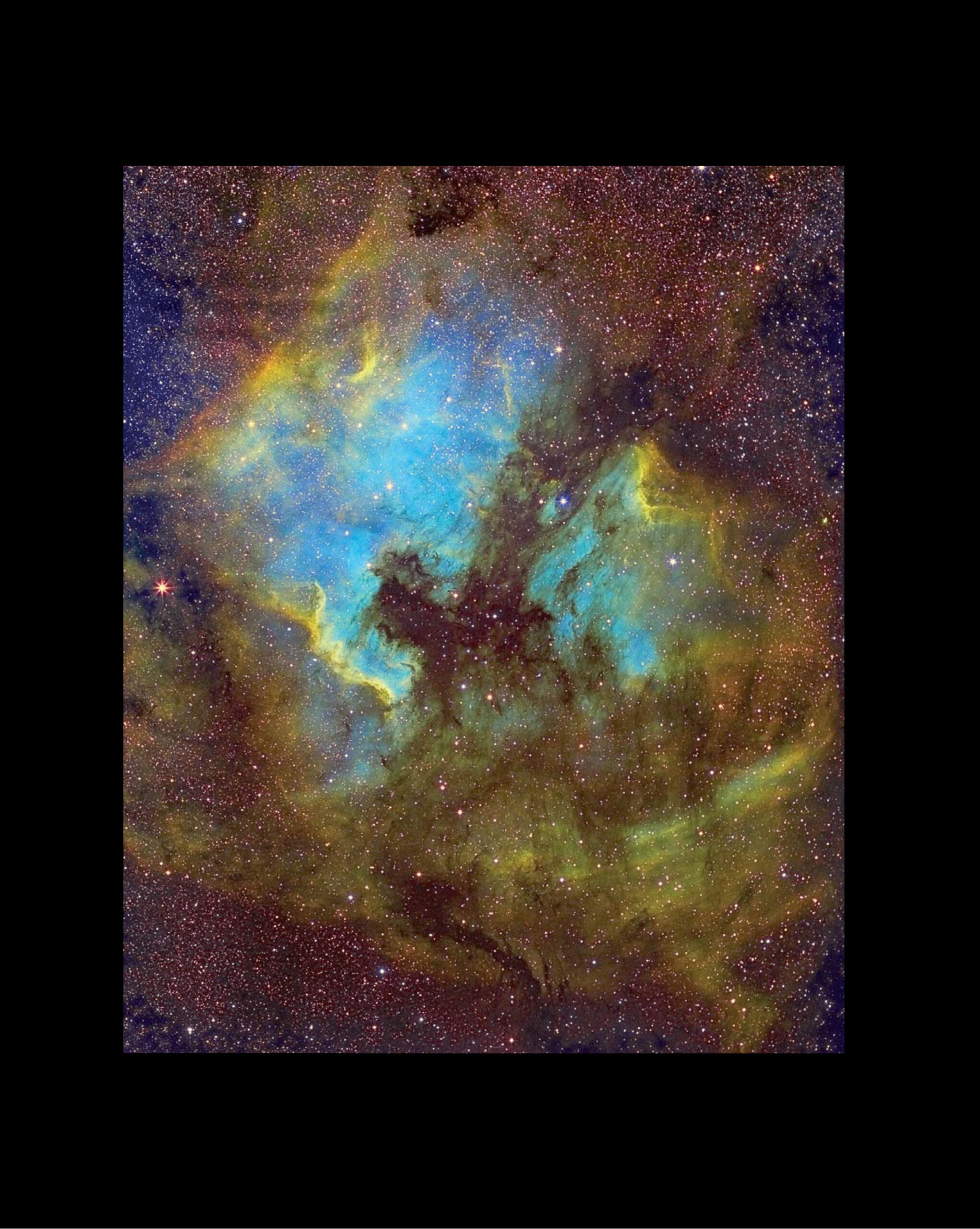 ASSIGNED COLOR Astronomers use false or representative color to help convey information in images of emission nebulosity, but that doesn’t make the photo less useful. This narrowband composite photograph of the North America and Pelican nebulae (NGC 7000 and IC 5070, respectively) assigns images recorded through O III, Hα, and S II narrowband filters to the blue, green, and red channels in this picture to highlight the structure each gas contributes to the overall nebulous region.
 If you’ve been involved in astronomy for any length of time, chances are you’ve encountered discussions on the value of amateur astrophotography. Often, the phrase “It’s just a pretty picture” is wielded like a cudgel by some who perceive themselves as the champions of science against many just getting started in the field. Science and art are often compared in a pejorative sense, and that’s a pity. They both have value, and everyone seems to have their own definitions of what art or science actually is. If it’s an image, and it doesn’t meet someone’s personal definition of science, then it must be “just” art. But the fact is, astrophotography is a very large part of the science of astronomy.
Amateur astronomers, including astrophotographers, are amateur scientists. After all, it’s the passion for this branch of science that drives us into this pursuit and occasionally provides the fuel for a rich and fulfilling career in the sciences as well. But astro-imaging can also remain a hobby, and there is no shame in this. You can also be an amateur scientist and artist simultaneously — the two pursuits aren’t mutually exclusive.
What Is Science?One of the greatest misunderstandings about science among the general public is that it’s nothing more than a body of knowledge — that there is a book of facts with the word “science” on the spine. Not quite. According to Merriam-Webster, science is “the state of knowing: knowledge as distinguished from ignorance or misunderstanding."
The route to this knowledge is known as the scientific method. It is a time-tested process involving careful observation, skepticism, and measurement-based testing that inevitably leads to what is true. “Trust your feelings” might make for great Jedi knights in Star Wars, but it makes for a poor scientist in the real world.
Some would argue that unless you’re using a camera and contributing carefully calibrated data to some important project, you aren’t doing real science. Nonsense! Just looking through your telescope is observing and learning about real phenomena. Even if this is all you are doing, you are still learning to navigate the night sky and utilizing equipment that scientists have used for centuries. Indeed, the typical amateur equipment of today is far superior to the instruments that made groundbreaking discoveries just 100 years ago. In the early days of astrophotography, the scientific community scoffed at anyone taking pictures through a telescope. A skilled observer is always better than machinery or glass plates, or so they thought. But the photographic revolution quickly turned the tables. Today, few (if any) professional astronomers use anything but an imaging device to make observations.
In order to perform science, your personal projects don’t have to change the world, be completely novel, or have value to anyone else to be valid science. If you’re making observations and using them to better understand the world around you, you’re doing science. If you’re repeating the 2,000-year-old experiment demonstrating that the world is round (which seems to require proof these days), you’re doing actual science. After all, the hallmark of the scientific method is reproducibility — repeating an experiment properly should give the same result every time.
Science in Pretty PicturesThe tools available to amateur astronomers today are truly amazing, and the hobby of recording splendid images of the night sky is flourishing, even in this period of COVID-19 and social distancing. Never before in our history have we had such a capability to record and discover the wonders of the universe above us.
Regardless, if you travel in imaging circles, you’ve doubtless encountered individuals seemingly on a mission to ensure that you don’t squander the awesome power of modern technology on pretty pictures. When I first took up astrophotography, I recall the pressure from some of my early mentors to engage in astronomy with all the seriousness it deserved. One of them would use the term “Pretty Picture People” — with all the contempt of someone saying “con-artist.” I’ve long since come to terms with this quarrel.
In fact, there are two kinds of scientific data: quantitative and qualitative. Professional astronomers understand that both kinds have value. Quantitative data is measured data. Counting the stars in an image and stating “there are 4,328 stars in this image” is another example of quantitative data. “This is a spiral galaxy,” is an example of qualitative data. It’s a type of galaxy that we recognize and have categorized. While the statement about the spiral galaxy is more subjective, it’s still true because that is our convention.
“This is an unusual-looking galaxy” would be an important qualitative observation — one that challenges our previous categorization schemes. Such a statement can cause scientific upheaval as much as anything unexpected in the quantitative realm.
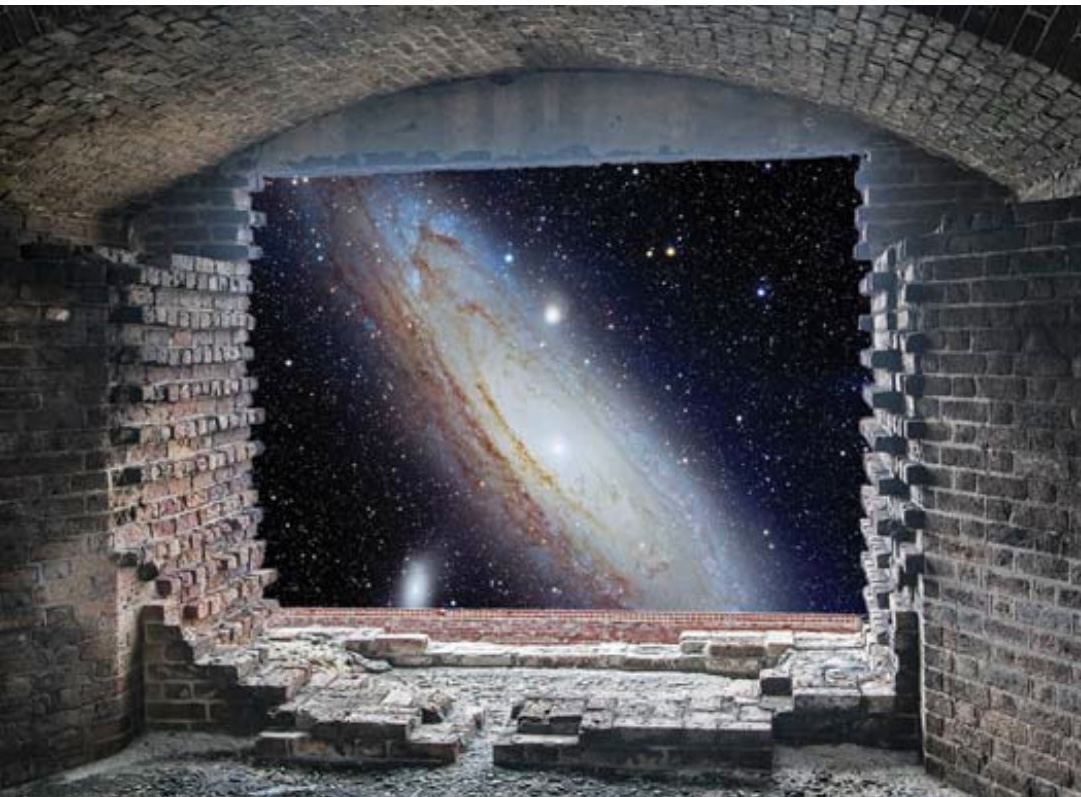 ASTRO ART Images like this creative conception of M31 as seen through an opening in a brick structure are more art than science, though nothing in the galaxy was distorted or changed to produce this fanciful composite.
The one and only rule about gathering qualitative imaging data is that you can’t fake it. For example, copying stars from one part of an image to fill an empty area distorts the quantitative information in the image. Selectively rotating a galaxy but not its surrounding star field or combining two nebulae to make a more creative image isn’t science at all — it’s purely art.
However, if you assign specific colors to particular wavelengths recorded, highlight only a particular color, or apply nonlinear stretch, that’s not faking image data. Nor is applying noise reduction or sharpening. In the world of astronomy and science in general, skillfully applied image processing is done all the time to uncover subtleties that wouldn’t be apparent otherwise. But be careful, because data can also be processed to the point of creating details that aren’t really there.
If you’ve followed this simple philosophy and someone claims your image has no scientific value, what they really mean is it has no scientific value that is of interest to them. But that doesn’t necessarily mean it has no scientific value or interest to others.
For example, let’s say you take an image of your favorite galaxy. You process it, perform some noise reduction and non-linear stretching to produce an attractive picture. You then share it on social media for your friends and family to see. That photo is full of important qualitative data. It is, after all, a real galaxy. While its brightness has been modified, the structure you’ve enhanced is real enough. It may have four spiral arms — you didn’t remove one of them or add a new one. “This galaxy has four spiral arms” is verifiable scientific data that you’ve captured with your non-linear processed, selectively enhanced pretty picture.
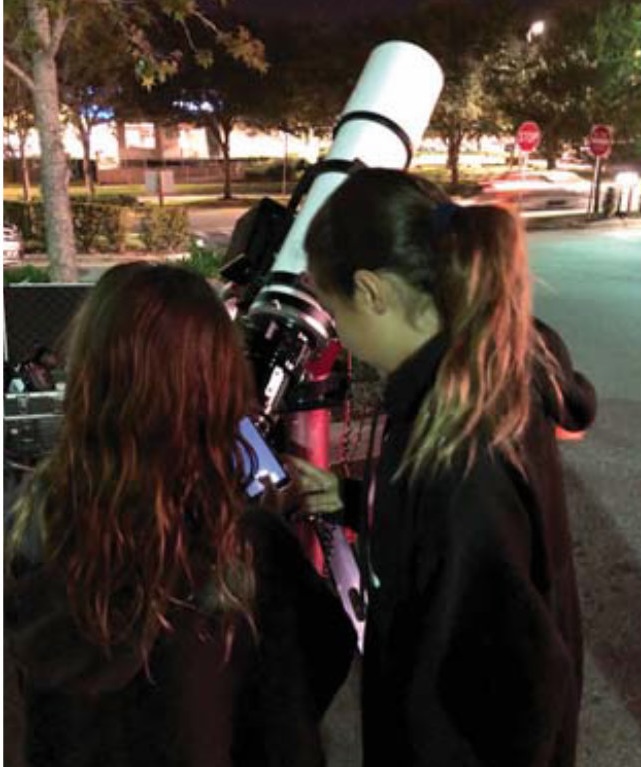 LEARNING DEVICE These two observers are learning about individual craters on the Moon by using a smartphone to share the view on the device’s screen.
“Wait,” a friend says. “Hey, I know that galaxy, but what’s that bright star right there?” The next night your friend images the same galaxy, records the same star, carefully calibrates the data and measures its brightness using differential photometry. It’s a supernova! Your friend gathered quantitative scientific data on the supernova by measuring its brightness, based on your qualitative data that there is a star there where there wasn’t one before. And you just may have discovered a supernova with your own aesthetically processed image.
Doing More with Your ImagingSo, what if you’d like to do more quantitative work? Aesthetic astrophotography can be its own reward, but there are also many ways you can dig deeper. Amateur scientists occasion- ally make a groundbreaking observation or discovery, though this is a tremendous gift when it happens and not common-place. Still, we sometimes play the lottery and hope we get lucky, so why not?
A great example of a collaboration between amateur astronomers pooling their resources and expertise is the MDW Hydrogen-Alpha Sky Survey described in this magazine’s October 2019 issue, page 20, and online at mdwsky-survey.org. These amateurs (two are current and former S&T editors) have set out to survey the entire sky with deep, hydrogen-alpha images. I find it wonderful that someone just thought such a thing as this ought to be. The imagery is stunningly beautiful and has contributed to several discoveries and scientific papers.
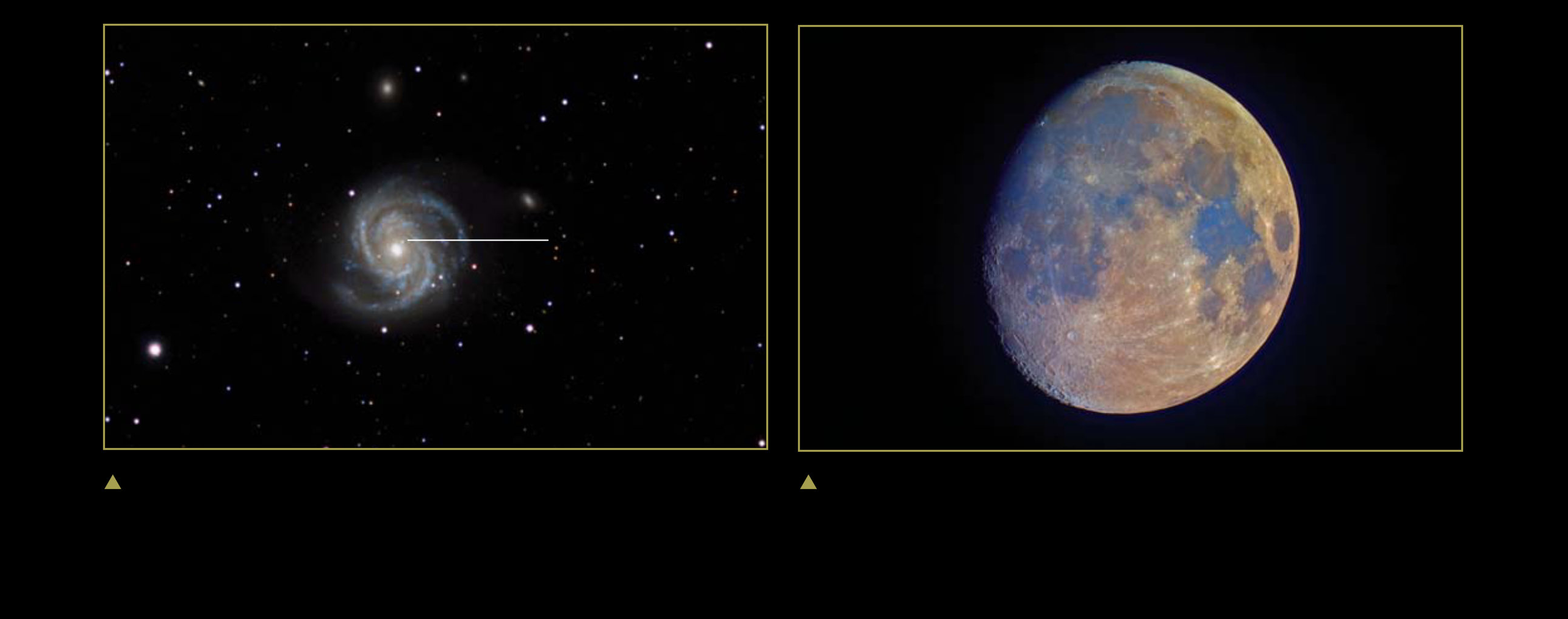 SUPERNOVA SURPRISE Left: Aesthetic processing doesn’t render an image scientifically useless. A good example is this photo of M100 in Virgo. The author imaged it in the spring of 2019, and after processing it simply to look good, a friend later noticed a new star in the galaxy, which turned out to be supernova SN 2019ehk.
 Tim Puckett, the most prolific amateur supernova hunter of all time, is another great example of an amateur scientist (cometwatch.com). Puckett is an amateur astronomer based in Georgia who began his supernova-hunting program in 1994. With the help of other amateurs, he’s discovered hundreds of supernovae. While supernova searches today are highly automated, amateurs can still contribute occasional discoveries, and that includes you.
If you have your own research interests or projects, you can join the American Astronomical Society (aas.org) as an amateur affiliate member. (Note: The AAS owns Sky & Telescope.) This membership class is for those who aren’t employed as astronomers, but nevertheless may be working on research that they wish to report on, or who may take advantage of the society’s resources for their work.
While you certainly can create your own scientific observing program, many organizations have structured scientific programs that amateurs can participate in. Joining one of these programs can provide you with a framework to follow and offer training and guidance. Sometimes they even have mentoring programs.
One of the best-known organizations for professional/amateur collaboration is the American Association of Variable Star Observers (AAVSO), found online at aavso.org. For more than a century this organization has helped amateurs learn the basics of photometry and how to make scientifically useful observations.
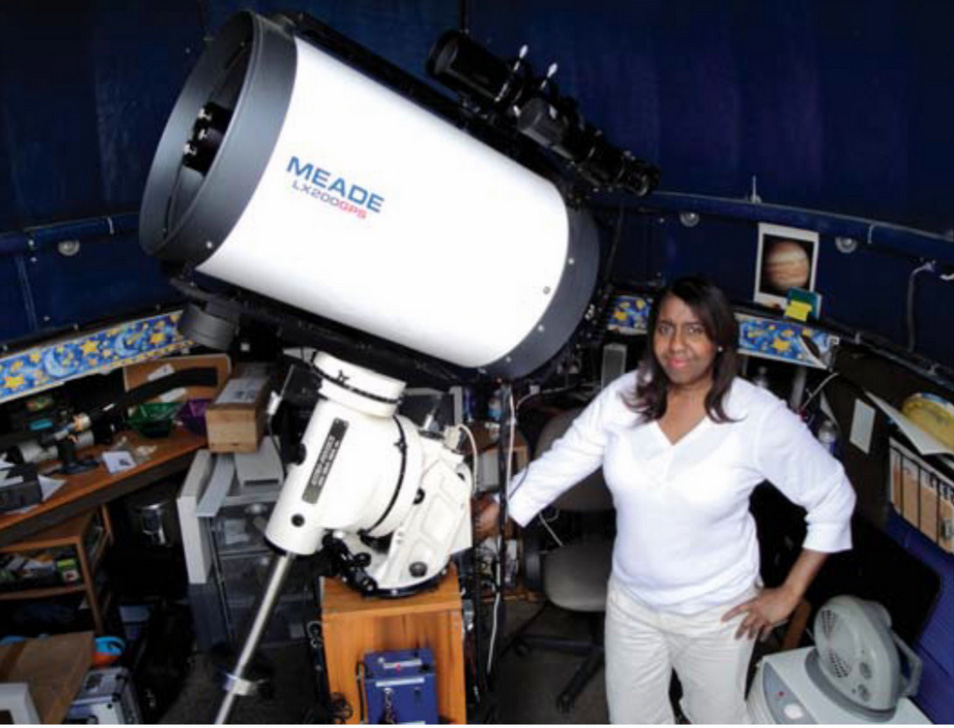 BIG PAYOFF While methodically imaging the star U Scorpii every clear morning, AAVSO member Barbara Harris made the discovery observations of the variable star going into outburst.
 A great example of this occurred in 2010, when amateur astronomer Barbara Harris observed a sudden outburst of the variable star U Scorpii. Harris and other amateurs had enlisted in an AAVSO campaign to monitor this star for an eruption predicted by a professional astronomer. Harris got up to let her dog out, flipped on her telescope, and won the celestial lottery! Well, it wasn’t quite that simple, but just like in all forms of photography, “being there” is the most important thing.
If variable stars don’t interest you, the AAVSO also offers an exoplanet program in which amateurs can contribute follow-up observations of stars with orbiting planets discovered by the Transiting Exoplanet Survey Satellite (TESS) telescope. Making an observation that confirms the existence of a planet around another star would be a pretty exciting use for a backyard telescope, and it can be performed with photometry and telescopes as small as 6-inch aperture (see our December issue, page 60).
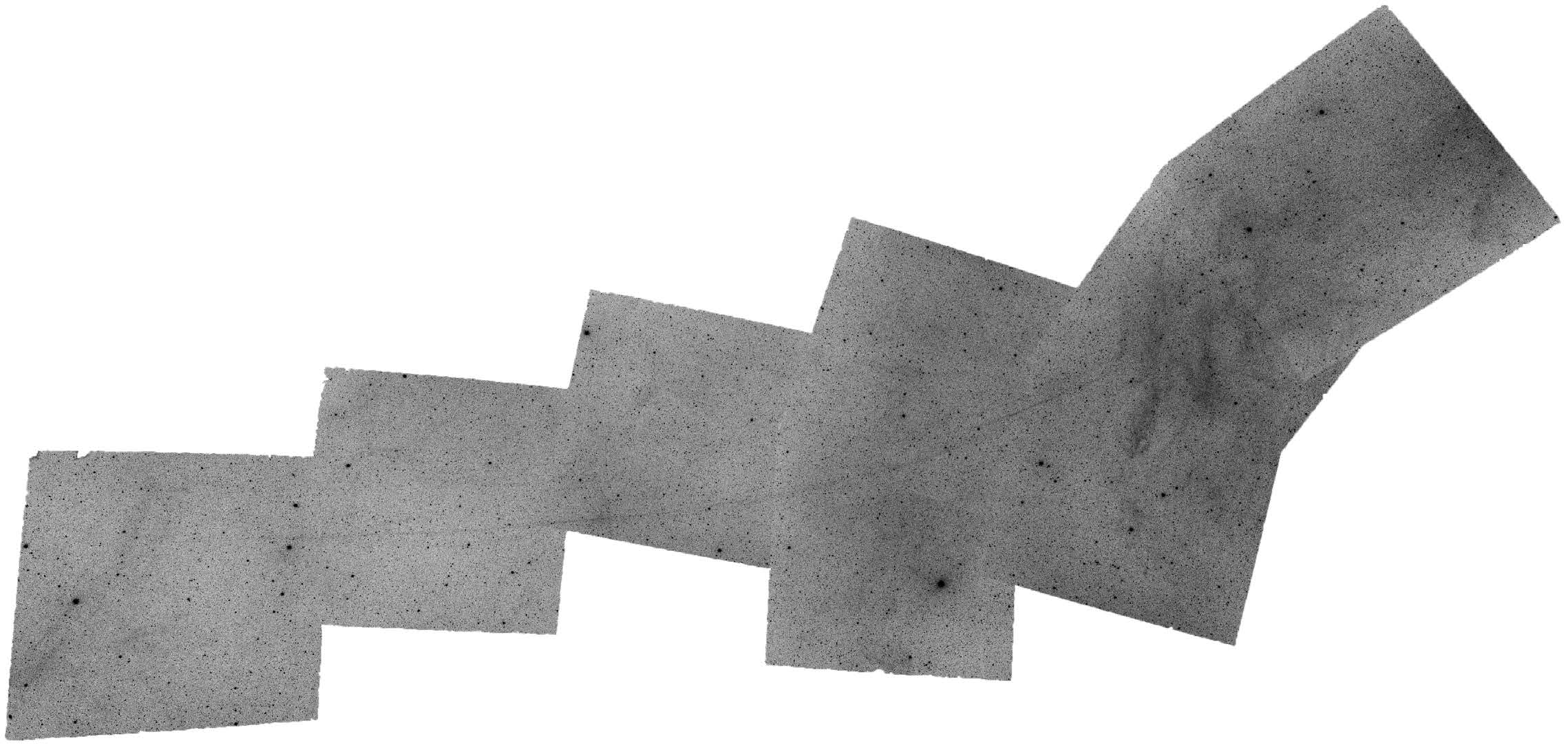 CONTRIBUTING TO DISCOVERY There are still lots of things to find in the night sky, and some of them are within reach of amateurs with relatively modest equipment. The mosaic above shows a thin arc of nebulosity discovered in Ursa Major by a team of astronomers and verified by the amateur MDW Sky Survey using a pair of 5-inch refractors.
Solar System Studies
CONTRIBUTING TO DISCOVERY There are still lots of things to find in the night sky, and some of them are within reach of amateurs with relatively modest equipment. The mosaic above shows a thin arc of nebulosity discovered in Ursa Major by a team of astronomers and verified by the amateur MDW Sky Survey using a pair of 5-inch refractors.
Solar System Studies
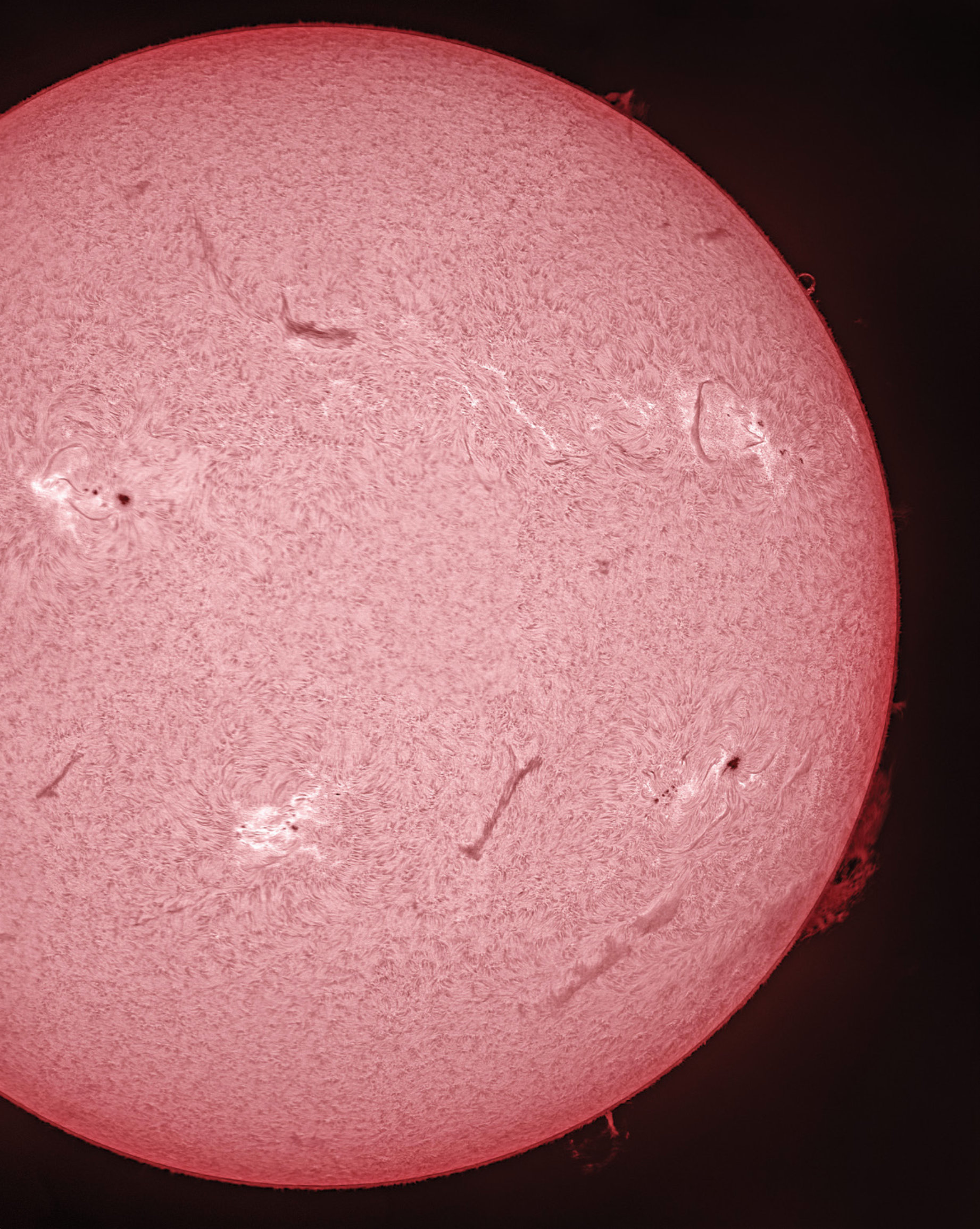
Closer to home, objects in our solar system exhibit a great deal of dynamic activity that we still have much to learn about. If this interests you, there are two organizations that you can get involved with — the Association of Lunar & Planetary Observers (alpo-astronomy.org), and the British Astronomical Association (britastro.org). Both have programs covering solar system objects, from the Sun, Moon, and planets to asteroids and comets. For example, amateurs can submit their images of sunspots to a repository that documents how these features evolve over time. Other examples include recording storms and weather events on Mars, Jupiter, Saturn, Uranus, and Neptune. These observations contribute to the pool of data and aid our understanding of the planets. Taking part in this research is within the reach of many amateur astronomers and imagers.
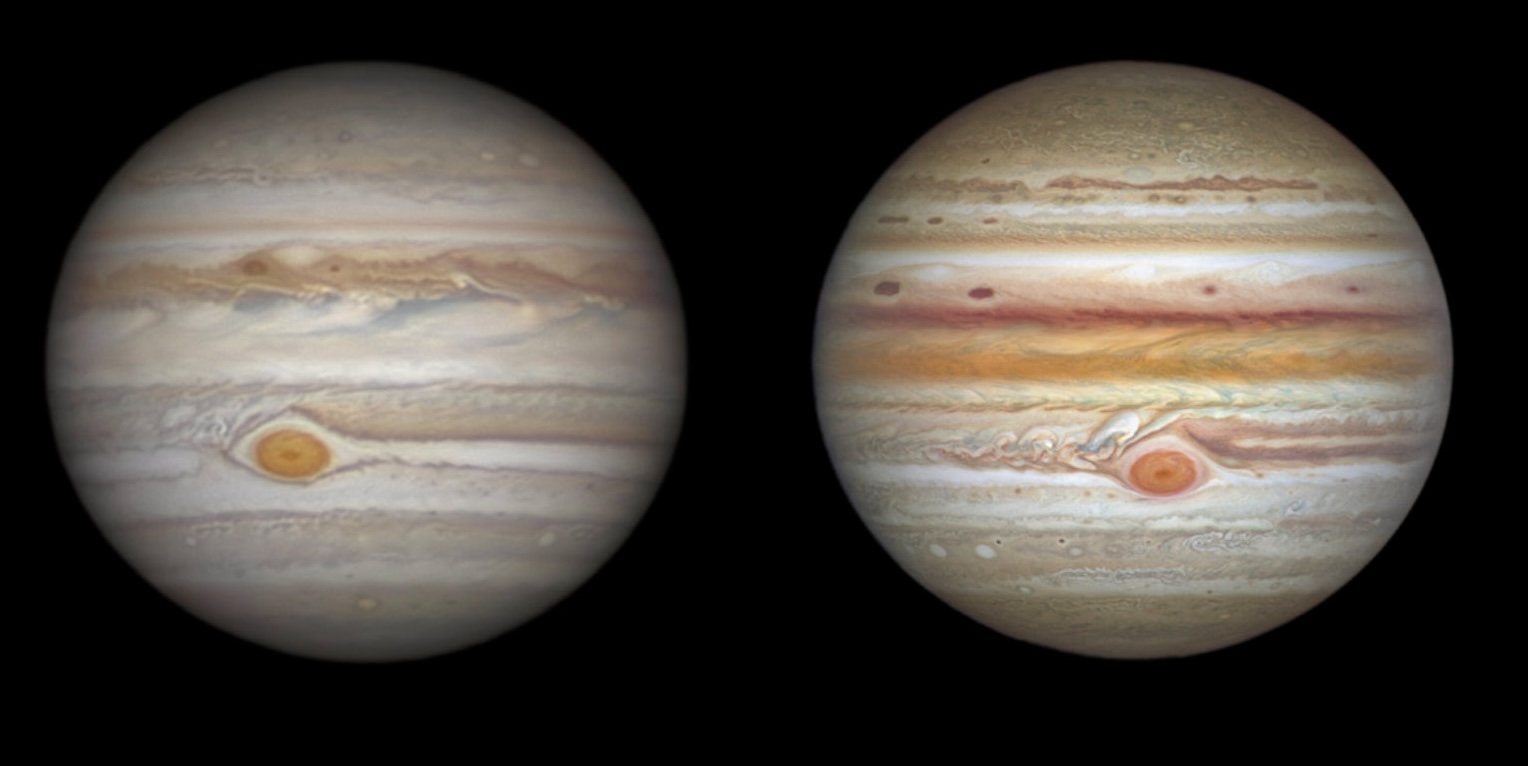
A great example of an imager making a name for himself in solar system studies is Philippine amateur Christopher Go— a man who runs a furniture company by day and methodically images the planets by night. Go has made several discoveries, including detecting a changing storm on Jupiter as well as recording an impact in the gas giant’s cloudtops. Go is an excellent example of an imager whose passion blurs the lines between amateur and professional astronomy.
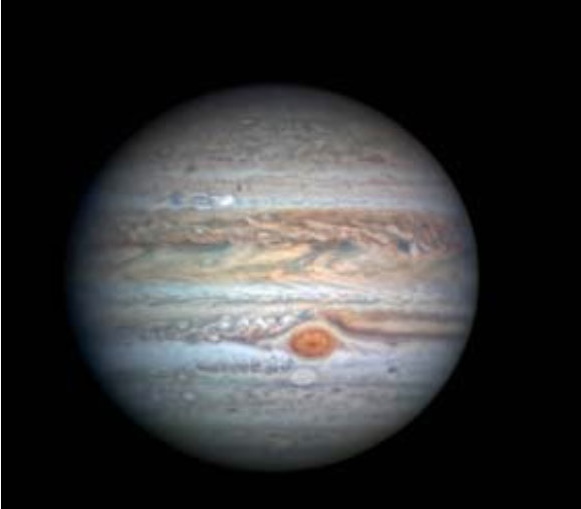 SOLAR SYSTEM DISCOVERIES Many amateurs concentrate on studying the solar system. Christopher Go has made several important discoveries, including witnessing major changes in a large storm on Jupiter (seen here passing south of the Great Red Spot on August 25, 2020).
 Even if you don’t have any observing equipment, there are numerous citizen science projects you can participate in with just an internet connection. You can help classify galaxies with Galaxy Zoo (zooniverse.org) or classify craters on the Moon and map the extent of impact ejecta on asteroids at CosmoQuest (cosmoquest.org).
Whether you are an astrophotographer taking pictures for fun, performing your own research, taking part in an orchestrated scientific data-collection program, or participating in a citizen science project, you’ll be spending your time in a wonderful way. Projects such as these build scientific literacy and appreciation while contributing to the world’s astronomical and artistic richness. How deep you choose to delve into this fantastic hobby is completely up to you.
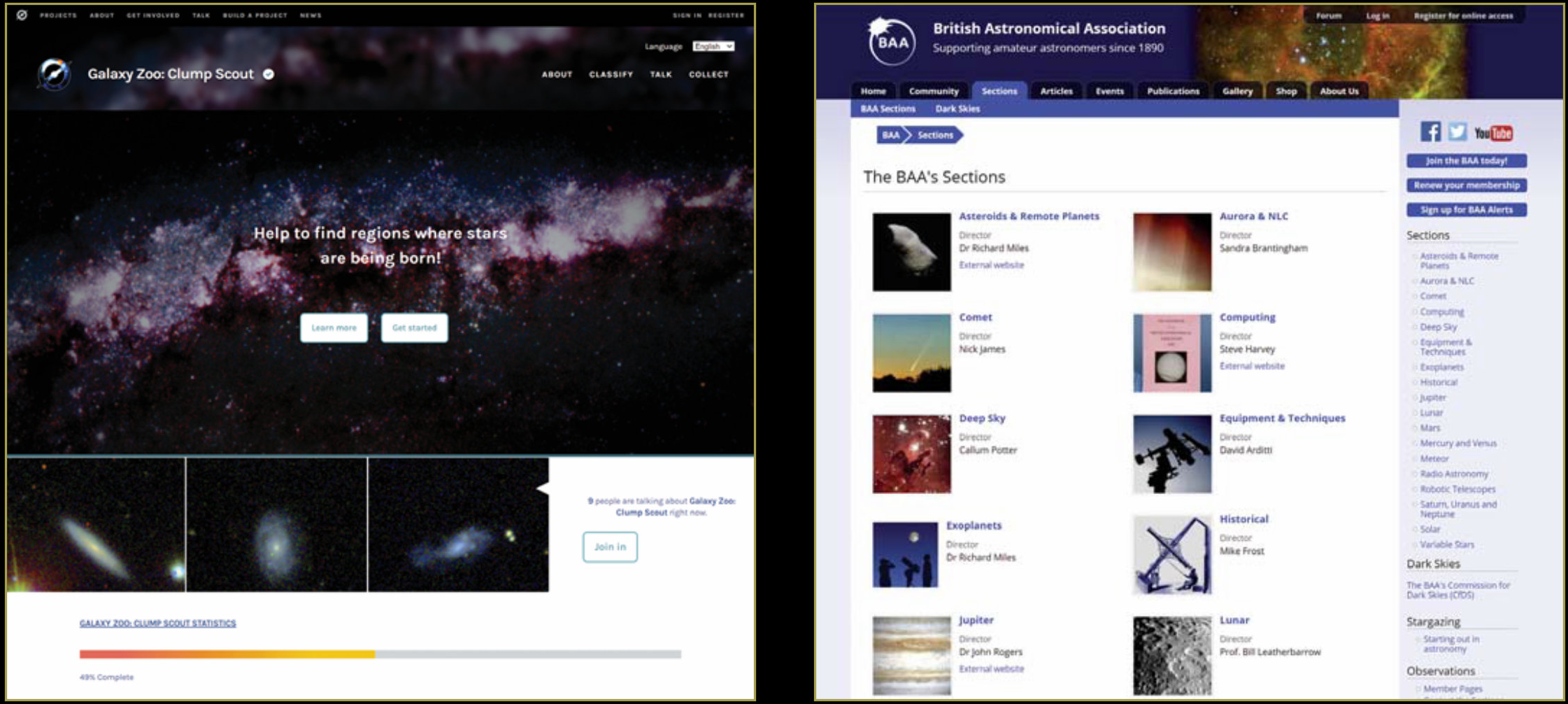 Left: You can contribute to astronomical research without even owning your own telescope. Galaxy Zoo, for example, is a crowdsourcing program that uses the power of the internet to let you help identify star-forming regions in other galaxies and work on other big data projects. Right: Organizations such as the Association of Lunar & Planetary Observers (ALPO) and the British Astronomical Association (BAA) are made up entirely of amateurs who study objects in our solar system.
This article originally appeared in the March 2021 issue of Sky & Telescope.
Comments (0)